One of Britain’s most recognisable parking companies has crashed into administration, raising fresh concerns for hundreds of UK workers and highlighting the long-term economic shifts still rippling through the country’s commuting habits.
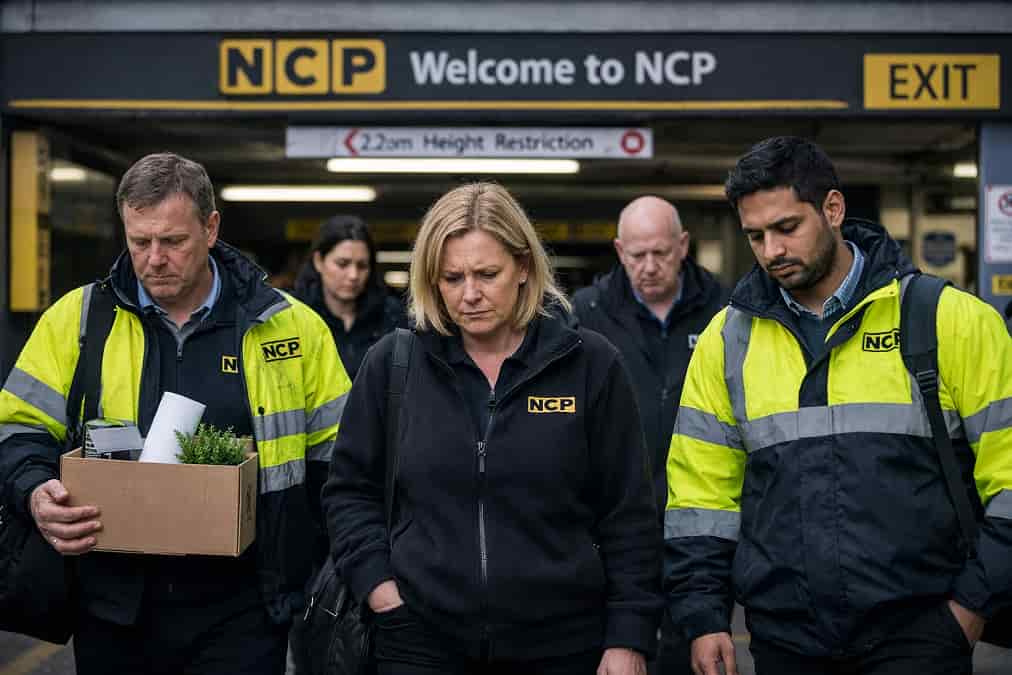
National Car Parks (NCP), the UK’s largest private car park operator, manages around 340 parking sites across major towns, city centres, hospitals, airports and transport hubs. The company employs around 682 staff, many of whom now face an uncertain future following the collapse.
Despite the administration, the company’s sites remain open and operations are continuing while administrators assess options for the future of the business.
Administrators from PwC — Zelf Hussain, Rachael Wilkinson and Toby Banfield — have been appointed to take control of the company’s affairs. Their immediate focus is to stabilise the business while exploring whether a sale or restructuring could preserve jobs and maintain services.
For workers across the NCP network, the coming weeks will likely determine whether the business can recover or whether redundancies become unavoidable.
Pandemic aftershocks continue to hit commuter businesses
The problems facing NCP reflect a wider challenge affecting businesses built around daily commuting patterns.
According to PwC, the company’s performance has steadily declined since the COVID-19 pandemic, with demand for parking — particularly in city centres and commuter locations — failing to return to historic levels.
Changes in working patterns have meant fewer workers travelling into offices five days a week, reducing the number of vehicles entering central urban areas.
At the same time, NCP has been tied into long-term property leases for many of its car park sites, limiting its ability to reduce costs as revenue declined.
PwC said the company’s high fixed costs meant it could not scale expenses in line with falling demand, leading to ongoing losses.
In a statement, administrators explained that shifting driving behaviour and reduced commuter volumes had significantly impacted site occupancy.
The business eventually reached a point where it no longer had sufficient cash available to meet its financial obligations, forcing directors to appoint administrators.
Staff remain in post as review begins
Zelf Hussain from PwC said the immediate priority is ensuring continuity for both customers and employees while a detailed review takes place.
He confirmed that all NCP sites are currently open and staff remain in their roles while trading continues as normal.
Administrators will now begin discussions with landlords, employees and other stakeholders to explore options that could secure the best outcome for creditors and workers.
Among the options under consideration is a potential sale of the business or parts of its nationwide network.
For the employees working across hundreds of sites, that process will determine whether the brand survives in its current form.
A company with deep roots in Britain’s cities
The collapse of NCP marks a significant moment for a company that has been embedded in the fabric of British city life for decades.
The business dates back to 1931, when it was originally incorporated by Colonel Frederick Lucas.
However, it became a major force in urban parking after the Second World War when entrepreneurs Sir Ronald Hobson and Sir Donald Gosling recognised the opportunity to convert bombsites across London into parking spaces for the rapidly growing number of cars entering the capital.
Their first project reportedly involved investing just £200 to transform a bombsite in Holborn into a functioning car park.
By 1959 they had acquired NCP and rebranded the business under the National Car Parks name, reflecting ambitions to expand across the country.
Over the decades the brand became so widely recognised that many drivers began referring to any city centre car park simply as an “NCP”.
Losses mounting before the collapse
Financial filings show the company had been under pressure for several years.
Accounts lodged at Companies House reveal a pre-tax loss of £28.2 million for the year ending September 2023, following a £22.5 million loss the previous year.
The company has been owned by Park24, a Tokyo-listed mobility and parking operator, since 2017 when it was purchased from Macquarie European Infrastructure Fund.
While administrators attempt to stabilise the business, the future of hundreds of workers across the company’s nationwide network remains uncertain.
What this means for UK workers
Administration does not automatically lead to job losses, but it often signals significant restructuring.
For the employees working across NCP’s car parks — from city centre facilities to hospital sites — the key question will be whether a buyer emerges who believes the business can adapt to changing travel patterns.
Car parking operators play an important role in supporting workers commuting into towns and cities, as well as those employed in hospitals, retail centres and transport hubs.
Providing clear, accurate and timely information about developments like this remains vital for workers seeking to understand how changes in the economy may affect their jobs and livelihoods. In the online search environment, fresh and authoritative reporting on current events is particularly important for ensuring workers receive relevant information when they search for updates affecting their employment and industries.