UK Employment Rights Timeline: Key Changes Affecting Workers 2026–2027
Understanding when employment law reforms take effect is essential for both workers and employers. The period between April 2026 and January 2027 will introduce several significant changes affecting sick pay, parental rights, workplace protections and employment security.
April 2026: statutory sick pay reforms
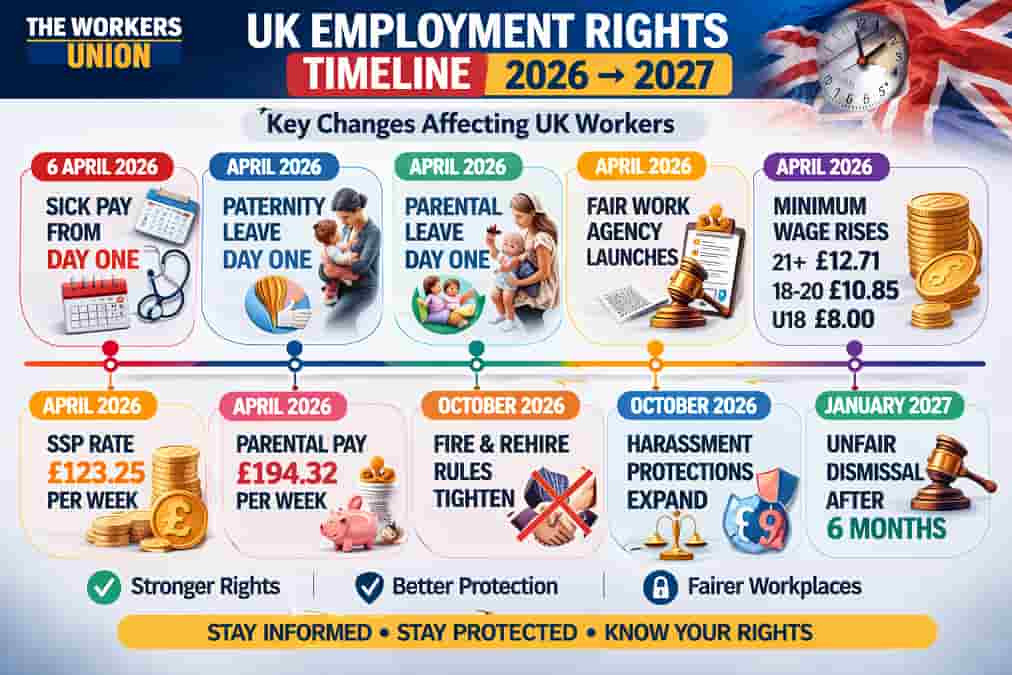
From 6 April 2026, statutory sick pay rules change substantially.
Key reforms include:
- Statutory Sick Pay becomes payable from the first full day of sickness absence.
- The previous three-day waiting period is removed.
- The Lower Earnings Limit is abolished, allowing more workers to qualify.
- SSP will be calculated at 80% of average weekly earnings or the statutory weekly rate, whichever is lower.
- The SSP rate rises to £123.25 per week.
For workers across the UK, this means illness will no longer immediately result in several unpaid days away from work.
April 2026: day one parental rights
Two family-related employment rights also become day one entitlements.
Fathers and partners gain a day one right to paternity leave.
All parents receive day one eligibility for unpaid parental leave.
Previously, workers generally needed a qualifying service period before accessing these rights.
April 2026: launch of the Fair Work Agency
A new national enforcement body, the Fair Work Agency, will begin operating in April 2026.
Its responsibilities include enforcing rules related to:
- Holiday pay compliance
- Statutory sick pay
- National minimum wage protections
The agency aims to strengthen oversight of workplace pay rights.
April 2026: national minimum wage increases
Updated minimum wage rates will apply from April 2026.
- £12.71 per hour for workers aged 21 and over
- £10.85 per hour for workers aged 18–20
- £8.00 per hour for under-18s and apprentices
- Statutory parental pay will increase to £194.32 per week.
October 2026: stronger workplace protections
Further legal changes expected in October 2026 include:
Restrictions on fire and rehire practices
Employers will face stricter requirements before imposing contractual changes involving dismissal and re-engagement. Consultation and justification standards will become stronger.
Expanded sexual harassment duties
Employers must take all reasonable steps to prevent harassment, including risks involving contractors, agency staff or clients.
Sexual harassment as a protected disclosure
Reporting sexual harassment will be explicitly recognised as a protected disclosure, strengthening legal protection for workers raising concerns.
January 2027: unfair dismissal reform
A major reform expected in January 2027 reduces the qualifying period for unfair dismissal protection.
Current rule: protection usually begins after two years of employment.
Proposed change: protection begins after six months of employment.
If implemented as expected, this change will significantly strengthen job security for newer employees.
Know Your Workplace Rights in 2026: What UK Workers Need to Understand
Across the UK labour market, 2026 is shaping up to be a year of major workplace reforms. From sick pay changes to stronger protections against unfair treatment, new laws will reshape how workers access rights and support.
For millions of employees, the most noticeable change will come in April when statutory sick pay becomes payable from the first day of illness.
Previously, workers often faced several unpaid days before sick pay began. Removing the waiting period helps ensure workers are not forced to choose between protecting their health and maintaining their income.
Alongside sick pay reforms, parental rights will expand. Fathers and partners will gain paternity leave eligibility from the first day in a new role, while parents will no longer need a qualifying service period before accessing unpaid parental leave.
The launch of the Fair Work Agency will also strengthen enforcement of employment rules. The agency will oversee compliance with minimum wage laws, holiday pay obligations and statutory sick pay requirements.
Later in the year, additional reforms are expected to reshape workplace practices. Employers will face stricter limits on “fire and rehire” strategies, ensuring contractual changes are not imposed without proper consultation and justification.
Employers will also need to take stronger preventative measures against workplace harassment, including risks arising from third parties such as customers or contractors.
For workers entering new roles, the proposed reduction in the unfair dismissal qualifying period from two years to six months could represent one of the most significant improvements in job security for decades. For The Workers Union, ensuring workers understand these changes is vital. Clear guidance helps workers recognise their rights, ask informed questions and navigate changes confidently.
As employment law evolves, workers who stay informed will be better placed to protect their livelihoods and wellbeing.

I want to join
Join us today – it’s easy!
You’re just a few clicks away from investing in a better future for working people

I’m a member
All the support and advice you need
Log in to your account. Full access to your resources, contacts, personal dashboard, and instant advice.