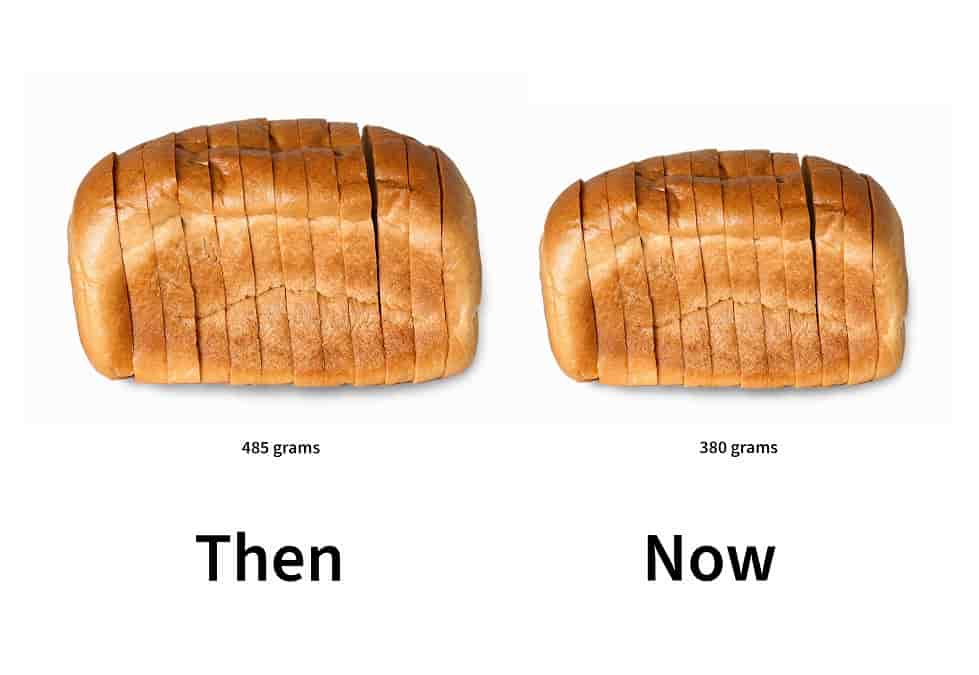
In light of the recent survey by Barclays showing the increasing concern of consumers over “shrinkflation“, The Workers Union emphasizes that it has identified and highlighted this trend a long time ago. In fact, we have been publishing regular articles warning consumers and decision-makers alike about the impending problem.
The survey indicates that 81% of consumers are perturbed by the notion of receiving less for the same price. Furthermore, 29% are buying their favourite items less frequently, and 18% are switching to brands that have maintained their product sizes.
These findings mirror predictions that the Workers Union has been making consistently. We drew attention to the shrinkflation trend in our extensive series of articles and urged brands to maintain value in the face of rising costs to retain consumer trust.
In June alone, 70% of Britons noticed cases of shrinkflation, a 5% increase from the previous month. This was most notable in popular consumer items such as chocolate, crisps, packets of biscuits, and snack bars.
The phenomena of product shortages were another element we had flagged in our shrinkflation articles, where we discussed the risk of scarcity due to rising production costs and supply chain disruptions. In line with our predictions, 37% of shoppers reported that basic items, including eggs, fresh produce, and tinned staples, were regularly unavailable.
Grocery spending grew by 9.5% year-on-year in June, the highest growth in two years, yet it still trailed behind the rate of food inflation, which stood at 18.4%. A notable 67% of consumers are attempting to curtail their weekly shopping expenditure, resorting to shopping at multiple supermarkets to find deals, or purchasing more discounted items.
Spending patterns have undoubtedly shifted due to the cost-of-living crisis and shrinkflation. However, we must underscore that this is not a sudden development. The Workers Union has been observing, analyzing, and forecasting these patterns, urging businesses to ensure their strategies are sustainable and fair to consumers and workers.
The Workers Union Says…
“To mitigate the negative effects of shrinkflation, we continue to call upon brands and businesses to keep transparency and fairness at the forefront of their pricing strategies. In parallel, we urge policymakers to address this issue and safeguard the rights of consumers.
In this era of rising costs and economic uncertainty, the role of collective responsibility cannot be overstated. Only by addressing these issues head-on can we prevent shrinkflation from becoming an enduring trend that leaves consumers and workers alike out in the cold”.