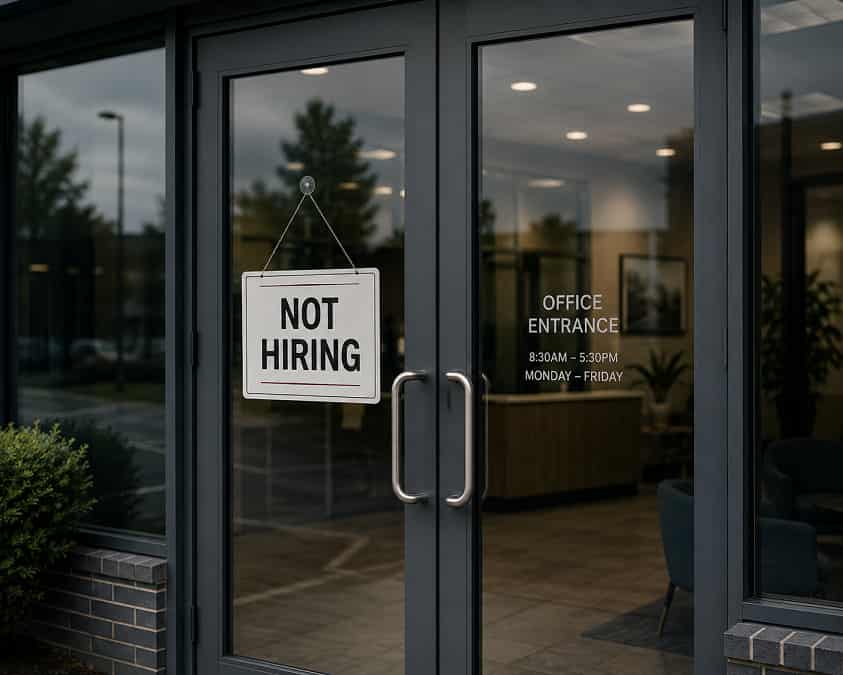
Britain’s jobs market is showing growing signs of strain after employers across multiple sectors began cutting recruitment, reducing vacancies and scaling back payrolls amid mounting economic pressure linked to the ongoing 2026 Iran war.
New figures released this week show UK unemployment has risen to 5%, while payroll employment dropped sharply by around 100,000 jobs in April alone — one of the steepest monthly declines seen since the pandemic era. Economists warn the combination of rising fuel prices, energy instability and business uncertainty is now beginning to hit workers directly.
The latest data suggests hospitality, retail, manufacturing and logistics are among the sectors facing the greatest pressure as firms attempt to absorb soaring operational costs caused by global instability and disrupted energy markets.
The developing economic fallout comes as the conflict involving Iran continues to impact global oil and gas supplies, particularly through disruption around the Strait of Hormuz — one of the world’s most critical energy shipping routes. Analysts say the resulting spike in energy prices is feeding directly into UK business costs, household bills and employer confidence.
For UK workers, the consequences are becoming increasingly visible.
Recruitment firms have reported falling job placements, reduced hiring confidence and an increase in employers delaying expansion plans. Business surveys suggest many firms are now prioritising survival and cost control over growth and recruitment.
At the same time, wage growth is slowing.
Official figures show regular pay growth excluding bonuses has eased to 3.4%, while real-term wage growth after inflation is now sitting at just 0.3%. Economists say this leaves many working people facing another squeeze on living standards just as energy and food costs continue rising.
The Organisation for Economic Co-operation and Development (OECD) has reportedly identified the UK as one of the advanced economies most exposed to the economic consequences of the current energy shock.
Some forecasts now predict Britain could lose more than 160,000 jobs during 2026 if current economic pressures continue.
For many workers, the situation is beginning to feel uncomfortably familiar.
After years dominated by inflation, company collapses, redundancy fears and rising household bills, many employees are once again facing uncertainty over job security and workplace stability.
Employers themselves are also under pressure.
Many businesses are facing a difficult balancing act between rising energy costs, increased payroll expenses and weakening consumer confidence. Industry groups say firms are becoming increasingly cautious about taking on new staff while global uncertainty remains high.
The Workers Union says periods like this highlight why workers need practical, immediate support more than ever.
A spokesperson for The Workers Union said:
“UK workers are once again finding themselves caught in the middle of global instability they did not create. Rising costs, job uncertainty and slowing recruitment are creating genuine anxiety across workplaces.
Workers need clear guidance, fast support and practical help during periods of economic pressure. The focus must remain on protecting working people and helping them navigate uncertainty with confidence.”
Economic analysts are also warning that younger workers could be disproportionately affected if hiring freezes continue throughout the remainder of the year. Early indicators already suggest employment opportunities for under-34s have started weakening more rapidly than other age groups.
Although the UK economy recorded modest growth during the first quarter of 2026, many economists believe conditions are likely to deteriorate further if geopolitical tensions continue through the summer.
For working people across Britain, the concern is increasingly straightforward:
higher bills, fewer vacancies and growing uncertainty about what comes next.