Fresh concerns are mounting across England’s health service after new figures revealed a sharp increase in racial abuse directed at NHS staff by patients, with frontline workers describing a growing climate of fear, anxiety and emotional exhaustion inside hospitals and emergency call centres.
The latest revelations follow previous concerns surrounding rising violence and aggression against healthcare workers, including enhanced security measures recently introduced by NHS trusts to protect staff from abuse and intimidation.
Now, new evidence suggests racial abuse is becoming an increasingly common part of working life for many NHS employees.
At the centre of the growing crisis is the testimony of healthcare workers like nurse Tito Vicario, who says he has experienced repeated racist abuse while working at Sunderland Royal Hospital.
Vicario, originally from the Philippines, says incidents have ranged from verbal insults to attempted physical assaults by patients.
“Whenever I feel like it’s going to happen again I feel my heart racing,” he explained.
“There are times where some patients will try to punch you or slap you.
“It affects you not just physically but mentally as well.”
In one deeply distressing incident, Vicario says he was subjected to an offensive racial slur by a patient. Although the patient’s family apologised immediately, he says the emotional impact remained long afterwards.
Another patient allegedly refused medication from him because of his ethnicity.
“They try to say these things to release their anger and anxiety but we’re not punching bags, we’re still people,” he said.
“You can’t hit back, just smile.
“You just take it.”
The scale of the issue appears to be worsening.
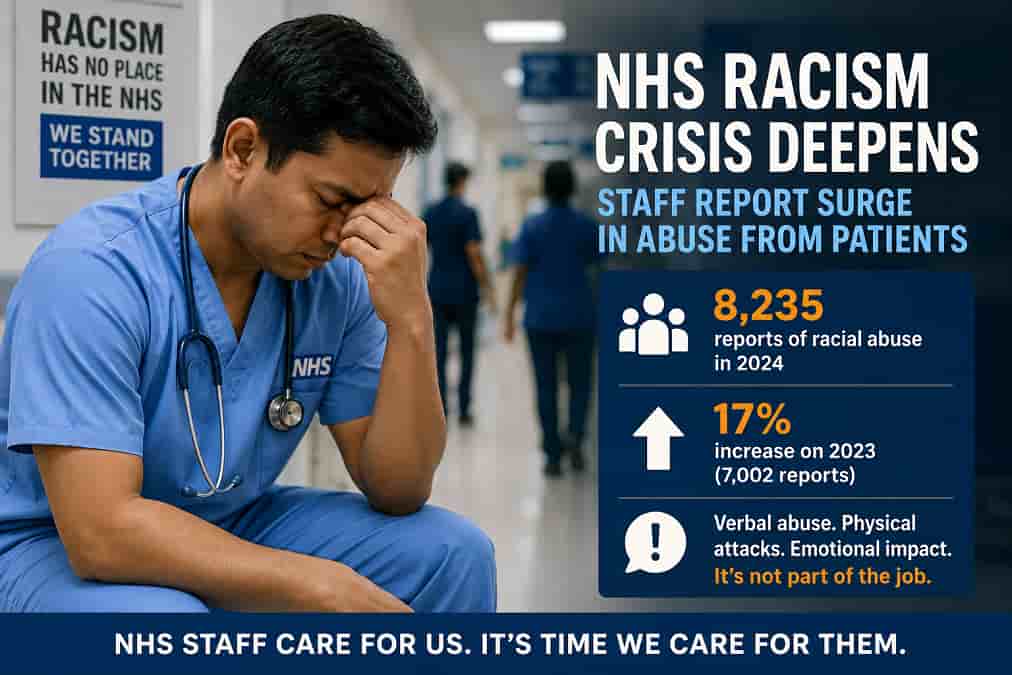
Freedom of Information requests sent to NHS hospital and mental health trusts in England revealed that 8,235 reports of racial abuse against staff were recorded in 2024 by the 106 trusts that provided data. That represents a 17% increase compared with the 7,002 incidents recorded in 2023.
Campaigners believe the true figure could be substantially higher because not all NHS trusts provided data and many incidents are believed to go unreported.
The figures include both physical and non-physical incidents, highlighting the breadth of abuse being experienced by healthcare workers across the country.
Neomi Bennett, founder of Equality 4 Black Nurses, warned that many affected workers no longer trust internal systems to protect them.
“In our research around 67% chose not to report,” she said.
“Some of the nurses that have approached us have ended up going to work in retail or into sales or something which is less risky than nursing.”
She also warned that some overseas healthcare workers have chosen to leave the UK entirely because of the abuse they have faced.
Emergency call handlers are also reporting a significant increase in racist incidents.
An NHS worker from India, identified only as Ishaan due to fears of attracting further abuse, says he regularly experiences racism while answering 111 and 999 calls for the North East Ambulance Service.
Callers have allegedly told him they “want to speak to an English person” and demanded he “go back to where you came from”.
He says the abuse has intensified sharply over the last year.
“When the caller’s demands are not met they start becoming aggressive and racially abusive,” he explained.
According to Ishaan, repeated abuse not only affects staff wellbeing but also risks delaying patient care by disrupting emergency call handling operations.
The Department of Health and Social Care said the NHS operates a “zero tolerance approach to racism” and acknowledged there had been an “intolerable rise in racism against hardworking NHS staff” in recent years.
A spokesperson confirmed that further work is now underway to better understand how abuse is affecting frontline staff groups.
Measures introduced include stronger incident reporting systems and mandatory national-level data collection to identify patterns of racial targeting across the NHS workforce.
The developments raise wider questions about workplace safety, staff retention and the long-term pressures facing healthcare services already struggling with recruitment shortages and burnout.
For many NHS workers, however, the issue is intensely personal.
Behind every statistic is a worker simply trying to do their job while facing abuse because of who they are.
For UK workers across healthcare, emergency services and public-facing roles, the findings serve as another stark reminder of the growing challenges many employees now face simply for turning up to work.
The Workers Union continues to encourage all workers experiencing workplace abuse, discrimination or harassment to document incidents carefully and seek appropriate workplace support where necessary.