
A British manufacturing company has been fined £80,000 after an experienced factory worker suffered devastating hand injuries while cleaning machinery at a production facility in St Helens, Merseyside.
The employee, who had worked as a machine operator for 11 years, lost two fingers completely and suffered partial amputations to another two when her right hand became trapped between moving rollers.
The accident has left her struggling with everyday activities, including cooking, gardening and hobbies she previously enjoyed. But perhaps the most troubling aspect of the case is what investigators discovered afterwards.
The Health and Safety Executive (HSE) found that the machine lacked an appropriate safety guard, leaving workers exposed to dangerous moving parts. The company had also received enforcement action relating to other machinery guarding problems on four previous occasions.
For manufacturing workers across Britain, the prosecution raises an uncomfortable question: how many employees continue to operate machinery without the protections that could prevent permanent injuries?
Experienced factory worker loses fingers during routine cleaning
According to the official HSE investigation published on 5 November 2026, the accident occurred at the St Helens premises of Duni Poppies Limited, a manufacturer of napkins and other thin-ply paper products.
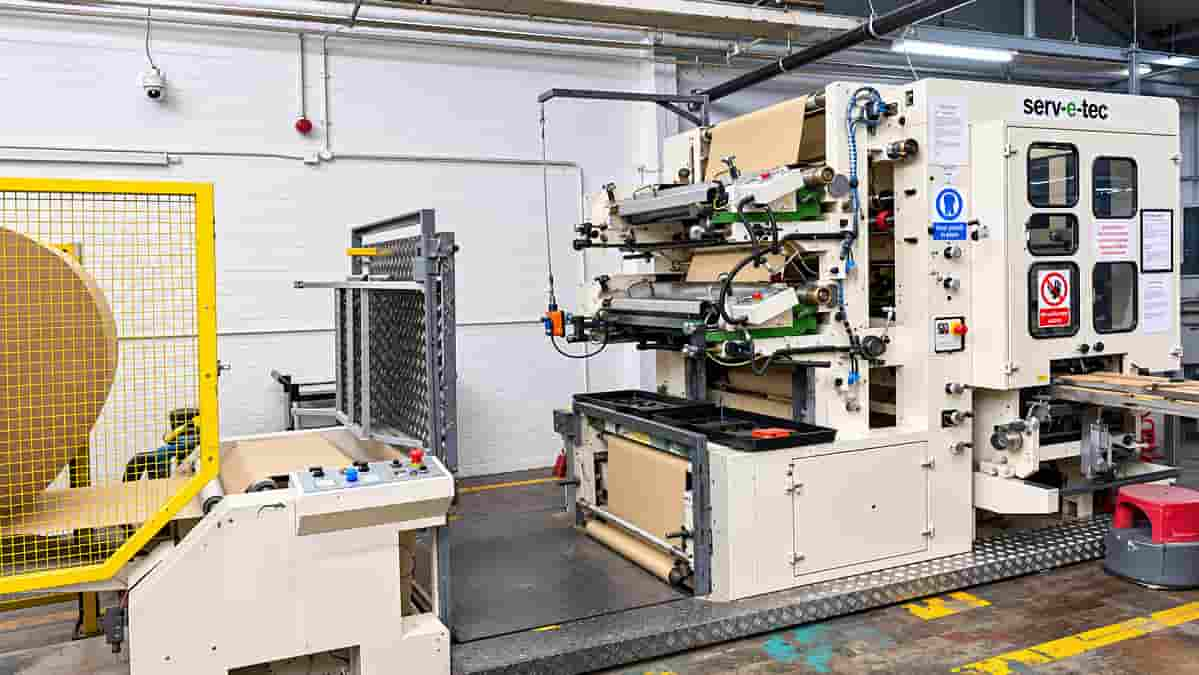
The employee was cleaning rollers on machinery used to emboss logos and designs onto tissue paper before the napkins were folded. During the task, her right hand was drawn into the machine and became trapped for several minutes.
She suffered complete amputations of her little and ring fingers, alongside partial amputations of her index and middle fingers. The injuries also caused increased sensitivity in her dominant hand.
The consequences have extended far beyond the factory floor.
Tasks that many people take for granted have become difficult. Cooking is now a struggle, while cycling, knitting and gardening are activities she can no longer enjoy as before.
After 11 years operating machinery, the employee has been left with permanent injuries arising from an incident that investigators concluded could have been avoided.
Company fined £80,000 following safety failures
Duni Poppies Limited, based on Cornwall Street in St Helens, pleaded guilty to breaching Regulation 11(1) of the Provision and Use of Work Equipment Regulations 1998.
At Warrington Magistrates’ Court on 3 November 2026, the company was fined £80,000 and ordered to pay £4,756 in prosecution costs.
The court proceedings followed an HSE investigation into the circumstances surrounding the employee’s injuries.
Inspectors established that the machine did not have an interlocked guard preventing access to its dangerous print rollers. This meant employees could come into contact with moving components while the equipment was operating.
The findings raise serious concerns about the effectiveness of the company’s machinery safety arrangements.
Under the Provision and Use of Work Equipment Regulations 1998, employers must take effective measures to prevent access to dangerous machinery parts. Appropriate guarding is one of the fundamental protections expected in manufacturing environments.
Previous enforcement action raises further questions
One of the most significant findings was that the company had previously faced enforcement action concerning other machinery guarding issues.
According to the HSE, those interventions occurred in 2010, 2014, 2019 and 2021.
The earlier enforcement actions were not necessarily connected to the specific machine involved in this accident.
Nevertheless, their existence highlights the importance of employers reviewing safety arrangements across their operations rather than addressing hazards only when they are identified during inspections.
Manufacturing facilities frequently rely on machinery capable of causing serious injuries within seconds.
Moving rollers, cutting equipment, conveyors and other powered components can present substantial risks when guarding is missing, inadequate or incorrectly maintained.
Workers should never be expected to rely solely on their experience or reactions to avoid contact with dangerous equipment.
HSE says accident could have been prevented
HSE inspector Gemma Feerick described the incident as avoidable and said that appropriate risk assessment and safety measures could have prevented the worker’s injuries.
The regulator emphasised that employers must take effective action to prevent employees accessing dangerous moving machinery. In this case, an appropriate interlocked guard would have prevented access to the rollers while they were operating.
The HSE’s machinery safety guidance explains the importance of guarding, equipment maintenance, suitable risk assessments and safe working procedures.
These obligations apply across manufacturing sectors, including food production, packaging, engineering, textiles and industrial processing. The case demonstrates why employers must continually assess the risks associated with routine activities such as cleaning and maintenance, not simply normal production.
What rights do UK factory workers have?
Every worker should be able to carry out their duties without being unnecessarily exposed to foreseeable dangers.
Under the Health and Safety at Work etc. Act 1974, employers have duties to protect the health, safety and welfare of employees, so far as is reasonably practicable. These responsibilities include providing safe equipment, suitable training, appropriate supervision and effective systems of work.
Employees operating potentially dangerous machinery should understand how equipment is isolated before cleaning, maintenance or repairs.
Where guards are missing or machinery appears unsafe, concerns should be reported promptly.
Workers can find further information through The Workers Union’s employment and workplace guidance. Employees should also know that health and safety law provides protections in certain circumstances where they raise safety concerns or take appropriate action in response to serious and imminent danger.
The precise protections depend on employment status and the circumstances involved.
What should workers do if machinery appears unsafe?
Workers who encounter unsafe machinery should not ignore the risk or assume that a dangerous practice is acceptable simply because it has been followed for years.
Important precautions include:
- Report missing or damaged guards. Notify a supervisor or responsible manager immediately.
- Follow safe isolation procedures. Machinery should be made safe before cleaning, maintenance or clearing blockages.
- Request appropriate training. Employees should understand the hazards associated with the equipment they operate.
- Keep records of safety concerns. Written reports can help establish when problems were identified and what action followed.
- Seek advice when concerns remain unresolved. Workers may contact the HSE or obtain appropriate employment advice.
The HSE’s guidance on reporting workplace safety concerns explains how employees can raise concerns about potentially unsafe working conditions.
Where an accident has already occurred, workers should also ensure it is recorded and seek appropriate medical attention.
The real cost of workplace accidents
The £80,000 fine represents a substantial financial penalty for the employer. However, the consequences for the injured worker cannot be measured by the amount imposed by the court.
She must now live with permanent physical injuries and the loss of activities that formed part of her everyday life. Her experience illustrates why workplace safety should never be treated merely as an administrative exercise or a collection of compliance documents.
Effective risk assessments, correctly installed safety guards and proper maintenance procedures can mean the difference between completing a normal working day and suffering an injury that changes someone’s life forever.
The prosecution also sends a wider message to Britain’s manufacturing sector.
Experience does not eliminate danger. Routine tasks are not automatically safe. Previous warnings must lead to meaningful improvements.
Protecting workers must remain the priority
The conviction of Duni Poppies Limited demonstrates the consequences of failing to prevent access to dangerous machinery.
It also reinforces the importance of effective enforcement and employers taking action before workers are seriously injured. For thousands of factory employees operating industrial equipment across the UK, the case is a reminder that workplace safety protections exist for a reason.
No employee should have to sacrifice their health, independence or quality of life simply to earn a living.
The central lesson is unmistakable: machinery safety failures can cause permanent harm, and employers must act before preventable accidents become life-changing tragedies.