Millions of UK workers are set to receive a pay rise within weeks as statutory pay floors increase in April. The headline figure is clear: the National Living Wage will rise from £12.21 to £12.71 an hour, a 50p uplift that ministers say is designed to improve living standards. Yet behind the welcome increase lies a more complex question for 2026 and beyond: what does this mean for the average wage rise, and how sustainable is it for employers already under strain?
What is changing in April
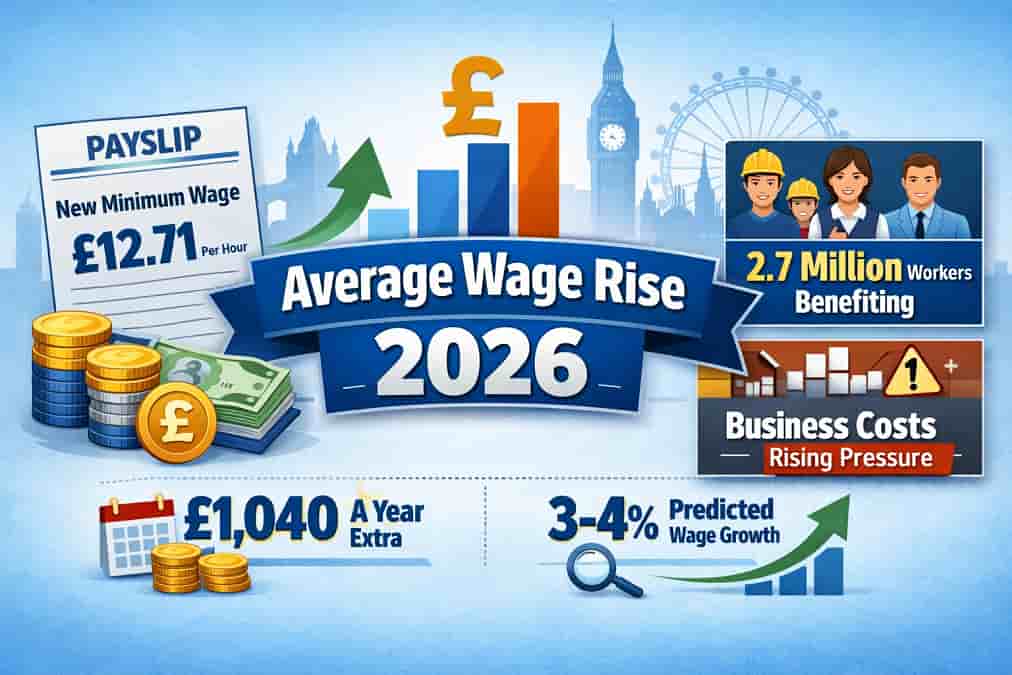
From April, workers aged 21 and over will see the National Living Wage increase by 50p an hour. For someone working a standard 40-hour week, this moves annual pay from approximately £25,397 to £26,437. In practical terms, that is an extra £1,040 a year before tax.
Younger workers also see notable increases. Those aged 18 to 20 will receive an 85p hourly rise, taking pay from £10.00 to £10.85 an hour. For under-18s and apprentices, the hourly rate increases by 45p, moving from £7.55 to £8.00. According to Treasury estimates, around 2.7 million people will benefit directly from these changes.
For many households facing higher food, energy, and housing costs, this additional income will be felt immediately. It also narrows, slightly, the gap between the lowest-paid roles and median earnings across the economy.
The average wage rise for 2026: what can workers expect?
While the minimum wage increase is fixed, the average wage rise across the economy in 2026 is less certain. Current projections from economic analysts suggest average earnings growth may sit between 3% and 4%, assuming inflation continues to ease. That would place the minimum wage rise—just over 4%—slightly above the anticipated national average.
This matters because minimum wage adjustments often set a reference point. Employers paying just above the legal minimum may feel pressure to adjust pay bands to maintain differentials. In some sectors, particularly retail, hospitality, and care, the April increase could ripple upwards, influencing pay reviews later in the year.
However, this is not guaranteed. Many businesses argue that rising statutory pay, combined with higher national insurance contributions and operating costs, limits their ability to go further. The risk, they say, is that wage growth becomes compressed at the lower end rather than lifting pay across the board.
Business concerns and hiring decisions
Business groups have warned that the April increase adds to existing cost pressures. Energy prices, rent, and borrowing costs remain elevated for many employers, particularly small and medium-sized firms. As a result, some companies may respond cautiously.
There are concerns that employers could delay job recruitment, reduce hours, or introduce temporary hiring freezes to manage budgets. While such measures do not negate the benefit of higher hourly pay, they can affect overall income security for workers if hours become less predictable.
From a broader economic perspective, policymakers are balancing two objectives: ensuring work pays, while avoiding unintended consequences for employment levels. The April rise reflects confidence that the labour market can absorb higher pay floors, but the full impact will become clearer over the next year.
Checking you are paid correctly
With new rates approaching, it is important for workers to ensure they are being paid in line with the law. The government provides an online National Living Wage calculator that allows individuals to check their age, role, and pay against current legal requirements.
If you believe you are being underpaid, there are two main routes to address the issue. The first is an informal approach: raising the matter with your employer and requesting that pay is corrected and backdated where appropriate. Many issues are resolved at this stage, particularly where errors are administrative rather than deliberate.
The second option is to report the issue anonymously to HMRC, which is responsible for enforcing minimum wage law. Reports can be made online and do not require you to confront your employer directly.
What this means for UK workers
For millions, the April increase represents a tangible improvement in weekly and monthly income. It also signals continued political focus on low pay as a cost-of-living issue. Yet it does not remove wider uncertainties around job security, hours, or progression.
At The Workers Union, the focus remains on ensuring UK workers understand their rights, their pay, and the practical steps available when something does not look right. Knowledge, in this context, is as important as the headline figures.
As 2026 approaches, the key question will be whether wage growth can broaden beyond the legal minimum, supporting living standards without slowing opportunities. The April rise is a clear marker—but not the final word.