
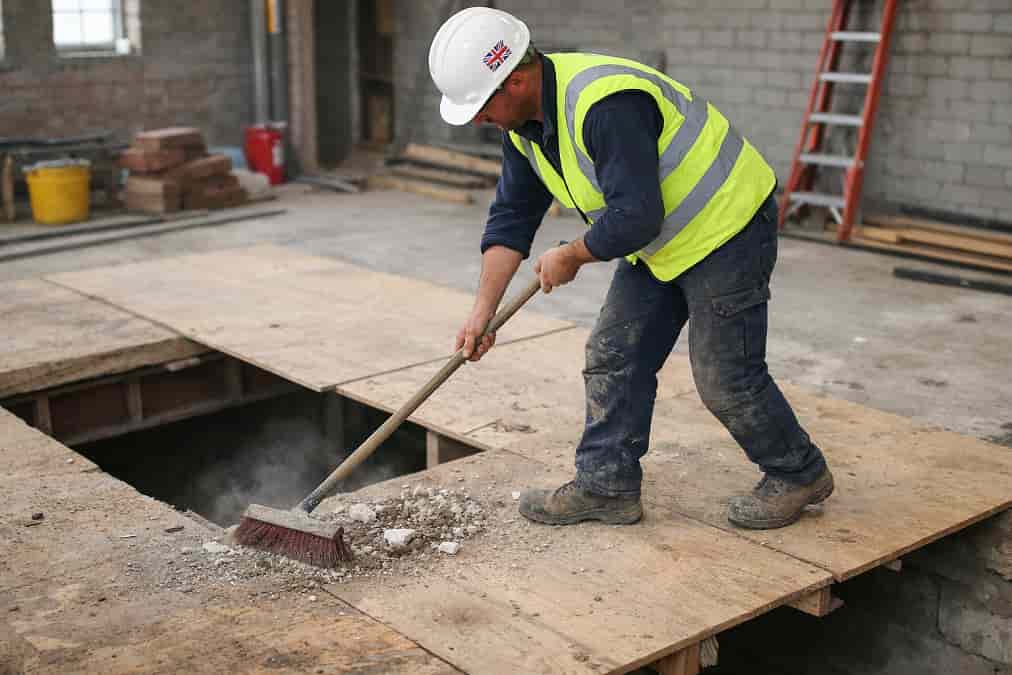
A construction company based in Cumbria has been fined £60,000 after a serious workplace incident in which an employee was knocked through an unprotected stairwell opening and fell onto a concrete floor below, suffering life-changing injuries.
Ace Infra Ltd admitted responsibility following the incident, which occurred on 25 April 2024 at its site at NW Auctions in Milnthorpe, Cumbria. The case highlights ongoing concerns around safety standards on construction sites and reinforces the legal duties placed on employers to protect workers from foreseeable risks.
The injured worker, Mark Jones, a general labourer, was carrying out routine end-of-day cleaning duties on the first floor of the building. Earlier that same day, wooden boards had been laid across a large floor opening where a staircase was due to be installed. However, the boards failed to fully cover the opening, and no edge protection, barriers, or warning signage had been installed to reduce the risk of a fall.
Crucially, Mr Jones had not been given any instructions or briefing about the hazard, nor was he made aware of how to work safely around the partially covered opening. The court heard that no site supervisor or manager was present at the time of the incident.
While sweeping along the boards, a newly constructed wall beside Mr Jones collapsed without warning. The collapse caused him to lose his balance and fall from height through the exposed gap, dropping between 2.5 and three metres onto the concrete floor below.
Mr Jones sustained multiple fractures and a dislocated shoulder. He spent a month in hospital recovering from his workplace injuries, with the court acknowledging the severity of the physical and emotional impact of the incident.
An investigation by the Health and Safety Executive found that the risk of falling through the floor opening had not been properly assessed or controlled. No preventative measures had been put in place, despite the clear and foreseeable danger posed by the incomplete covering of the stairwell opening.
The investigation also confirmed that Mr Jones had not received suitable information, instruction, or training relating to working at height on the site. Inspectors noted that the absence of supervision and a failure to implement basic safety controls significantly increased the risk of serious injury.
Under established guidance on working at height, employers are required to take appropriate precautions to prevent falls that could result in injury. This includes securing or guarding floor openings and ensuring workers understand the risks present in their working environment.
Ace Infra Ltd, of 31 St James Drive, Burton, Carnforth, Cumbria, pleaded guilty to breaching Regulation 6(3) of the Work at Height Regulations 2005. The regulation requires employers to ensure that suitable and sufficient measures are taken, so far as reasonably practicable, to prevent falls from height.
At Lancaster Magistrates Court on 23 December 2025, the company was fined £60,000. It was also ordered to pay £4,799.44 in prosecution costs and a £2,000 victim surcharge.
HSE Inspector Derek McLauchlan said that the incident should serve as a warning to the wider construction sector. He emphasised that work at height remains one of the most significant causes of serious injury and fatalities in the industry and requires thorough planning and implementation of safety controls.
He noted that the injuries sustained were severe and that the outcome could easily have been far worse. The incident, he said, was entirely preventable with the right safeguards, training, and supervision in place.
The prosecution was brought by HSE Enforcement Lawyer Chloe Ward, supported by Paralegal Officer Zahra Shafique.
Jonathan Morgan, spokesperson for The Workers Union, said the case reflects a worrying trend. He stated that there has been a noticeable increase in serious construction-related injuries over the past year and stressed that employers must take stronger action to ensure workers are properly protected.
For UK workers, the case underlines the importance of clear risk assessments, visible safety controls, and effective site supervision. It also demonstrates that failures in basic safety planning can have devastating consequences, both for individuals and for businesses that fall short of their legal responsibilities.