Meaning of Employee and Employer
This page explains the meaning of employee and employer in the United Kingdom, clarifying how the two roles differ and how they interact in day‑to‑day working life. We set out core definitions, practical examples, and the key differences between employee and employer, placing UK workers at the heart of the guidance. Our aim is to provide clear, neutral information that helps you understand obligations, protections and expectations in modern workplaces.
Definitions in plain English
Employee: A person who works under a contract of employment, providing work personally and being paid for that work.
Employer: A person or organisation that engages people to perform work, directs how work is done, and provides pay and a safe working environment.
Difference between employee and employer
At a glance, the difference between employee and employer includes:
- Control: Employers decide what work is done and how; employees carry out the work.
- Pay and benefits: Employers pay wages/salary and manage benefits; employees receive them.
- Liability and risk: Employers hold most legal and financial responsibilities for the business; employees have responsibilities for conduct and performance.
- Contracts: Employers issue contracts and policies; employees agree to and follow them.
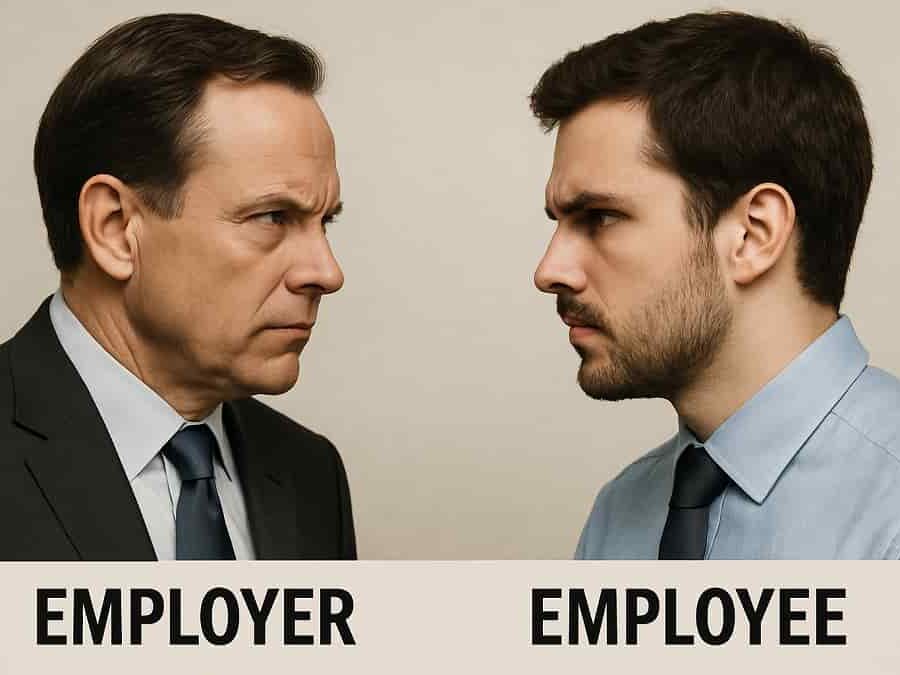
Employer to Employee Responsibilities
Common employer to employee responsibilities include the following:
| Area | Typical employer duties |
| Pay and terms | Provide written terms, pay on time, follow minimum wage and holiday rules. |
| Health and safety | Assess risks, provide training/equipment, keep workplaces safe. |
| Equality and fairness | Avoid discrimination, handle grievances fairly, support reasonable adjustments. |
| Working hours | Follow working time rules, rest breaks, and record keeping. |
Employee responsibilities
Employees should perform work with reasonable care and skill, follow lawful and reasonable instructions, maintain confidentiality, and meet standards of conduct and attendance.
Practical examples
Who are the employers? They can be limited companies, sole traders, partnerships, charities, or public bodies such as councils and NHS trusts.
Who are the employees? Individuals with a contract of employment—full‑time, part‑time, fixed‑term, or apprentices—who personally perform work for pay.
FAQs
An employee is a person working under a contract of employment; an employer is the individual or organisation that hires and directs them.
The employer controls and pays for work; the employee carries out the work under agreed terms.
Any person or organisation that hires staff—private businesses, charities, and public sector bodies.
Pay correctly and on time, keep workplaces safe, prevent discrimination, and follow working time rules.
We provide clear, neutral guidance to help workers understand rights and responsibilities at work.

I want to join
Join us today – it’s easy!
You’re just a few clicks away from investing in a better future for working people

I’m a member
All the support and advice you need
Log in to your account. Full access to your resources, contacts, personal dashboard, and instant advice.