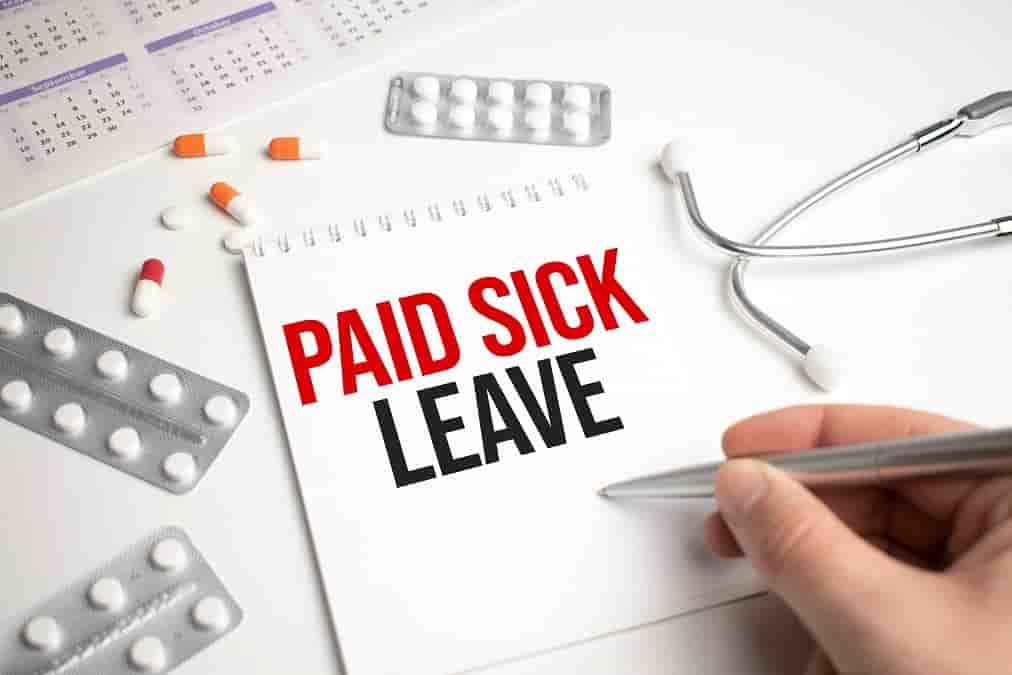
Ex cabinet ministers Priti Patel and Sir Robert Buckland have urged the government to tackle sick pay.
In an article published in last week’s Times, they set out their ideas for a sick pay system which, they say, will help people to ‘get back on their feet and back to work.’
The current statutory sick pay (SSP) provision covers workers on an average salary of £123 a week or more who have been sick for at least four days in a row – including non-working days. Workers must also be classified as ‘employees’ to qualify. However, Buckland and Patel argue that as many as 2 million people do not meet this criteria. Meanwhile they say, 10 million people only qualify for sick pay after three days, as their employers do not offer company sick pay schemes.
The government considered making changes to SSP back in 2019, when the results of a consultation revealed that 75 percent of businesses supported plans to include workers below the current lower earnings threshold in the scheme. Despite this feedback, the plans were not taken forward.
In response, Buckland and Patel wrote: ‘The government has an opportunity to grasp the nettle and take forward these popular reforms. A modest investment in supporting those affected by ill heath will save businesses money by reducing the impact and risk of longer-term absence, help efforts to support recruitment, retention and employee morale, and provide a boost to our economy.’
Buckland and Patel’s article was welcomed by Amanda Walters, the director of the Safe Sickpay Campaign. Mrs Walters said: ‘Extending the UK’s sick pay system to every worker, from day one of an illness, will benefit workers and the wider economy.’
‘Our sick pay system should be a world leader in supporting workers and businesses, but one in three workers can’t pay the bills when they get sick. This is causing some people to leave the job market entirely, despite wanting to work.’
Data published by the Office for National Statistics (ONS), reveals that the number of days lost by UK workers to sickness hit a record high in 2022. The ONS said that about 185.6 million days were lost – a 25 percent rise on 2021 figures and the highest figure on record.
The Workers Union Says…
It’s clear that the gap in statutory sick pay provision is making life very difficult for working people. For those on lower incomes, SSP is an essential lifeline if sickness strikes. But lowering the entitlement threshold is only the beginning of the debate. We need to have an honest conversation about company sick pay policies, and look at ways in which they can be extended to cover working people in their times of need.