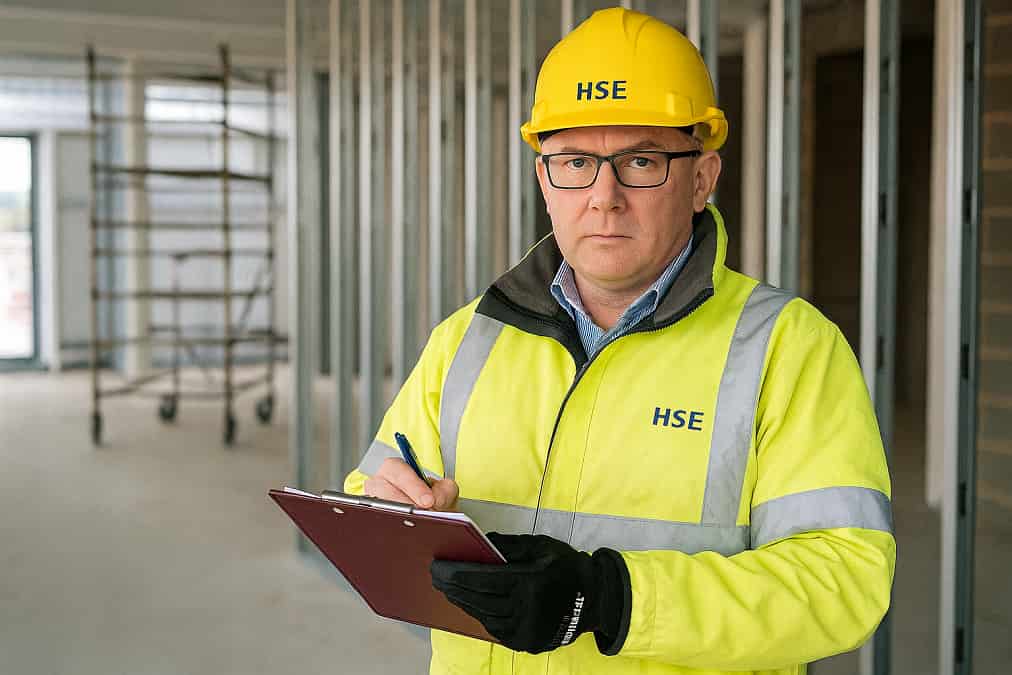
In an incident that has shaken both the local community and the wider UK workforce, the Health and Safety Executive (HSE) has fined A J Wells & Sons £200,000 following a serious workplace accident that resulted in an employee losing his lower leg. The HSE released details on 28 November, stressing that the event stands as a stark reminder of the consequences when essential safety measures fall short.
The accident occurred on 15 August 2023 at the company’s Newport site on the Isle of Wight. The employee had been manually manoeuvring a heavy trolley loaded with around 30 sheet metal pieces, each weighing more than 20kg. As he moved the trolley, the load toppled and fell onto his legs, causing injuries so severe that medics were forced to amputate his lower limb. For workers across the UK, this devastating outcome highlights a scenario that should never unfold when proper safeguards are in place.
After investigating, HSE specialists concluded that the task was not being carried out safely and that essential control measures were missing. According to the regulator, the case illustrates the absolute necessity of thorough, ongoing risk assessments and proactive safety management. These assessments are not mere paperwork—they are integral mechanisms that protect working people day in and day out.
The HSE has urged employers to take their responsibilities seriously: ensuring that known risks are controlled, tasks properly planned, and employees supported with training, guidance and safe systems of work. The Workers Union echoes this sentiment, Spokesperson J Morgan said “the safety and dignity of UK workers must always remain at the fore”.
Commenting on the wider implications of safety oversight, Phil Pinnington, head of audit and consultancy at the British Safety Council, noted that while HR teams do not typically write risk assessments, they serve as a crucial bridge between safety planning and day-to-day behaviours. He highlighted that HR plays a pivotal role in ensuring that workers understand expectations, receive training, feel equipped to challenge unsafe conditions and uphold a culture that supports continuous safety improvement.
Pinnington explained that manual handling risk assessments should be more than compliance tasks. They must become living, evolving tools shaped by real-world working patterns and updated as risks develop. Managers and safety specialists may lead on technical content, but HR ensures that these processes are woven into organisational culture, accountability frameworks and communication channels.
Ruth Wilkinson, head of policy at the Institution of Occupational Safety and Health, reinforced the legal responsibilities employers face under UK health and safety legislation. She stated that employers are obliged to secure the health, safety and welfare of their workforce and anyone else affected by their operations. She emphasised that risk assessments are mandatory and must be documented for organisations employing five or more staff. Their purpose is clear: identify what may cause harm, evaluate the risks, and eliminate hazards wherever possible.
Both experts agree that a strong safety culture—supported by proper training, supervision and clear communication—is essential to prevent life-changing injuries like this one. Their guidance aligns with the core mission of The Workers Union: to champion safer working environments, promote awareness, and ensure that no UK worker faces avoidable danger while simply doing their job.
The HSE’s findings serve as a reminder to employers nationwide. Safety is not optional. It is a duty, a legal requirement, and a fundamental obligation owed to every worker who steps through the door.