A quiet but significant shift is beginning to ripple across UK workplaces. As fuel and power pressures intensify, more employers are turning to “work from home” instructions—not as a perk, but as a necessity. For many workers, the question is no longer whether remote working is possible, but what their rights and obligations actually are when told to stay away from the workplace.
At first glance, the instruction may seem straightforward. But beneath it sits a complex mix of employment law, contractual terms, and practical realities that could affect millions of UK workers.
Why this is happening now
Rising fuel costs, supply chain instability, and intermittent energy concerns are forcing businesses to rethink operations. Some employers are attempting to reduce travel, lower overheads, and maintain productivity by shifting staff to home working arrangements.
But unlike the rapid shift seen during the pandemic, today’s approach is more fragmented—and in some cases, less clearly defined.
Can your employer tell you to work from home?
The starting point is your employment contract. If it includes a flexibility clause allowing changes to your place of work, your employer may have the right to instruct you to work from home temporarily.
However, if your contract clearly states a fixed workplace with no flexibility, the situation becomes more nuanced. Employers cannot simply impose changes without agreement unless there is a clear business necessity and they act reasonably.
In practical terms:
- Temporary changes during exceptional circumstances may be lawful
- Permanent changes usually require consultation and agreement
- Any instruction must still be reasonable and safe
Your right to a safe working environment
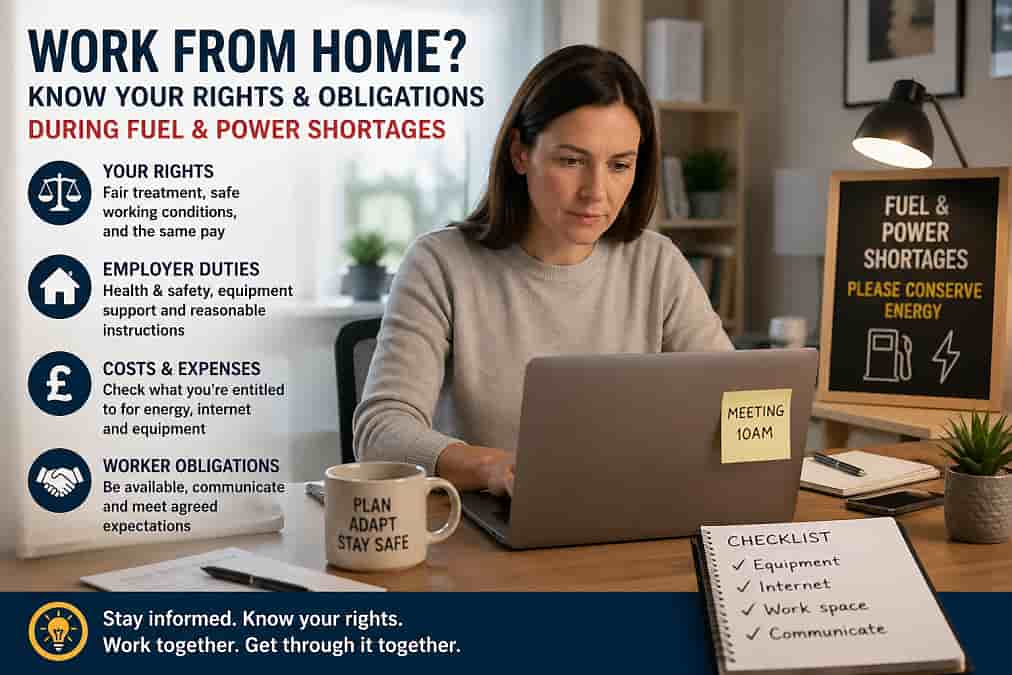
One of the most overlooked aspects of home working is health and safety. Even when working remotely, employers still have a duty of care.
This means they should:
- Assess risks associated with home working
- Provide appropriate equipment where necessary
- Ensure workloads and expectations remain manageable
If your home setup is unsuitable—for example, no proper desk, unsafe conditions, or lack of necessary equipment—you have grounds to raise concerns.
Who pays for energy and equipment?
With power shortages part of the issue, this question is becoming increasingly important.
There is no automatic legal requirement for employers to cover increased home energy costs unless stated in your contract or company policy. However, many employers offer:
- Equipment such as laptops, monitors, and chairs
- Contributions or allowances for utilities
- Reimbursement for specific work-related expenses
Workers should not be left significantly out of pocket as a result of employer decisions. If costs become unreasonable, this may need to be addressed formally.
What if you cannot work from home?
Not every role can be done remotely. And even where it can, not every worker has the means to do so.
If you genuinely cannot work from home due to:
- Lack of space
- Poor internet performance or access
- Caring responsibilities
- Health issues
You should inform your employer immediately. They are expected to consider reasonable alternatives, which may include adjusted duties, hybrid arrangements, or temporary leave options.
Pay, hours, and expectations
A key concern for many workers is whether pay changes when working from home.
The short answer is no—your pay and contractual hours should remain the same unless a formal agreement is made. Employers cannot reduce wages simply because you are working remotely.
However, expectations around availability and productivity must still be reasonable. Monitoring practices should be proportionate and not intrusive.
What about refusals?
Refusing to follow a reasonable instruction to work from home could lead to disciplinary action. But the keyword here is “reasonable.”
If the instruction:
- Creates unsafe working conditions
- Imposes unfair costs
- Conflicts with your personal circumstances
You have the right to challenge it.
This is where clear communication becomes critical. Raising concerns early and documenting them can help prevent escalation.
The Workers Union perspective
The Workers Union is already seeing an increase in enquiries linked to remote working disputes tied to operational pressures.
For UK workers, the key message is clear: flexibility cuts both ways.
Employers can adapt to changing conditions, but they must do so fairly, lawfully, and with proper consideration of the individual worker’s situation.
At the same time, workers are expected to cooperate where reasonable—but not at the expense of their safety, financial stability, or wellbeing.
What this means for the months ahead
This issue is unlikely to fade quickly. If anything, it signals a longer-term shift in how workplaces respond to external pressures.
As highlighted in modern search evaluation systems, useful and trustworthy information—particularly grounded in real-world scenarios—is increasingly prioritised when helping individuals navigate complex situations . For workers, that means clear, practical guidance will matter more than ever.
The reality is this: working from home is no longer just a benefit. In some sectors, it is becoming a contingency plan.
Understanding your rights now could make all the difference later.