There is no escaping it. Turn on the television, scroll through your phone, or open a news app and the tone feels strikingly familiar: rising costs, job uncertainty, global instability, and pressure building across workplaces. For many UK workers, that constant stream of “doom and gloom” is not just background noise – it is shaping mood, motivation, and mental resilience.
And yet, quietly, a different conversation is emerging inside workplaces. One that is less about crisis and more about coping. One simple idea keeps resurfacing: what if the workplace itself became a little more human again?
For some employers and workers alike, that conversation is leading to an unexpected place – pets at work.
Why morale matters more than ever
There is now growing recognition that morale is not a soft issue. It is directly linked to productivity, retention, and long-term wellbeing. When workers feel overwhelmed, disengaged or anxious, performance inevitably follows.
The modern workplace is asking more of people than ever before. Hybrid working, performance tracking, cost-of-living pressures, and job insecurity all combine into a daily mental load. Against that backdrop, even small changes can have a measurable impact.
Search systems themselves now prioritise content that genuinely helps people complete tasks and improve outcomes, not just information that exists for its own sake . In the same way, workplaces are being judged not just on output, but on how effectively they support the people within them.
The rise of pets in the workplace
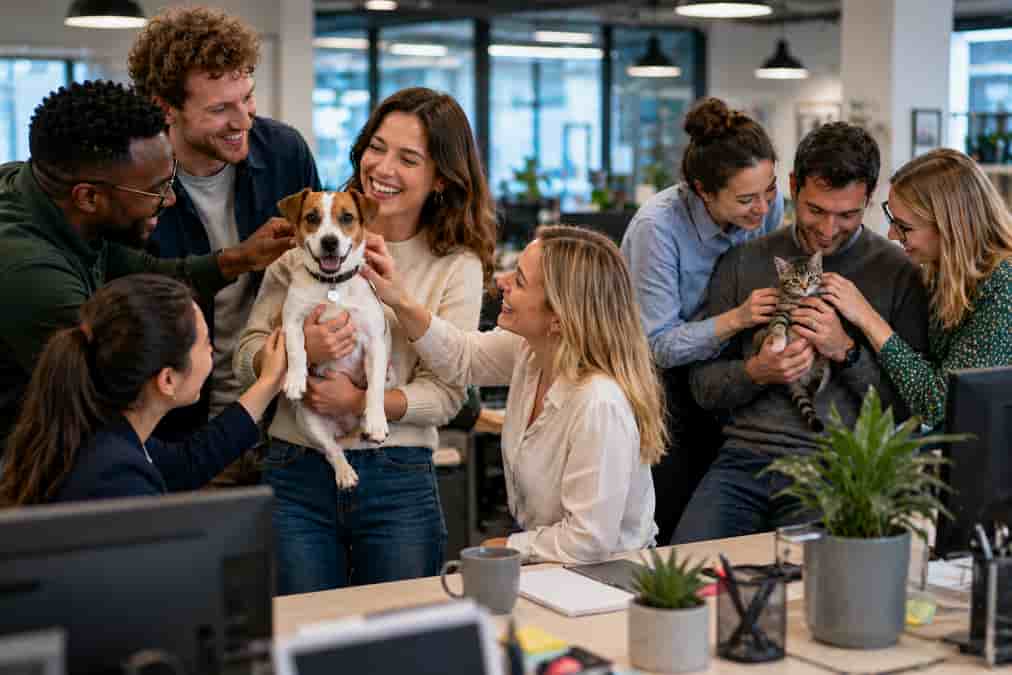
The idea of bringing pets into work is not entirely new, but it has gained renewed attention in recent years. From small offices to larger organisations experimenting with wellbeing policies, dogs in particular are becoming a more common sight.
But this is not simply about novelty. There are practical and psychological reasons why the concept is gaining traction.
Mental health support in a simple form
For many workers, stress is not occasional – it is constant. Having a pet present can create moments of calm throughout the day.
Interaction with animals has been linked to reduced stress levels, lower blood pressure, and improved mood. A short break to walk a dog or simply sit with a pet can interrupt the cycle of anxiety that builds during a demanding workday.
It also creates a subtle shift in environment. Offices feel less clinical, less rigid, and more approachable. That change alone can make a difference to how workers experience their day.
A natural morale boost
There is something disarming about a dog walking through an office or a cat quietly resting nearby. It breaks routine in a positive way.
Workers often report increased social interaction when pets are present. Conversations happen more naturally. Teams connect more easily. For new starters or those feeling isolated, this can be particularly valuable.
In a climate where many feel disconnected, that sense of shared experience can rebuild morale in a way that formal initiatives sometimes fail to achieve.
Practical benefits that are often overlooked
Beyond morale and mental health, there are practical advantages that are worth considering.
For workers, bringing a pet to work can remove the stress of arranging care during the day. Dog owners, for example, no longer need to rush home or worry about long hours alone for their animal.
For employers, it can support retention. A workplace that shows flexibility and trust often stands out, particularly when workers are weighing up options in uncertain times.
However, it is not without challenges. Allergies, safety considerations, and suitability of the working environment all need careful thought. Clear policies are essential to ensure that what is intended as a positive change does not create unintended issues.
Not every workplace – or every worker
It is important to be realistic. A pet-friendly policy will not work everywhere.
Industrial environments, customer-facing roles, or high-risk settings may not be appropriate. Equally, not every worker will feel comfortable around animals.
This is not a universal solution. It is one option among many in a broader conversation about how workplaces can better support people.
A wider question for UK workers
What this trend really highlights is something bigger.
Workers are asking for environments that recognise them as individuals, not just output. They are looking for practical ways to manage stress at work, maintain balance, and feel valued.
Whether it is flexible working, mental health support, or even something as simple as bringing a pet into the office, the direction of travel is clear: workplaces that adapt are more likely to keep people engaged.
So, would you?
It is a simple question, but one that speaks volumes about where we are right now.
Would bringing your pet into work make your day easier? Would it lift your mood? Or would it add another layer of distraction?
For some, the answer will be an immediate yes. For others, a firm no. But the fact the question is being asked at all reflects a shift in how work is being redefined.
At a time when headlines often feel relentlessly negative, even small, human-centred ideas can offer a different perspective.
And perhaps that is the point. In a cycle dominated by pressure and uncertainty, it may not take a major overhaul to make work feel better. Sometimes, it starts with something as simple as a wagging tail at your desk.
The Workers Union continues to place UK workers at the centre of these conversations, focusing on practical, realistic ways to improve everyday working life – not just in theory, but in practice.