A company has been fined £800,000 after a worker suffered burns to her face, hands and legs while disposing of pyrotechnic waste, in a case that exposed an unsafe workplace practice that had reportedly been used informally for years.
The 36-year-old woman was working at GMK Limited‘s Faldingworth site in Lincolnshire when waste pyrotechnic material unexpectedly ignited.
An investigation by the Health and Safety Executive found there was no suitable risk assessment or safe system of work for the disposal method being used.
The worker had also not been provided with suitable personal protective equipment that the regulator said could have prevented or significantly reduced her injuries.
Perhaps most concerning for workers is what investigators discovered afterwards.
The unsafe disposal method was not a one-off mistake.
It had reportedly been used on numerous occasions over several years without appropriate assessment, controls or oversight.
The case provides a stark warning for workplaces across Britain: something does not become safe simply because workers have been doing it for years without somebody getting hurt.
Worker suffered burns after material suddenly ignited
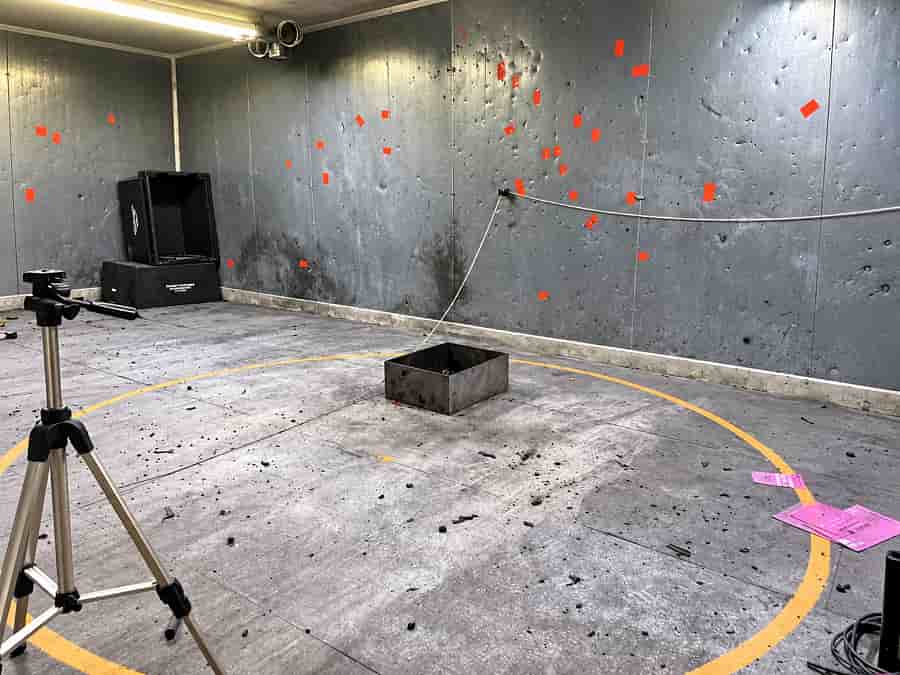
The incident happened on 10 January 2023 at GMK Limited’s manufacturing facility in Faldingworth.
The woman was working alongside a colleague disposing of waste pyrotechnic composition.
According to the Health and Safety Executive’s investigation, the employees were using a metal tray to destroy excess powders.
During the process, pyrotechnic composition came into contact with the hot tray.
It unexpectedly ignited.
The resulting flash caused burns to the woman’s hands, face and legs.
When HSE investigators examined the circumstances surrounding the incident, they identified several significant safety failures.
No suitable risk assessment
One of the most fundamental findings concerned risk assessment.
HSE established that the method being used had no suitable risk assessment and no safe system of work.
That is particularly serious considering employees were handling potentially dangerous pyrotechnic substances.
Risk assessments should identify hazards before somebody is injured and determine what measures are necessary to control those risks.
Workers can read more about why this process matters in our guidance on workplace health and safety.
The importance of proper assessment has also emerged repeatedly in recent enforcement cases.
In September, we reported how a 1.2-tonne crate fell from a forklift and left a worker with life-changing injuries.
That investigation similarly found that a non-standard workplace task had not been adequately assessed, planned or supervised.
The circumstances are different, but the underlying lesson is remarkably similar.
Hazards need identifying before work begins — not after somebody is injured.
Worker wasn’t provided with suitable PPE
HSE also found that GMK Limited failed to provide the injured worker with suitable personal protective equipment.
The regulator concluded that appropriate PPE, if supplied and correctly used, may have prevented or significantly reduced the injuries she suffered.
PPE should never be treated as a substitute for eliminating or properly controlling workplace hazards.
But where risks remain, suitable protective equipment can provide an important additional line of defence.
In a workplace involving potentially explosive or combustible materials, that protection can be particularly important.
Unsafe practice had been used for years
This is arguably the most important part of the prosecution for workers in other industries.
GMK Limited already had an established and recognised procedure for disposing of waste pyrotechnic substances and articles.
But that approved procedure was not being followed when the accident happened.
Instead, according to HSE, an unapproved method had been used informally within the production building.
And it wasn’t new.
Investigators found the method had been used for a number of years and on multiple occasions without proper assessment, controls or oversight.
That should concern employers and workers far beyond the explosives industry.
Workplaces naturally develop routines.
Sometimes employees discover faster or easier ways of completing tasks.
A shortcut may be repeated dozens or hundreds of times without anything going wrong.
Eventually it can become accepted as simply “the way we do things here”.
But previous success does not prove that a method is safe.
We recently reported another case where years of unsafe machinery access were uncovered after a worker suffered life-changing injuries.
In that case, an unauthorised opening had reportedly existed in machinery for years, allowing workers to clear blockages while equipment continued operating.
Both cases illustrate the danger of unsafe practices becoming normalised.
Company was also breaching its explosives licence
The HSE investigation uncovered another significant problem.
Pyrotechnic materials were being stored in areas of the production building that were not licensed for that purpose.
The disposal activity itself had also been undertaken in an unlicensed part of the building.
Industry guidance provides established procedures for the safe management and disposal of explosive materials.
HSE concluded that it was reasonably practicable for the company to ensure disposal took place within the designated area using prescribed methods.
In other words, an approved alternative already existed.
£800,000 fine
GMK Limited, based in Fareham, Hampshire, pleaded guilty to breaching Section 2(1) of the Health and Safety at Work etc. Act 1974 and Regulation 7 of the Explosives Regulations 2014.
At Birmingham Magistrates’ Court on 2 October 2026, the company was fined:
£800,000
It was also ordered to pay £10,306 in costs.
HSE inspector Philip Smith described the failures as particularly concerning for a leading company.
He said the woman’s injuries could have been avoided through safe working practices and appropriate PPE, adding that the scale of the fine should send a clear message that failing to protect workers can result in enforcement action.
The complete findings can be read in the official HSE prosecution report.
“We’ve always done it this way” is not a safety system
There is a wider lesson here for workers across manufacturing, warehouses, construction, engineering and other industrial environments.
Unsafe practices can gradually become normal.
A worker may initially be told that a shortcut is temporary.
Then it happens again.
New employees see experienced colleagues doing it and assume it must be acceptable.
Supervisors become accustomed to seeing it.
Eventually an unofficial practice can become part of everyday work despite never having been properly assessed.
That is exactly why workplace safety cannot depend solely on experience or habit.
Employers need to examine how work is actually being carried out, rather than relying exclusively on what written procedures say should happen.
We saw a similar principle following a serious dumper-truck accident where a worker suffered crushing injuries. Our report, Dumper truck overturn leaves worker seriously injured after company told drivers not to wear seat belts, highlighted what can happen when accepted workplace behaviour conflicts with established safety precautions.
A procedure sitting inside a safety manual offers little protection if everyday working practices ignore it.
Workers should be able to question unsafe practices
Workers are often closest to workplace hazards.
They see machinery operating every day.
They know which procedures are followed and which are routinely bypassed.
They may also notice when production pressures, staffing shortages or convenience begin encouraging unsafe shortcuts.
That makes workers an essential part of workplace safety.
Employees should feel able to raise concerns when a task appears unsafe, when the correct equipment is unavailable or when established procedures are being ignored.
Those concerns should be taken seriously before an accident occurs.
The Workers Union continues to encourage workers to challenge situations where they reasonably believe their health or safety could be placed at risk.
Nobody should feel pressured to continue a dangerous task simply because colleagues have performed it previously without injury.
Safety procedures must work in the real workplace
The £800,000 fine imposed on GMK Limited is substantial.
But the financial penalty should not become the sole focus of this case.
A worker went to work and suffered burns to her face, hands and legs.
Investigators subsequently identified an unsafe method that had reportedly been used repeatedly over several years.
An approved disposal procedure already existed.
Suitable PPE could have reduced or prevented the injuries.
And the dangerous activity was taking place in an area that was not licensed for it.
Those findings provide a straightforward lesson for every workplace.
Risk assessments must reflect reality.
Safe systems of work must actually be followed.
Workers must receive appropriate protective equipment.
And when unofficial shortcuts begin becoming normal working practices, somebody needs to challenge them.
Because “we’ve always done it this way” is never evidence that something is safe.