A major chemicals manufacturer has been handed a substantial £3.8 million fine following two serious workplace incidents that left one worker with life-changing injuries and exposed significant failings in workplace safety standards. The case raises urgent questions for UK workers about employer responsibility, risk management, and the real-world consequences when safety systems fall short.
The penalty follows investigations into incidents at Industrial Chemicals Limited (ICL), where workers were exposed to highly corrosive substances due to inadequate controls, poor equipment, and a lack of proper planning. For those working across manufacturing, logistics, and industrial sectors, the details serve as a stark reminder of the risks that can exist when safety is not prioritised.
Life-changing injury highlights systemic failures
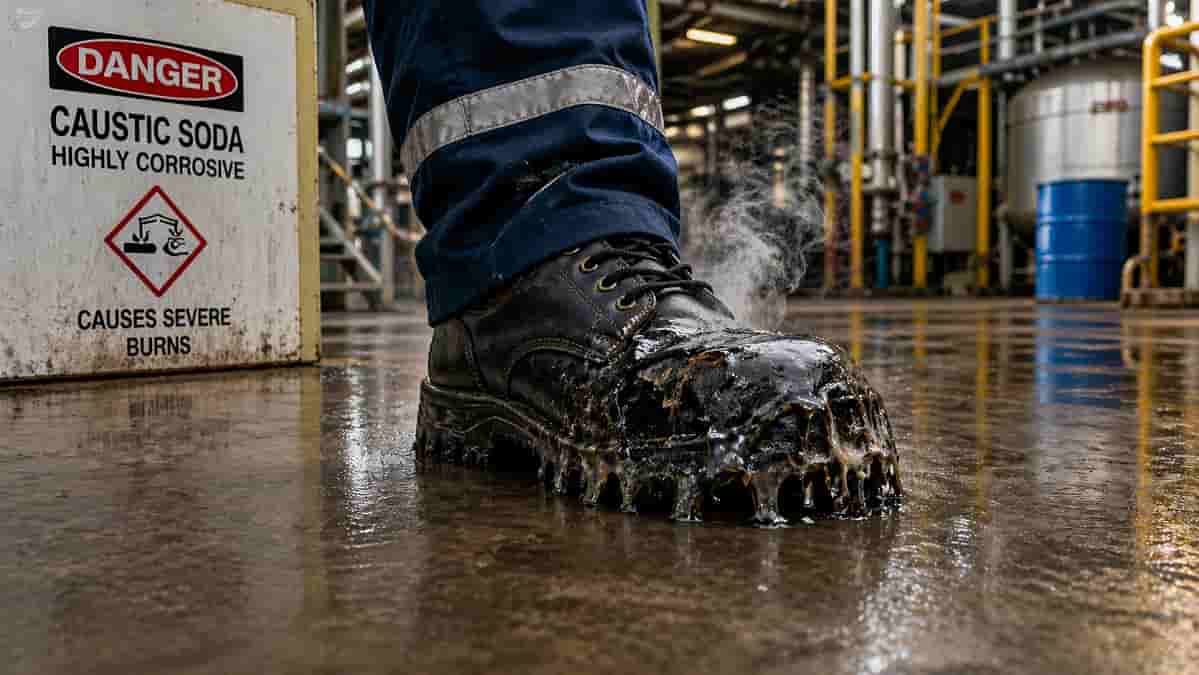
The most serious incident occurred in December 2019 at the company’s West Thurrock site. Michael Bartholomew, then working as a chemical loader, stepped into a puddle believed to contain caustic soda—a highly corrosive substance commonly used in industrial processes.
Despite being issued safety boots, the protective equipment was found to be in poor condition and unsuitable for the hazard. The result was devastating. Mr Bartholomew suffered severe burns, ultimately leading to the amputation of his leg below the knee. He has not returned to work since.
His personal statement reveals the profound impact on his life, not only physically but emotionally and financially. Losing his ability to work and support his family has reshaped his day-to-day existence, removing independence and limiting time spent with loved ones.
For UK workers, this case underscores a key reality: protective equipment alone is not enough if it is not properly maintained, appropriate for the risk, and supported by effective workplace systems.
Unsafe conditions and lack of control measures
The investigation by the Health and Safety Executive (HSE) uncovered widespread safety issues at the site. These included:
- Multiple leaks of hazardous substances from equipment and infrastructure
- No effective systems to manage or clean up chemical spillages
- Poor ground conditions allowing hazardous puddles to form
- Lack of clearly defined and enforced walkways for safe movement
These failings point to a broader issue—not a single mistake, but a pattern of risk that had not been properly addressed.
Second incident reinforces pattern of risk
A separate incident in August 2022 at ICL’s Titan Works site in Grays further reinforced concerns. A worker handling 50% concentration caustic soda suffered burns to his foot after exposure during a manual decanting process. The injuries required skin grafts, although the employee has since returned to work.
Crucially, investigators found there was no formal risk assessment or documented safe system of work for the task. Even more concerning, a safer alternative already existed. An automated dosing system could have eliminated the need for manual handling entirely, significantly reducing the risk of exposure.
Following the incident, changes were introduced, including removing the use of smaller containers and sourcing pre-mixed solutions—steps that could have prevented the injury in the first place.
Legal outcome and wider implications
ICL pleaded guilty to breaching Regulation 7(1) of the Control of Substances Hazardous to Health Regulations 2002. The £3.8 million fine, alongside additional costs of over £124,000, reflects the severity of the failures.
This is not the company’s first penalty. In April 2025, it was fined £2.5 million following separate incidents involving uncontrolled acid releases. The repeated nature of enforcement action suggests ongoing concerns about safety culture and operational oversight.
For UK workers, the message is clear: employers must not only identify risks but actively control them. Where safer alternatives exist—such as automation or improved processes—they should be implemented.
What this means for workers today
This case is particularly relevant in the current climate, where many industries are under pressure to maintain productivity while managing costs. However, safety cannot be compromised.
Workers should expect:
- Proper risk assessments for all hazardous tasks
- Suitable and well-maintained protective equipment
- Clear systems for dealing with spills and exposure risks
- Safer alternatives being used where available
The Workers Union perspective
At The Workers Union, the focus remains firmly on supporting individuals facing workplace challenges—particularly where safety concerns arise. Situations like this highlight the importance of understanding your rights, recognising unsafe practices, and taking early action where risks are present.
No worker should feel exposed to avoidable danger simply for doing their job.
Conclusion
This case is not just about a fine—it is about the long-term impact on workers and families when safety systems fail. With one worker’s life permanently altered and another injured in preventable circumstances, the lessons are clear.
Workplace safety must be proactive, not reactive. And for UK workers, staying informed, vigilant, and supported has never been more important.