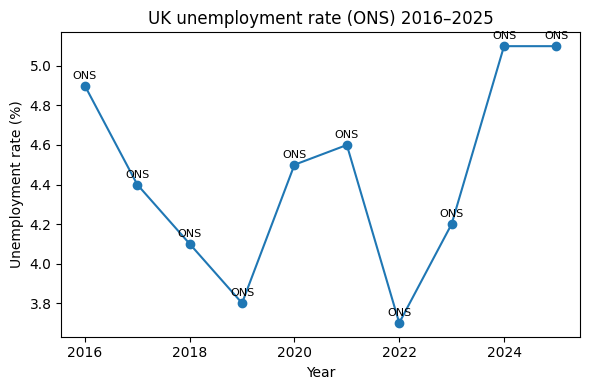
The latest official figures confirm a subtle but significant shift in the UK labour market, one that will matter deeply to working people across the country. New data from the Office for National Statistics (ONS) shows that the UK unemployment rate has risen to 5.1 per cent in the three months to October, up from 5 per cent in the previous period. While the increase may appear modest, it marks the highest unemployment level since early 2021, and excluding the pandemic years, the highest rate recorded since 2016.
For UK workers, this change signals a labour market that is losing momentum. It also underlines a broader slowdown in the economy, arriving shortly after confirmation that economic output unexpectedly shrank by 0.1 per cent in October. Growth has stalled since June, with no expansion recorded in August, leaving households, workers and employers navigating an increasingly uncertain environment.
At the same time, earnings growth is easing. Average regular pay rose by 4.6 per cent in the three months to October, down from previous readings. Once inflation is accounted for using the Consumer Prices Index, real pay growth stood at just 0.9 per cent. While this still represents an improvement for some workers compared with recent years of high inflation, it offers limited relief against rising household costs and ongoing financial pressure.
Perhaps most concerning is the deterioration in employment opportunities for younger people. The ONS reports that payroll employment fell by 38,000 in November alone, bringing the total number of people on payrolls down to 30.3 million. Officials described the labour market as “subdued”, with younger workers disproportionately affected by reduced hiring and fewer vacancies.
Unemployment among those aged 25 to 34 increased by 47,000 over the quarter, while the number of unemployed 16 and 17-year-olds rose by 28,000. For those aged 18 to 24, the picture is even more stark. There are now an estimated 546,000 young people in this age group without work, the highest figure since 2015 and an increase of 85,000 in just one quarter.
Vacancies across the economy have also edged lower. Between September and November, the number of available roles fell by 2,000 to 729,000. Compared with a year earlier, jobs for workers are down by 78,000, intensifying competition for available jobs and making it harder for people who are out of work to re-enter employment. Long-term unemployment has risen by 93,000 over the past year, reinforcing concerns that periods without work are becoming longer and more difficult to escape.
Business sentiment appears to be a key factor behind the slowdown. Jane Gratton, Deputy Director of Public Policy at the British Chambers of Commerce, described the data as painting a “gloomy picture” for jobs, opportunities and growth. Employers, she noted, remain cautious about hiring amid ongoing uncertainty, high employment costs and the cumulative impact of regulatory and economic change.
Labour costs continue to weigh heavily on decision-making. Although average earnings including bonuses slowed slightly to 4.7 per cent, nearly three quarters of businesses surveyed by the Chambers of British Commerce said labour costs remain their biggest financial pressure. For many firms, there is limited scope to absorb further costs without affecting recruitment, investment or expansion plans.
From a policy perspective, the figures add pressure on the government to restore confidence and momentum. The economy’s failure to grow since early summer, combined with rising unemployment, highlights the challenge of stimulating activity without fuelling inflation. Analysts emphasise the importance of long-term investment in skills, innovation and productivity to support sustainable job creation, particularly for younger workers seeking a foothold in the labour market.
For The Workers Union, these developments matter because they shape the everyday reality faced by UK workers and their families. A softer jobs market can weaken pay progression, limit opportunities for career development and increase insecurity, especially for those at the start of their working lives. Clear information, practical guidance and a strong focus on fairness at work remain essential as conditions evolve.
Looking ahead, experts argue that rebuilding confidence will require close cooperation between policymakers and employers, with a clear emphasis on growth, skills and economic stability. Without that, the risk is that rising unemployment becomes entrenched, leaving a generation of workers struggling to access secure and meaningful work.