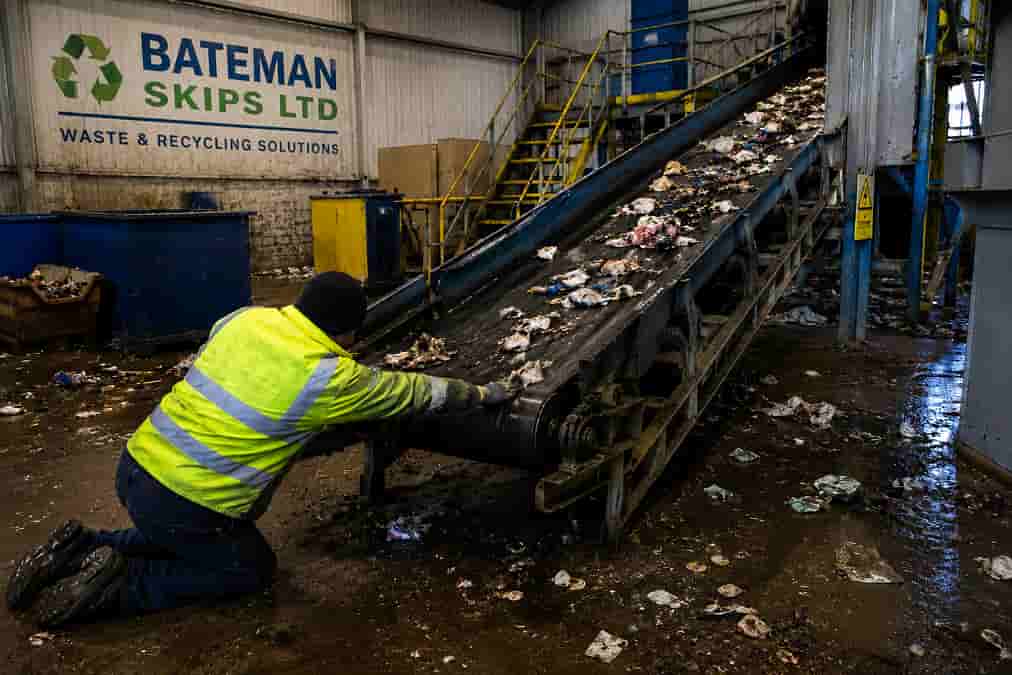
A worker has suffered devastating life-changing injuries after becoming trapped in an unguarded conveyor belt at a waste and recycling facility in Bristol, leading to enforcement action by the UK’s workplace safety regulator.
The incident took place on 27 January 2024 at the Bristol facility operated by Bateman Skips Ltd. The employee was attempting to clear a blockage on a conveyor system when they slipped and came into contact with the unguarded tail-end of the moving belt.
The worker’s arm was pulled into the machinery, causing severe crush injuries. The injuries included multiple bone fractures, serious lacerations, nerve damage and a fractured rib.
In a victim personal statement, the injured employee described the lasting impact the incident has had on daily life.
“I used to enjoy riding my bike, playing darts and snooker with my sons, working on cars and I am now unable to do any of these tasks.”
The worker added:
“This has been the most traumatic thing I have ever experienced both physically and mentally, and I know it will continue to affect me for the rest of my life.”
HSE findings
An investigation by the Health and Safety Executive found that the company had failed to adequately protect employees from dangerous moving machinery.
Inspectors concluded that the business had failed to:
- Prevent access to dangerous parts of machinery.
- Implement a safe system of work for clearing blockages.
- Ensure appropriate safeguarding measures were in place.
- Adequately manage the risks associated with maintenance and cleaning activities.
The HSE highlighted that under the Provision and Use of Work Equipment Regulations 1998 (PUWER), employers have a legal duty to ensure dangerous machinery is properly guarded and that workers are protected from foreseeable risks.
Where machinery presents a risk of injury, employers should ensure:
- Suitable machine guarding is installed.
- Equipment is isolated before maintenance or cleaning.
- Clear procedures are established.
- Employees receive adequate training.
- Appropriate supervision is provided.
A common cause of serious workplace injuries
Contact with moving machinery remains one of the most common causes of fatal and serious workplace incidents across Great Britain. Conveyor belts, rollers, chains and moving mechanical parts can present significant hazards when safeguards are removed, damaged or absent.
Incidents involving waste and recycling facilities have historically been a focus for regulators due to the combination of moving machinery, manual intervention and high-risk operational environments.
For UK workers, this case serves as another reminder of the importance of stopping machinery and following isolation procedures before attempting to clear blockages or carry out maintenance work.
Jonathan Morgan, Spokesperson for The Workers Union, said:
“Every worker and member of TWU has the right to return home safely at the end of their shift. Cases involving unguarded machinery continue to demonstrate the devastating consequences that can occur when workplace risks are not properly controlled.
Employers must ensure that machinery is adequately guarded, that safe systems of work are implemented and that workers receive the training and supervision necessary to perform their duties safely.
Our thoughts remain with the injured worker and their family as they continue to deal with the long-term physical and emotional impact of this incident.”
What workers should remember
If you are asked to clear a blockage or carry out maintenance on workplace machinery:
- Never reach into moving machinery.
- Ensure equipment is fully isolated before work begins.
- Follow lock-off and isolation procedures.
- Report missing or damaged guards immediately.
- Refuse unsafe instructions that place you at risk.
- Seek guidance if you are unsure how a task should be carried out safely.