
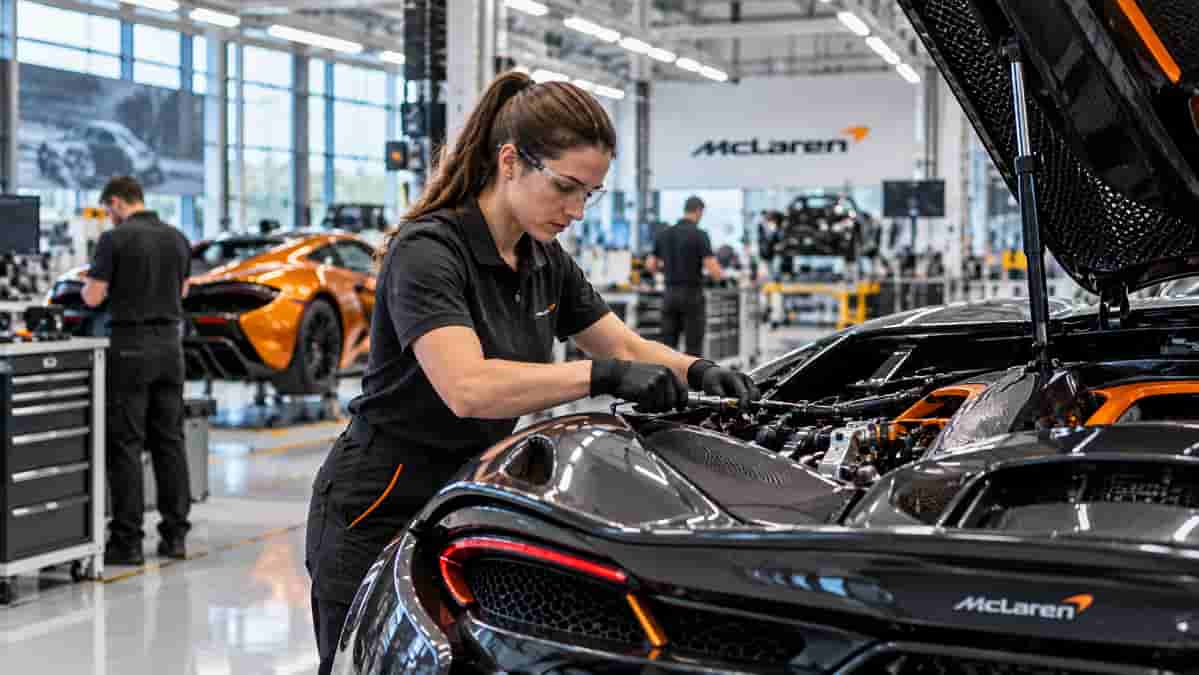
British automotive manufacturing has received a significant vote of confidence, with McLaren reported to be preparing a £450 million investment in its UK operations that could create around 1,000 jobs.
The investment is centred on McLaren’s technology operations in Woking, Surrey, where manufacturing and research and development are expected to benefit as the company undertakes a substantial overhaul of its product strategy.
The development provides a welcome positive employment story at a difficult time for parts of Britain’s automotive industry. Reports indicate that the new opportunities will include direct, indirect and agency employment, potentially opening routes into manufacturing, engineering, technology and associated supply-chain work.
For The Workers Union, the announcement is particularly significant because it demonstrates that alongside restructuring and redundancies elsewhere, businesses are still prepared to make substantial investments in skilled UK workers and British manufacturing capability.
£450 million investment in Woking
McLaren currently employs more than 2,500 people and produces its cars in Britain. The reported £450 million programme will support manufacturing and research and development at its Woking technology centre.
The plans follow major changes at the company.
McLaren Automotive combined with UK electric-vehicle start-up Forseven Holdings last year, while Abu Dhabi-based CYVN Holdings acquired McLaren’s automotive business. CYVN has previously indicated plans to invest approximately $2 billion over five years as the business develops its future product strategy.
The scale of the latest proposed expansion is considerable.
Adding around 1,000 employment opportunities against a workforce of approximately 2,500 represents a substantial increase in activity, although the eventual composition of those jobs will be important.
Reports indicate the figure includes indirect and agency workers rather than representing 1,000 permanent positions directly employed by McLaren. That distinction should be retained when considering the employment impact.
Opportunities beyond traditional car manufacturing
One of the most interesting aspects for UK workers is the changing nature of automotive employment.
Modern vehicle manufacturing increasingly depends on software, electronics, advanced materials, battery technology, digital engineering, automation and sophisticated production systems alongside traditional mechanical engineering.
That means automotive investment can generate employment well beyond assembly lines.
McLaren’s investment is expected to support both manufacturing and research and development, potentially increasing demand for technicians, engineers and other specialist workers as well as production and supporting occupations.
Recruitment connected with McLaren is already visible within the wider employment market. The Workers Union’s Find a Job service, for example, recently carried a Woking logistics vacancy supporting McLaren production, illustrating how vehicle manufacturing generates opportunities across warehousing and production logistics as well as engineering.
A contrasting picture across UK automotive employment
The timing makes the announcement particularly noteworthy.
Our recent coverage examined the Government’s talks with JLR and the potential consequences for workers across the West Midlands automotive economy.
McLaren’s expansion therefore presents the other side of Britain’s changing automotive sector.
One major manufacturer is reducing costs and employment while another is preparing substantial investment and expansion.
Neither development alone defines the health of UK automotive manufacturing.
Instead, they demonstrate an industry undergoing significant structural change as manufacturers respond to electrification, international competition, technology, tariffs and changing consumer demand.
Why manufacturing investment matters for UK workers
Large industrial investments have consequences beyond the company making the announcement.
Vehicle manufacturing relies upon networks of component manufacturers, engineering companies, logistics providers, technology businesses, maintenance specialists and professional services.
Investment can therefore generate economic activity throughout a supply chain.
The Workers Union has previously highlighted similar positive investment in British advanced manufacturing.
Earlier this year, Rolls-Royce announced investment in its Advanced Blade Casting Facility in South Yorkshire, supporting highly skilled manufacturing and engineering employment.
More recently, major investment in Britain’s nuclear submarine programme demonstrated continuing demand for engineering skills, manufacturing capability and apprenticeships.
McLaren’s reported expansion adds automotive manufacturing to that developing picture.
These investments do not eliminate the difficulties experienced elsewhere in the labour market. However, they provide evidence that advanced manufacturing remains capable of generating new employment opportunities in Britain.
Skills could determine who benefits
The bigger question is what kind of jobs Britain’s next generation of automotive investment will create.
As vehicles become increasingly dependent on software, electronics and advanced engineering, workers may need different combinations of skills.
That makes training particularly important.
Experienced manufacturing employees possess considerable practical knowledge, but future automotive operations are likely to place increasing value on workers who can combine traditional engineering experience with digital and technological capabilities.
For younger workers considering their career options, the automotive industry may consequently look very different from the sector entered by previous generations.
Engineering, robotics, software development, electronics, logistics, data and advanced manufacturing could all play increasingly prominent roles.
The Workers Union has previously reported that manufacturing, engineering, logistics and warehousing remain important areas of recruitment within the UK employment market.
Finding opportunities as recruitment develops
McLaren has not yet published a detailed breakdown of the reported 1,000 opportunities, meaning workers should be cautious about assuming that all positions are currently available for application.
Further information is expected as the company’s plans develop.
Workers interested in opportunities within engineering, manufacturing and related sectors can meanwhile use The Workers Union jobs service, which brings together live vacancies from employers across Britain. The service was expanded earlier this year to provide workers and visitors with quicker access to regularly updated employment opportunities.
For people considering a move into advanced manufacturing, monitoring vacancies early can also provide useful information about the qualifications and experience employers are seeking.
A welcome sign for British industry
The McLaren investment should ultimately be judged by the jobs and opportunities it delivers.
The reported creation of around 1,000 roles represents encouraging news, particularly against a backdrop of workforce reductions elsewhere in automotive manufacturing.
Yet the significance extends beyond one company.
Britain retains substantial expertise in automotive engineering, advanced manufacturing and vehicle development. Continued investment is important if those capabilities are to translate into sustainable employment for the next generation of UK workers.
The Workers Union will therefore be watching the development closely, particularly the eventual number of direct jobs, agency opportunities, apprenticeships and specialist positions created.
For workers, the message from Woking is an encouraging one: despite considerable pressures across the automotive industry, substantial investment in British manufacturing skills and employment has not disappeared.