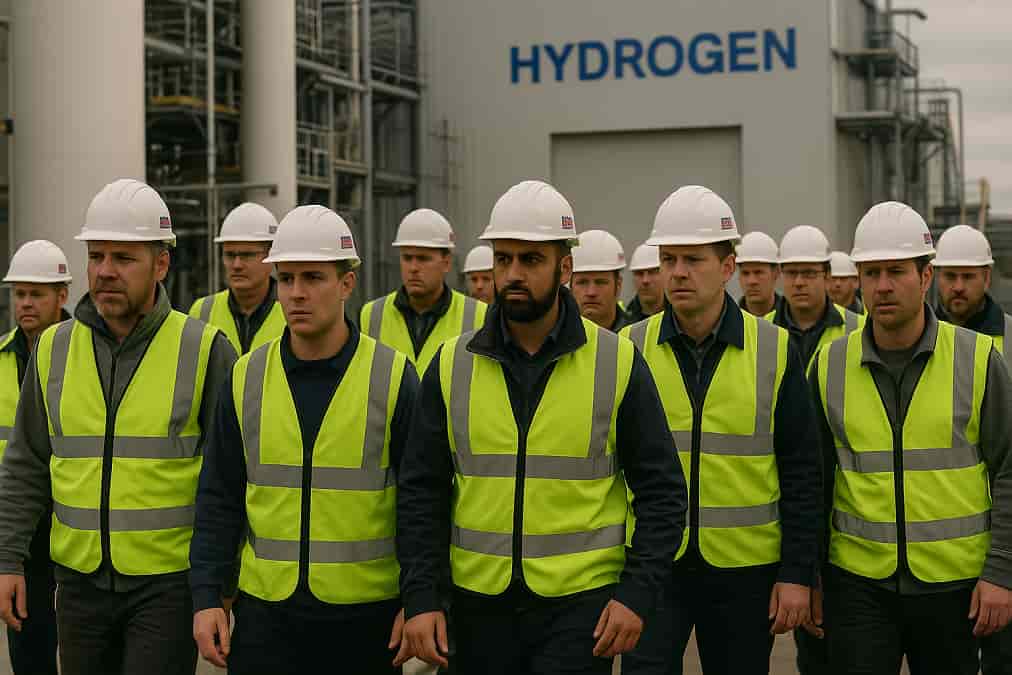
Around 30 construction workers have been suspended from a major chemical company’s construction project in Royston, Hertfordshire, after stopping work over what they described as serious health and safety concerns. The incident at Johnson Matthey which is a chemicals and advanced manufacturing company, with the Royston project linked to the construction of a hydrogen-related manufacturing facility, has raised fresh questions about site welfare standards, risk management, and how safety complaints are handled on large-scale industrial developments.
The site in question forms part of a high-profile chemicals and advanced manufacturing project in Hertfordshire, linked to future-facing technologies and supported by significant investment. For many UK workers, it represents the type of complex, high-risk construction environment where strong safety controls and clear communication are not optional extras, but absolute necessities.
According to accounts from workers on site, the decision to down tools followed mounting frustration over conditions they believed posed risks to health and wellbeing. Issues reported included a lack of basic welfare facilities such as running water and heating, insufficient protection against cold weather, and concerns about ventilation during certain construction activities. Workers say these concerns were raised repeatedly before the walkout took place.
The subsequent suspension of those involved has drawn attention to the balance between operational deadlines and the duty to maintain safe working conditions. For UK workers, the episode underlines a reality that safety disputes can escalate quickly when trust breaks down between those carrying out the work and those managing it.
Health and safety law in the UK places clear responsibilities on employers to provide a working environment that is safe, properly assessed, and adequately resourced. This includes suitable welfare facilities, appropriate personal protective equipment, and controls to reduce exposure to hazardous substances. Where construction work is taking place in cold conditions or involves potentially harmful materials, those duties become even more critical.
There are also established legal protections for workers who raise health and safety concerns or who believe there is a serious and imminent danger. While each situation turns on its specific facts, UK law recognises that workers should not be penalised simply for acting to protect themselves or others from harm. Understanding how those protections apply in practice, however, can be complex, particularly when suspensions or disciplinary processes follow.
From The Workers Union’s standpoint, this case is not just about one site in Hertfordshire. It reflects a broader challenge seen across the UK construction and industrial sectors: ensuring that safety systems on paper translate into safe conditions on the ground. Large projects often involve multiple contractors, tight schedules, and evolving risks. Without robust oversight and a culture that takes concerns seriously, problems can quickly multiply.
It is also a reminder that welfare and safety are closely linked to morale and mental wellbeing. Workers who feel unheard or unsafe are less likely to raise issues early, increasing the risk of incidents later. For employers, listening and responding promptly to safety feedback is not only a legal duty but a practical necessity for keeping projects running smoothly.
What UK workers can take from this case
For workers reading this story, several lessons stand out.
First, safety concerns should be raised as early as possible and, where practical, recorded in writing. Clear records of what was reported and when can be important if matters escalate.
Second, workers are entitled to ask what risk assessments are in place and what measures are being used to control identified hazards. Transparency around safety planning helps build confidence and accountability.
Third, if workers genuinely believe there is a serious and imminent risk, it is important to seek informed guidance quickly and to keep careful notes of decisions made. Acting reasonably and proportionately is key, and support at an early stage can make a significant difference.
At The Workers Union, our focus remains firmly on practical support, clear information, and keeping UK workers safe at work. Incidents like the one in Royston highlight why up-to-date advice, awareness of legal protections, and a strong safety culture matter across every sector.
As this situation develops, the hope among many workers will be that concerns are addressed constructively, suspensions are reviewed fairly, and lessons are learned to prevent similar disputes in the future. Safe sites benefit everyone: workers, employers, and the wider community that depends on these projects being delivered responsibly.