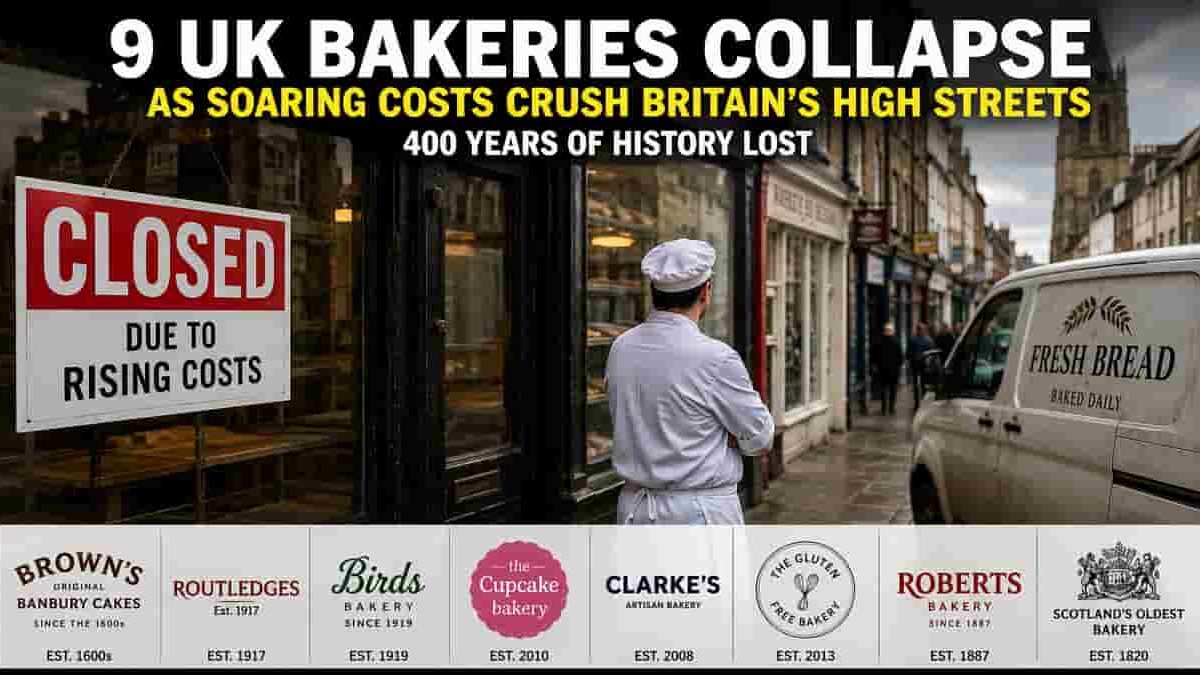
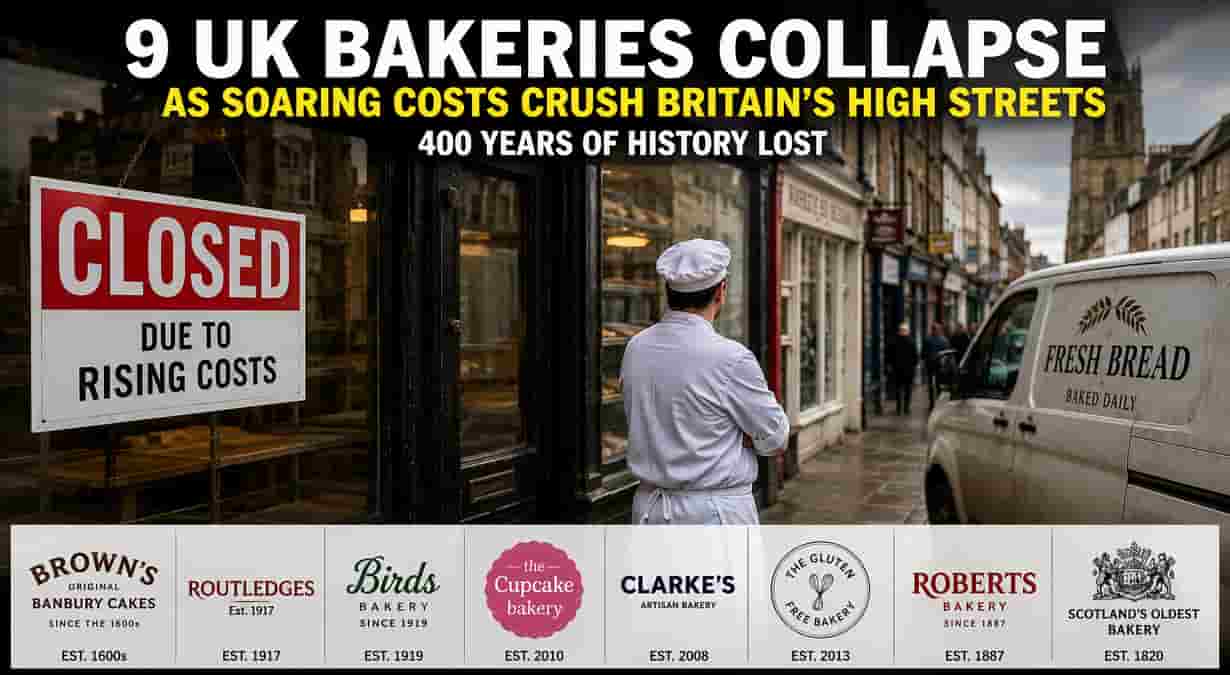
Britain’s bakery industry is facing a devastating reckoning as nine well-known bakery businesses across the UK have closed, entered liquidation or fallen into administration during 2026, sending shockwaves through workers, local communities and the struggling British high street.
From century-old family firms to modern artisan success stories, the closures paint a stark picture of what many business owners are now calling an unsustainable trading environment. Rising energy bills, increased wage pressures, falling customer footfall, soaring ingredient prices and mounting operational costs are pushing even some of Britain’s most beloved bakery names to breaking point.
For bakery workers employed across bakery counters, production units, delivery operations and retail sites, the consequences are deeply personal. Staff teams who helped sustain businesses through lockdowns, worked through intolerable working temperatures, recessions and changing consumer habits are now facing uncertainty as another part of Britain’s traditional high street economy begins to fracture.
At the centre of the crisis sits the heartbreaking closure of Brown’s Original Banbury Cakes Limited, a bakery whose roots stretch back to the early 1600s. The historic business officially dissolved in April 2026 after almost 400 years of trading.
The closure marks the end of one of Britain’s oldest surviving bakery traditions. The Brown family safeguarded the famous Banbury Cake recipe for generations, surviving wars, depressions and industrial change. But in the end, modern economic pressures proved too severe.
Elsewhere, the famous Routledges bakery chain in Carlisle entered liquidation after more than a century in business. Founded in 1917, the company blamed overwhelming increases in costs, including an estimated £80,000 rise in wages and energy bills.
Workers and customers described the closure as “the end of an era” across Cumbria, where the family-run bakery had become woven into daily life through bread deliveries, pastries and filled rolls.
Meanwhile, Roberts Bakery, founded in 1887 and one of the UK’s largest family-owned bakeries, was forced into administration following years of financial instability worsened by a major factory fire in 2023 and continuing economic turbulence. Although parts of the operation were rescued through a pre-pack administration deal, the collapse highlighted how even industrial-scale bakeries are struggling to remain financially stable.
The troubles have not been confined to historic firms.
Several younger independent bakeries, many of which thrived during lockdown through online deliveries and postal orders, have also fallen victim to changing consumer behaviour and escalating overheads.
A Wiltshire-based brownie company founded in 2018 collapsed into liquidation after rapid expansion during the pandemic years. What began as a family-run success story eventually became impossible to sustain amid worsening economic conditions and personal health pressures affecting the founders.
In Devon, an artisan bakery known for oversized brownies and cookies shut its Exeter shop in January 2026, with owners admitting the stress of commercial retail costs had become unmanageable. The business pivoted away from physical retail operations to focus on postal deliveries and wholesale supply instead.
In Leeds, an award-winning gluten-free bakery entered liquidation after ingredient costs spiralled beyond control. Despite strong customer loyalty and nationwide demand, the business said months of financial pressure ultimately became impossible to overcome.
London has not escaped the damage either.
An artisan bakery linked to celebrated restaurateur Sally Clarke entered administration with debts reportedly exceeding £1 million. Despite excellent reviews and a strong reputation among tourists and locals alike, liabilities significantly outweighed assets after financial backing was withdrawn.
Even long-established regional chains are now retreating from traditional high street locations.
Founded in 1919, Birds Bakery announced strategic branch closures during March 2026 after reporting a “significant decline in trade” and reduced town centre footfall. The company remains operational but acknowledged that difficult decisions were necessary to survive.
Scotland’s oldest bakery, founded in 1820, narrowly avoided total collapse only after being sold to a private investor earlier this year.
The wider implications for UK workers are becoming increasingly difficult to ignore.
Britain’s bakery sector has historically provided employment opportunities spanning apprenticeships, logistics, manufacturing, retail and specialist food production. These businesses often form part of the social fabric of local communities, particularly in smaller towns where independent bakeries remain major employers and longstanding institutions.
The Workers Union believes these closures underline the immense pressure facing many sectors of the UK economy, particularly businesses reliant on high energy consumption, physical retail trade and rising staffing costs.
Industry experts warn that unless economic conditions stabilise, more closures could follow across Britain’s independent food and retail sectors during the remainder of 2026.
For many workers now facing redundancy, uncertainty or reduced hours, the collapse of these bakeries represents more than just lost businesses. It signals the continued erosion of traditional high street Britain and raises growing concerns about the future sustainability of independent employers operating in increasingly unforgiving economic conditions.
As delivery vans disappear from local streets and ovens fall silent inside once-thriving bakeries, communities across Britain are being left to ask an uncomfortable question: how many more historic businesses can survive the modern cost crisis?