A quiet but significant shift has taken place in pay packets across the country, and for many UK workers, the change may already be sitting in their bank account. Nearly a month on from the latest National Minimum Wage increase, attention is turning to whether employers have acted correctly — and whether workers are receiving every penny they are legally entitled to.
From 1 April 2026, updated minimum wage rates came into force, marking another intervention aimed at easing ongoing cost-of-living pressures. But while the headline figures suggest a boost, the reality for many workers is more complicated. The key question now is simple: has your pay actually increased in line with the law?
What has changed in 2026
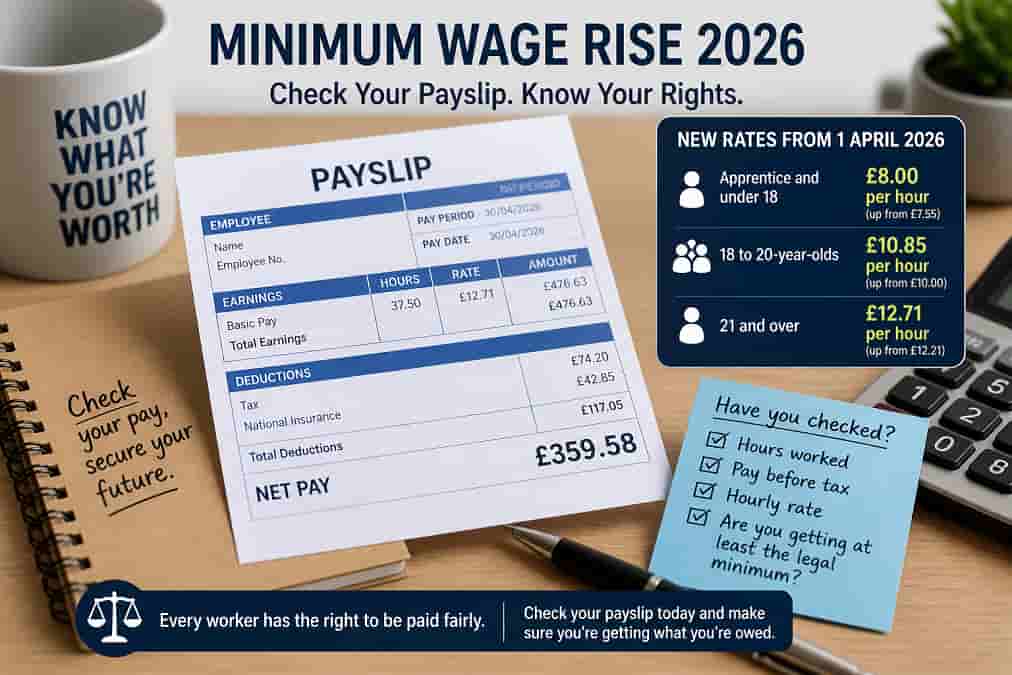
The latest rates, confirmed and reinforced through updates by HM Revenue and Customs, set out clear minimum thresholds based on age and employment status.
From April 2026:
- Apprentices and those under 18: £8.00 per hour (up from £7.55)
- Workers aged 18 to 20: £10.85 per hour (up from £10.00)
- Workers aged 21 and over: £12.71 per hour (up from £12.21)
These changes represent a noticeable uplift, particularly for younger workers and apprentices, groups often most vulnerable to lower earnings.
However, there is an important distinction. The minimum wage is calculated as an hourly rate — but it applies to all eligible workers regardless of how they are paid. That includes salaried staff, piece-rate workers, and those on commission-based earnings.
In practice, this means workers must calculate their “effective hourly rate” to ensure compliance.
Why workers must check now
This is where the risk emerges. Not all employers update payroll systems immediately, and errors — whether accidental or systemic — can occur.
For UK workers, the responsibility does not sit solely with the employer. There is a growing expectation, reinforced by guidance on GOV.UK, that individuals actively check their own pay.
Workers should review:
- Total hours worked in a pay period
- Gross pay received (before deductions)
- Any unpaid time that may affect calculations
If the resulting hourly rate falls below the legal minimum, even by a small margin, it may indicate underpayment.
Apprentices: a critical detail often missed
One of the most misunderstood aspects of the 2026 changes relates to apprentices.
Apprentices qualify for the lower apprentice rate only if:
- They are under 19, or
- They are over 19 but in the first year of their apprenticeship
After completing the first year, the rules shift. Pay must then align with age-based minimum wage bands.
For example, a 21-year-old apprentice entering their second year must be paid at least £12.71 per hour — not the apprentice rate.
This is a frequent area of error, and one where workers may unknowingly be underpaid.
What if you are already paid above minimum wage?
For those earning above the new thresholds, the situation is different.
There is no automatic legal requirement for employers to increase wages beyond the statutory minimum. Any additional rises are typically determined by company policy, performance reviews, or broader economic decisions.
This creates a widening gap between minimum compliance and competitive pay — a trend increasingly visible across sectors.
A broader shift in workplace expectations
The 2026 increase comes at a time when scrutiny around pay fairness is intensifying. Workers are more aware, more informed, and more willing to question discrepancies.
At The Workers Union, there is a growing pattern of enquiries centred not just on underpayment, but on understanding payslips, contracts, and entitlement clarity.
This reflects a wider shift in the UK labour landscape — one where transparency is becoming as important as the numbers themselves.
How to check your pay properly
Workers can verify their pay using the official National Minimum Wage calculator available via GOV.UK.
To complete a check, you will typically need:
- Your total pay before tax for the period
- The number of hours worked
- Any deductions that may affect pay
The process is straightforward, but the implications can be significant. Underpayment, even if unintentional, can lead to back pay obligations and enforcement action.
The bottom line for UK workers
The message is clear from The Workers Union: do not assume your pay has been updated correctly.
The April 2026 wage rise is designed to improve earnings, but its impact depends entirely on accurate implementation. For many workers, especially those in lower-paid roles, even small discrepancies can add up quickly over time.
Checking your payslip is not just a precaution — it is a necessary step in ensuring fair treatment at work.
As the economic landscape continues to evolve, awareness remains one of the strongest tools available to UK workers navigating their rights and entitlements.