A young bricklayer suffered a broken back after falling through a fragile barn roof in Northumberland in another disturbing workplace incident involving work at height.
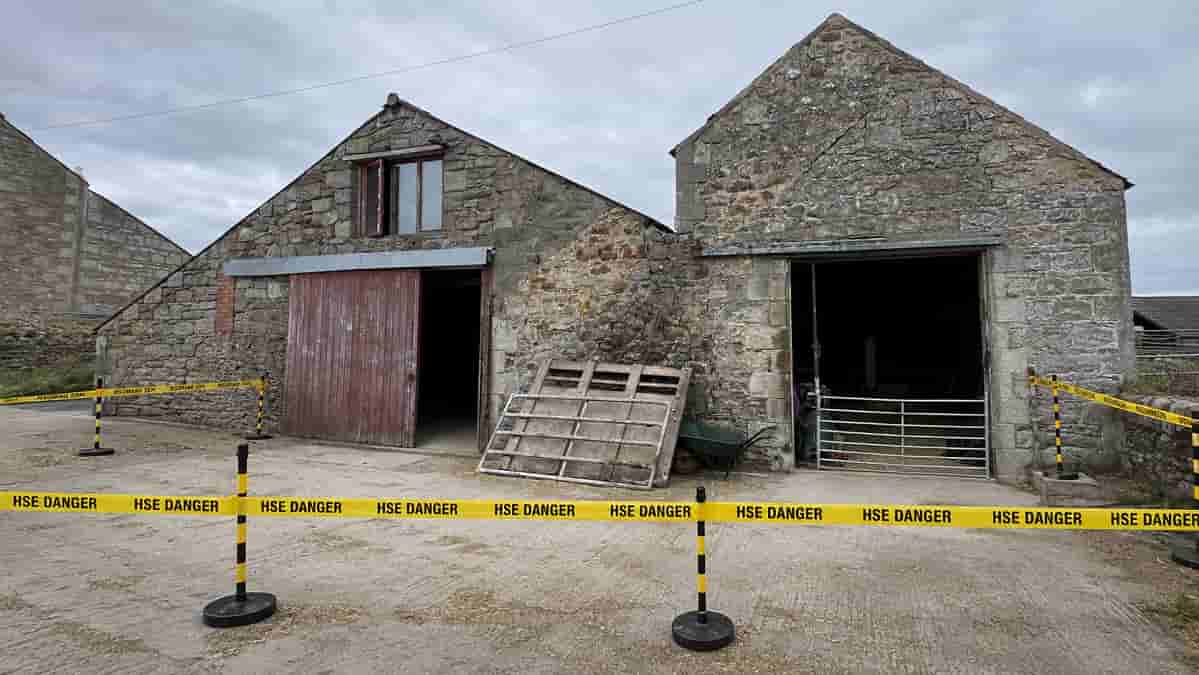
The 24-year-old worker was part of a team employed by Len Smith & Son Building Contractors Limited to repair a barn roof at East Fleetham Farm in Seahouses.
On 5 February 2025, he stepped onto a polycarbonate roof sheet and fell approximately eight feet onto the concrete floor below. He sustained two broken vertebrae and a fractured sternum, requiring surgery.
An eight-foot fall may not sound extreme when compared with incidents involving scaffolding or tall buildings. But a fall onto concrete can generate devastating force. In this case, a routine day at work ended with a young worker undergoing surgery for serious spinal and chest injuries.
No risk assessment or safe system of work
An investigation by the Health and Safety Executive found that Len Smith & Son Building Contractors Limited had failed to put adequate measures in place to protect employees and contractors carrying out the roof repairs.
According to the HSE prosecution report, there was no risk assessment and no safe system of work for the activity being undertaken.
These are not minor administrative omissions. A suitable risk assessment should have identified the polycarbonate sheets as fragile surfaces that could not safely support a worker’s weight. A properly planned system should then have established how access would be controlled and what equipment or physical safeguards were required.
The company, based at East House, 17 Meadow Lane, Beadnell, Northumberland, pleaded guilty to breaching sections 2(1) and 3(1) of the Health and Safety at Work etc. Act 1974.
At North Tyneside Magistrates’ Court on 6 August 2026, the company was fined £20,000 and ordered to pay £5,744 in costs.
The Workers Union calls for action before work begins
Jonathan Morgan of The Workers Union said:
“This young bricklayer went to work expecting to earn a living and return home safely. Instead, he suffered serious injuries because a foreseeable workplace danger had not been properly assessed or controlled.
“Risk assessments and safe working arrangements must be completed before a worker is placed in danger. They cannot be treated as paperwork to be considered after somebody has fallen.
“The most troubling aspect is that incidents involving fragile roofs continue to happen despite the risks being well known. Employers must recognise that even a relatively short fall can kill a worker or leave them facing lifelong pain, restricted movement and an uncertain working future.”
Falls remain the leading cause of workplace deaths
This prosecution comes against a grim national background.
The latest HSE workplace fatality statistics show that 31 workers lost their lives in falls from height during 2025–26. Such falls accounted for around a quarter of all worker deaths recorded during the year.
Construction recorded 25 workplace deaths, the highest total among the main industries. Agriculture, forestry and fishing recorded 22 deaths and continued to have the highest fatal injury rate per 100,000 workers.
Those figures do not include the many workers who work at height, survive falls but are left with spinal damage, brain injuries, complex fractures, chronic pain or lasting psychological trauma.
HSE inspector Richard McMullen said the outcome in Northumberland could have been much worse, although the worker’s injuries remained extremely serious. He warned that the regulator would prosecute organisations that failed to protect people at work.
What employers must do before roof work starts
Official HSE working-at-height guidance requires employers and those controlling the work to ensure that it is properly planned, appropriately supervised and carried out by people with the necessary skills, knowledge and experience.
Before work begins, employers should:
- Identify fragile sheets, roof lights and other surfaces that may not support a person’s weight.
- Avoid work at height wherever the task can reasonably be completed from ground level.
- Provide safe access and suitable equipment where elevated work cannot be avoided.
- Prevent workers from reaching fragile areas or provide suitable platforms, coverings, guardrails or safety netting.
- Minimise the distance and consequences of a potential fall where the danger cannot be eliminated.
- Establish emergency and rescue procedures before anyone accesses the roof.
Workers who believe that planned work is unsafe should raise the matter immediately and ask to see the relevant risk assessment and working method. A deadline, customer demand or pressure to complete a job does not remove an employer’s legal safety responsibilities.
A preventable injury with lasting consequences
The court case has concluded, but the injured worker may face consequences lasting far longer than the company’s financial penalty.
Behind every prosecution is a person whose health, independence, employment prospects and family life may have been permanently altered. The central lesson is painfully familiar: fragile roofs must be identified, the work must be planned, and effective safeguards must be in place before a worker leaves the ground.
The Workers Union believes every worker should be able to complete their shift and return home safely. Preventing falls from height requires action before an incident—not explanations afterwards.