Britain’s White Van Man could find himself at the heart of the 2026 Budget as the government considers how to help millions of self-employed workers make more profit, reduce costs and spend less time battling paperwork.
It could be a significant moment for the builders, plumbers, electricians, decorators, couriers, engineers, drivers and independent contractors who keep a substantial part of the British economy moving.
The government’s message is that the self-employed have had a difficult time. The challenge now is turning that acknowledgement into something workers can actually feel in their pockets.
For The Workers Union, the key question ahead of the Budget is simple: will the measures genuinely make it easier for Britain’s self-employed workers to earn a decent living?
White Van Man under pressure
There are around four million self-employed people in Britain, and the sector contributes hundreds of billions of pounds to the economy.
Yet running a small operation can be expensive.
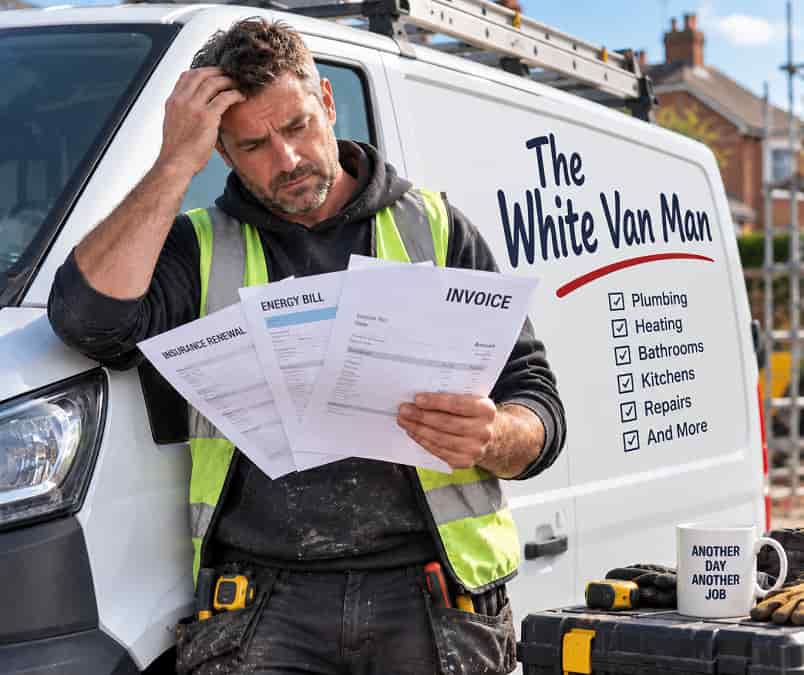
Consider the everyday reality for a self-employed tradesperson. Before taking home their earnings, there may be fuel, vehicle finance, commercial insurance, tools, materials, accountancy fees, software and tax to pay, not to mention tool theft.
Then there is the time spent quoting for jobs, preparing invoices, chasing payments and completing administration.
For workers who want to understand where they stand, The Workers Union provides dedicated information for self-employed workers, including some of the practical difficulties associated with working independently.
The question for the Treasury is whether the Budget can relieve some of those pressures.
Could cutting red tape make a difference?
One of the government’s most significant promises is a commitment to reduce the administrative burden of business regulation by 25%.
That sounds substantial.
But White Van Man is unlikely to judge its success by a government spreadsheet.
The practical test will be whether a plumber, electrician or builder actually spends fewer hours dealing with administration and more hours earning money.
The government’s wider plan for small and medium-sized businesses sets out measures intended to make running a business easier and tackle some of the barriers facing smaller operators.
For self-employed workers, simplicity matters.
Every hour spent dealing with unnecessary administration can be an hour that cannot be charged to a customer.
Tax will be closely watched
Tax will inevitably be one of the biggest areas of interest.
According to the government’s current self-employed National Insurance guidance, self-employed people with profits above £12,570 generally pay Class 4 National Insurance at 6% on profits between £12,570 and £50,270 for the 2026/27 tax year, with a 2% rate applying above that level.
Any Budget changes affecting taxation, allowances or legitimate business expenses could therefore have a direct effect on disposable income.
But workers should also pay attention to what does not change.
Fuel, insurance and vehicle costs can be particularly important for people whose van is effectively their workplace. A relatively small increase in operating costs multiplied across an entire year can significantly reduce profitability.
Making Tax Digital brings another challenge
There is also a potential contradiction the government may need to address.
While ministers want to reduce bureaucracy, some self-employed workers are simultaneously adjusting to Making Tax Digital for Income Tax.
From April 2026, qualifying sole traders and landlords with qualifying annual income above £50,000 have been required to use compatible software to keep digital records and submit quarterly updates to HMRC.
Digitalisation may eventually make elements of taxation easier, but for somebody accustomed to completing their accounts differently, it can also mean learning another system.
The Treasury’s challenge is therefore not simply digitising administration. It is ensuring that administration actually becomes easier.
Getting paid for work already completed
Then there is an issue that can be devastating for small businesses and self-employed workers: late payment.
Imagine completing a substantial job, paying for materials, covering fuel and paying other expenses — only to wait weeks or months for the invoice to be settled.
The government has already proposed stronger action.
Its late-payment reforms include proposals for stronger powers for the Small Business Commissioner, mandatory interest on late payments and a 60-day cap on payment terms for large businesses.
For many self-employed workers, getting paid promptly could be just as important as receiving a modest tax reduction.
Cash flow is not an abstract accounting concept when somebody works for themselves.
It can determine whether the mortgage gets paid.
Self-employed or actually a worker?
There is another important consideration.
Being described as self-employed does not automatically determine someone’s employment status.
The reality of the working relationship matters.
The Workers Union’s guidance on employment status in the UK explains the distinctions between employees, workers and self-employed people.
That distinction can affect important workplace rights.
Anyone unsure about their position should therefore understand their employment status rather than relying solely on the wording contained in a contract.
The Workers Union also provides broader information about workers’ rights in the UK and a dedicated guide covering contracts of employment.
What should White Van Man look for in the Budget?
For Britain’s self-employed workforce, the most important announcements may not necessarily be the biggest political headlines.
Watch National Insurance and taxation.
Watch fuel and vehicle costs.
Watch business allowances.
Watch what happens with late payments.
And importantly, watch whether the promised reduction in red tape produces a measurable reduction in the amount of administration required to earn a living.
There could also be opportunities around investment. Measures making it easier to purchase new tools, vans, machinery, software or other equipment could help smaller operators improve productivity and grow.
But ultimately, the Budget will have to pass a much more straightforward test.
Will White Van Man actually be better off?
Britain’s self-employed workers do not operate in an economic spreadsheet.
They operate on building sites, driveways, roads, warehouses, workshops, offices and customers’ premises.
They see economic policy through the price displayed on a fuel pump.
They see it when van insurance comes up for renewal.
They see it at the builders’ merchant when materials cost more.
They see it when an invoice remains unpaid.
And they see it when another evening disappears into paperwork.
That is why the 2026 Budget presents an important opportunity.
If government can genuinely reduce unnecessary administration, tackle late payments and allow self-employed people to retain more of the rewards from their own work, White Van Man could have reason to welcome the changes.
But promises of helping Britain’s grafters will ultimately be measured against what happens after the Budget documents have been closed.
For The Workers Union, Britain’s self-employed workforce should be recognised for what it is: a substantial and important part of the UK economy consisting of millions of people prepared to take responsibility, work hard and generate their own income.
The real Budget question is therefore not whether White Van Man receives a political pat on the back.
It is whether, when the bills have been paid and the paperwork completed, there is more money left in his pocket.