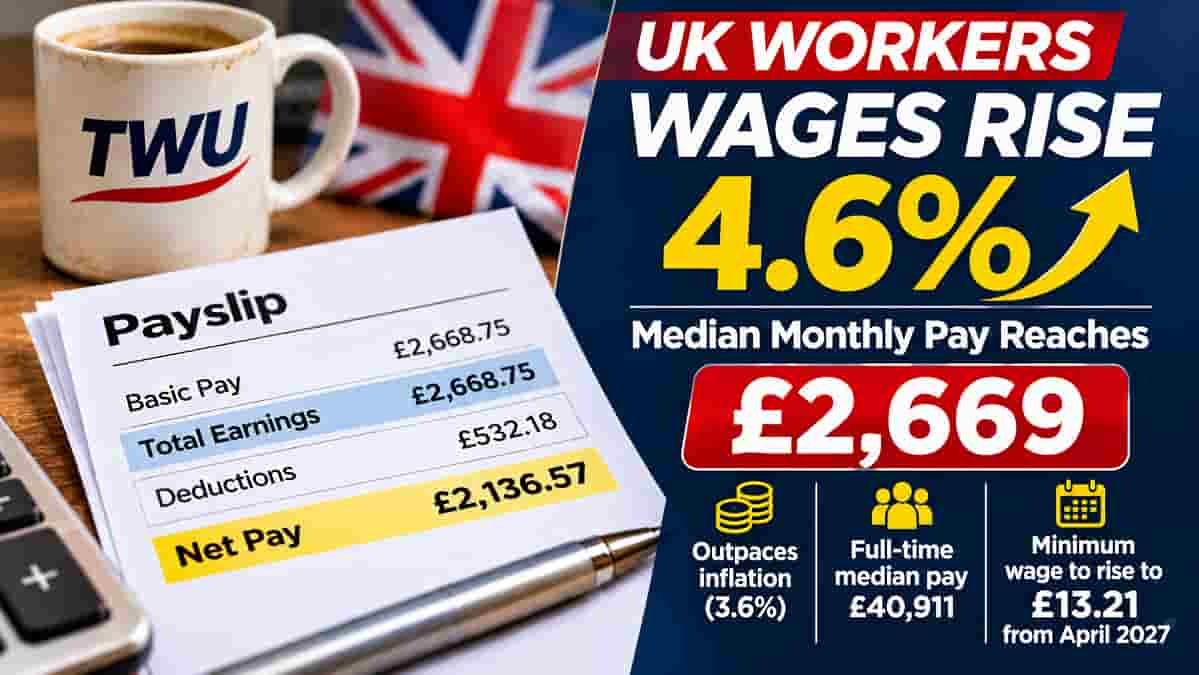
British workers have received encouraging news as the latest official earnings figures reveal that median monthly pay has increased by 4.6% over the past year, reaching £2,669 and outpacing the current headline rate of inflation.
The figures, published by the Office for National Statistics (ONS), provide welcome evidence of improving earnings at a time when millions of working households continue to face financial pressures. Although Britain’s employment market remains challenging, stronger wages could provide some much-needed financial breathing space as workers prepare for Christmas and look towards 2027.
According to the latest official ONS earnings and employment report, provisional payroll figures for October show that median earnings continue to increase across the UK.
UK wage growth outpaces inflation
Perhaps the most encouraging aspect of the latest earnings figures is that median pay growth is exceeding headline inflation.
The ONS consumer price inflation report, published on 18 November, confirmed that annual Consumer Prices Index inflation reached 3.6%. The difference between median pay growth and CPI inflation stands at one percentage point, suggesting a modest improvement in purchasing power at the median.
However, individual experiences will vary considerably, particularly for households facing higher housing, energy and commuting costs. For British workers, the real test of wage growth is not simply the figure appearing on their payslip, but how much money remains after essential household expenditure.
What would a 4.6% pay rise mean for your salary?
The financial value of a 4.6% salary increase depends on an employee’s existing earnings.
| Current annual salary | Annual increase | New annual salary |
| £20,000 | £920 | £20,920 |
| £25,000 | £1,150 | £26,150 |
| £30,000 | £1,380 | £31,380 |
| £35,000 | £1,610 | £36,610 |
| £40,000 | £1,840 | £41,840 |
| £50,000 | £2,300 | £52,300 |
These illustrative figures represent gross earnings before tax, National Insurance and other deductions. Importantly, the national increase in median earnings does not mean every employee has received, or is entitled to receive, a 4.6% pay rise.
Which UK workers are experiencing the strongest wage growth?
The official statistics reveal considerable differences between industries. The other service activities sector, which includes personal services and certain repair businesses, recorded annual median pay growth of 5.6%.
Meanwhile, professional, scientific and technical activities recorded growth of 3.4%. Monthly median earnings also varied substantially between sectors, with finance and insurance recording £4,341 compared with £1,464 in accommodation and food services.
Differences in working hours, employment patterns and occupational requirements should be considered when comparing these figures. Separate findings from the ONS annual employee earnings survey provide further encouraging evidence of wage improvements.
Median weekly earnings among full-time employees increased by 5.8% in the year to April 2026, while median annual earnings for qualifying full-time employees reached £40,911.
Previous UK pay rise announcements offer further encouragement
The Workers Union has consistently highlighted positive developments affecting British workers’ earnings. Earlier this month, our article, UK workers pay rise: Employers increase wage awards to 3.2% as 850,000 employees covered by latest deals, examined improving employer pay settlements.
We also reported how UK starting salaries are rising as employers offer higher pay despite a hiring slowdown. In September, thousands of Amazon UK workers received pay increases as minimum starting rates reached £15.10 an hour.
Further encouragement came in October when we reported that almost 500,000 UK workers were set for pay rises as the real Living Wage increased to £14.10. Together, these developments demonstrate that improvements in pay remain possible despite wider economic uncertainty.
UK minimum wage increase to deliver further financial support in 2027
Millions of lower-paid workers are also preparing for an increase in statutory minimum wages from April 2027. The National Living Wage for eligible workers aged 21 and over is scheduled to increase from £12.71 to £13.21 per hour.
For someone working 40 paid hours each week, this represents an additional £1,040 in annual gross earnings. Our previous coverage of the anticipated UK minimum wage increase examined the potential financial benefits before the final rate was confirmed.
Workers can check statutory wage entitlements through the Government’s National Minimum Wage guidance.
Rising wages must be accompanied by greater job security
Despite encouraging earnings figures, significant employment challenges remain. Payroll estimates indicate that the number of UK employees has fallen by 95,000 over the past year.
However, administrative and support services recorded an increase of 52,000 employees, demonstrating that employment opportunities continue to emerge in parts of the economy.
The latest ONS labour market overview also reports that unemployment has fallen to 4.6%, although job vacancies remain under pressure. Higher wages are welcome, but sustainable improvements in living standards depend equally on secure employment, career progression and reliable working hours.
A more positive outlook for British workers
As Britain approaches 2027, the latest wage figures offer grounds for cautious optimism.
Employees should be encouraged to understand their market value, review their employment terms and discuss appropriate salary improvements with their employers. Our recent article examining why pay is becoming increasingly important to British workers highlighted the importance of fair remuneration in maintaining workplace satisfaction.
British workers deserve to see their hard work reflected not only in higher salaries but also in improved financial security and quality of life.
With median monthly earnings reaching £2,669 and wage growth exceeding headline inflation, there are encouraging signs that some working households could finally begin to experience meaningful improvements in their purchasing power.
The challenge now is ensuring that this progress continues throughout 2027.