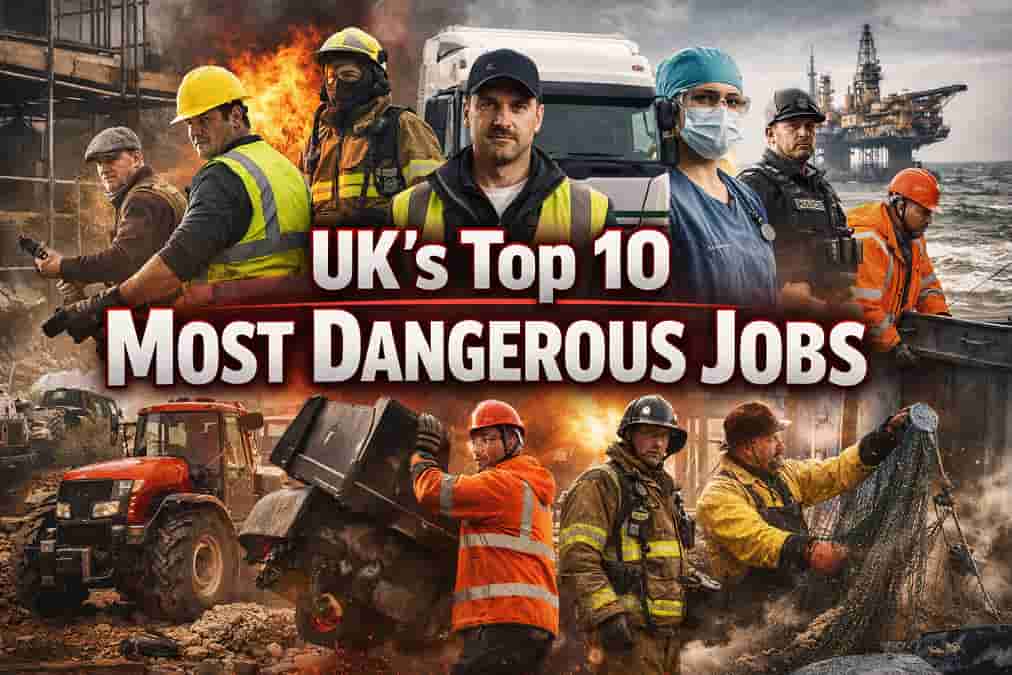
The latest figures from the Health and Safety Executive (HSE) and industry analyses make it starkly clear that not all jobs carry the same risk of serious injury or fatality in the United Kingdom. With 124 work-related fatal injuries reported in the latest HSE statistics year, the differences in danger across sectors reflect both the nature of the work and the environments in which UK workers operate.
While the overall trend over recent decades shows a decrease in fatal workplace injuries, certain roles, particularly those involving heavy machinery, working at height, or exposure to unpredictable conditions, continue to present significant hazards. The Workers Union is committed to placing UK workers at the front of discussions on workplace safety and risk awareness. This article outlines the top ten most dangerous jobs or occupational sectors in the UK, based on the latest available data. Rankings are drawn from fatal injury statistics, hazardous conditions, and industry risk profiles.
- Construction worker
Construction remains the most dangerous sector in absolute terms, with the highest number of fatal injuries each year and a wide range of risks including falls from height, being struck by moving objects, and accidents with heavy machinery. The latest figures from HSE show construction accounted for 35 worker deaths in 2024/25 – more than any other industry. - Agricultural and farm worker
Agriculture, forestry and fishing may employ fewer workers, but the fatal injury rate per 100,000 is consistently the highest among UK industries. Farming involves heavy equipment, unpredictable animals, and often solitary work, contributing to a disproportionately high risk of fatal incidents. - Lorry driver and transport worker
Transport and storage roles, particularly lorry driving, face significant risk from road traffic accidents and incidents involving moving vehicles. Lorry drivers are frequently highlighted in occupational risk listings due to deaths from being struck or involved in collisions. - Manufacturing operative
Manufacturing settings expose workers to machinery hazards, chemical risks, and repetitive strain. While the number of fatalities is lower than in construction or agriculture, manufacturing has a high rate of non-fatal injuries and serious workplace incidents. - Waste and recycling operatives
The waste and recycling sector has elevated fatality rates and serious injury risks, often associated with heavy machinery, traffic hazards, and manual handling. Workers in this sector also face significant exposure to biological and chemical hazards. - Emergency services personnel (firefighters, paramedics)
Emergency responders such as firefighters and paramedics are frequently cited among the most challenging and hazardous occupations in the UK. While not always reflected in statutory fatality statistics, risks include exposure to dangerous environments, unpredictable emergencies, and physical violence. - Roofing and scaffolding specialists
Within construction, specific roles such as roofers and scaffolders are especially dangerous due to the inherent risk of working at height and potential for severe falls. These sub-roles consistently appear near the top of hazards lists compiled by safety analysts. - Healthcare front-line roles
Healthcare workers, including paramedics and hospital staff, face significant non-fatal injury rates and risks of assault or occupational disease. While fatal injuries are comparatively less common in this sector, the high incidence of non-fatal injuries merits inclusion on any broad assessment of workplace danger. - Fishing and offshore roles
Commercial fishing and certain offshore jobs are among the most perilous, with extreme weather conditions, long hours, and hazards from equipment and the environment itself. Historical data indicate high fatality counts in fishing, although recent UK-specific fatality data is less comprehensive. - Waste collection and refuse workers
Waste collectors face persistent hazards including exposure to moving traffic, sharp objects, hazardous substances, and strenuous manual handling, making their job one of the more dangerous daily occupations in the UK.
These rankings reflect both fatal and non-fatal injury considerations, with particular attention to sectors where risk is elevated due to the physical nature of tasks, machinery involvement, and environmental danger. HSE statistics show that the most common causes of fatal injuries in the workplace remain falls from height, being struck by moving objects, and contact with machinery — factors that span many of the roles highlighted above.
Understanding the landscape of risk is vital for employers and workers alike. The Workers Union continues to emphasise the importance of robust health and safety practices, awareness programmes, and continuous improvements to reduce the risk of injury and fatality across UK workplaces. Increased training, improved hazard recognition, and technological solutions can help mitigate some of the dangers inherent to these occupations.
For UK workers, awareness of industry risks must go hand-in-hand with proactive safety measures. Whether you are entering one of these fields or managing teams within them, recognising where danger is most likely to occur is a critical step towards a safer workplace for all.