A tragic workplace death has once again placed the spotlight on safety failings in the construction sector, with The Workers Union issuing a measured but firm response on behalf of its members following a successful prosecution by the Health and Safety Executive (HSE).
The case centres on the death of a young worker, Renols, whose life was lost in what investigators have described as a wholly avoidable incident. The findings have raised serious questions about workplace inspection routines, risk management, and employer accountability when working at height.
Jonathan Morgan, spokesperson for The Workers Union, delivered a statement reflecting both gratitude and grief:
“We are grateful to the Health & Safety Executive for their efforts to investigate the accident and prosecute one of those responsible for Renols’s death. However, nothing anybody can do can bring our loved one back or lessen our grief in any way.”
His words underline a reality that resonates across workplaces in the UK: enforcement and fines, while necessary, often come after irreversible harm has occurred.
Investigation reveals critical safety failures
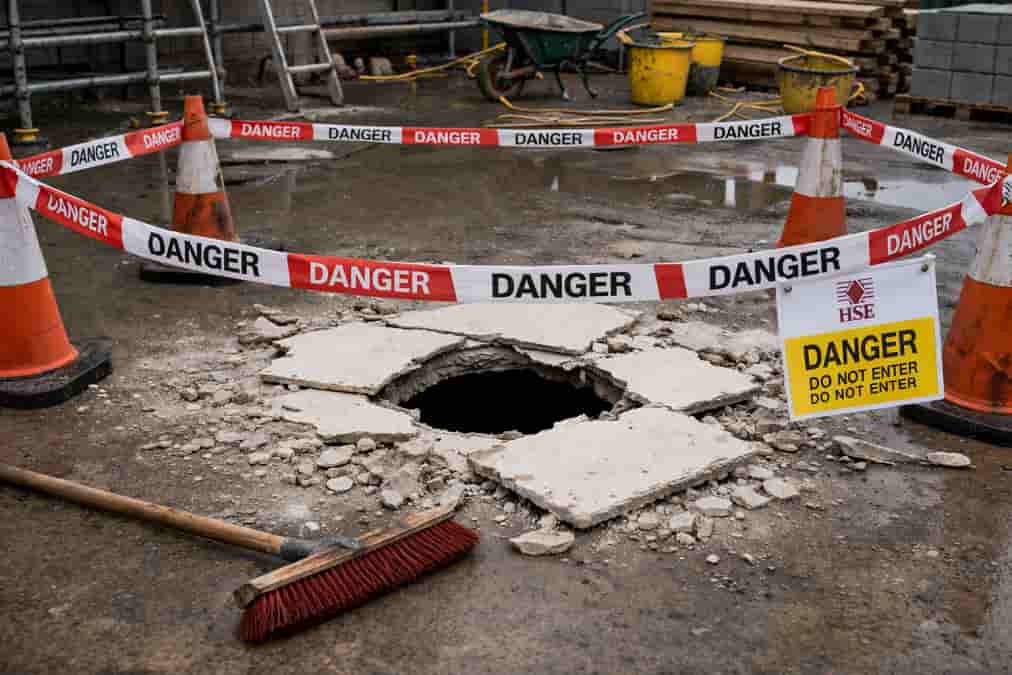
The HSE investigation uncovered a series of failings that ultimately led to the fatal incident. A ventilation shaft on a roof garden had been covered inadequately using only plasterboard and roofing foam. This makeshift covering lacked the strength required to safely support weight, particularly in an active construction environment.
Critically, routine inspections of the building failed to include the roof garden area. As a result, the dangerous covering went unnoticed, and no warning was issued to the scaffolding team working nearby. This omission proved fatal.
The findings reinforce long-standing HSE guidance on working at height, which clearly states that:
- Work should be carried out from the ground wherever possible
- Safe access and exit points must be ensured
- Equipment must be stable, suitable, and properly maintained
- All work must be planned, supervised, and carried out by competent individuals
These principles are not new. However, as this case demonstrates, failure to apply them consistently can have devastating consequences.
Court outcome and penalties
Jerram Falkus Construction Limited pleaded guilty to breaching Regulation 4(1) of the Work at Height Regulations 2005. The company was fined £42,200, alongside a £2,000 surcharge and £5,000 in costs. The sentencing took place at City of London Magistrates Court on 18 March 2026.
HSE Inspector Natalie Prince was unequivocal in her assessment:
“Falls from height are one of the biggest causes of workplace fatalities and major injuries. This was a wholly avoidable incident that led to the death of a young man. My thoughts are with Renols family and friends.”
The prosecution was led by HSE Enforcement Lawyer Arfaq Nabi and Senior Paralegal Manager Stephen Grabe, highlighting the seriousness with which regulators are treating such breaches.
A wider issue affecting UK workers
For UK workers, particularly those in construction, maintenance, and infrastructure roles, this case is not isolated. Falls from height remain one of the leading causes of workplace fatalities across the country.
The Workers Union has consistently highlighted concerns around:
- Inadequate site inspections
- Poor communication of hazards
- Cost-cutting measures impacting safety standards
- Gaps in supervision and competency checks
This case brings those concerns into sharp focus. It also reinforces the importance of ensuring that safety procedures are not only documented but actively enforced on every site, every day.
The importance of accountability and prevention
While the financial penalties imposed on the company are significant, they are unlikely to provide comfort to those affected by the loss. For many workers and families, the focus remains on prevention rather than punishment.
Employers have a legal and moral responsibility to ensure that all work at height is properly managed. This includes identifying risks, maintaining equipment, and ensuring that no area of a site is overlooked during inspections.
The Workers Union continues to advocate for higher standards, clearer accountability, and stronger awareness among UK workers about their rights to a safe working environment.
This means ensuring that UK workers can easily find up-to-date guidance on workplace safety, legal responsibilities, and their rights when things go wrong.
What workers should take away
For workers across the UK, this case serves as a stark reminder:
- Never assume a surface is safe without verification
- Report hazards immediately
- Ensure proper training and supervision are in place
- Understand that safety procedures exist for a reason
The Workers Union remains committed to supporting members with clear, factual guidance and ensuring that lessons from cases like this are not lost.