The UK’s steel fabrication sector has warned that as many as 30,000 jobs could be lost over the next seven years unless proposed steel import safeguards are amended.
Industry leaders argue that the Government’s planned tariff and quota regime could inadvertently damage Britain’s fabrication industry while failing to adequately protect domestic steel production.
The concern centres around a perceived loophole within the proposed measures. While imported steel sections would be subject to tariffs and quotas, fabricated steelwork would remain exempt. This distinction has prompted warnings that overseas suppliers could carry out minimal processing work before exporting products to the UK, effectively bypassing the new restrictions.
Examples cited by industry representatives include simple modifications such as attaching a plate to a beam or drilling holes into steel sections, allowing products to be classified as fabricated steelwork rather than raw steel imports.
Impact on a major UK employer
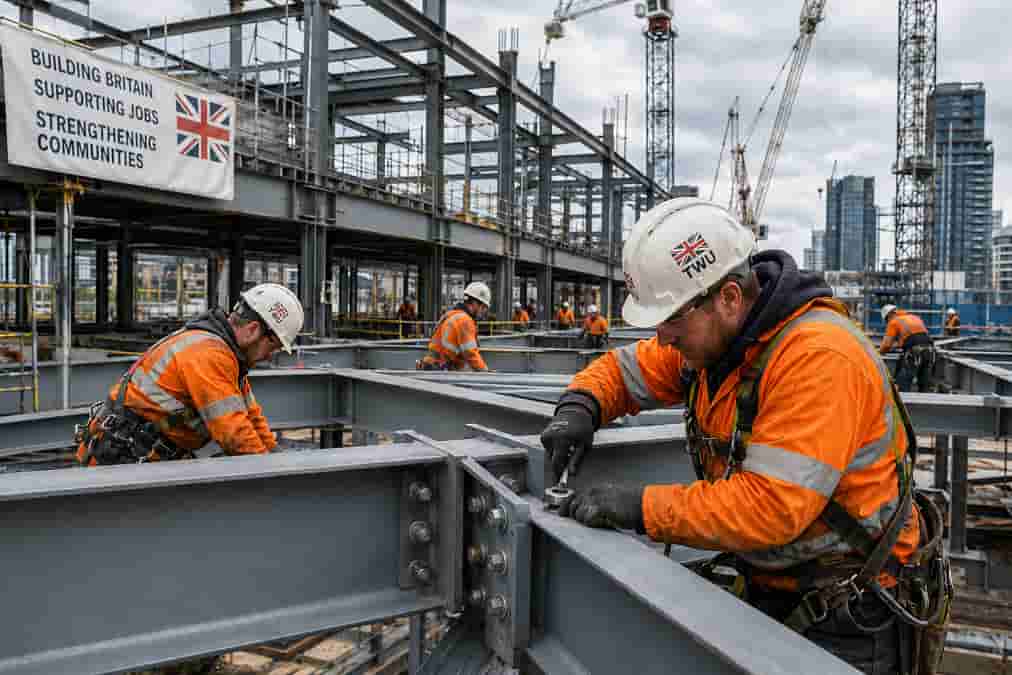
The fabricated steel sector supports approximately 60,000 jobs across the United Kingdom and plays a vital role in delivering major construction and infrastructure projects.
Industry bodies fear that overseas manufacturers could gain a significant competitive advantage, encouraging more fabrication work to be undertaken abroad rather than within the UK. This could accelerate the offshoring of skilled jobs and weaken an important part of Britain’s manufacturing base.
The issue has attracted the attention of Parliament’s Business and Trade Committee, which has written to Trade Secretary Peter Kyle requesting an urgent review of the proposals.
Rising costs already affecting construction projects
Evidence presented to the committee suggests that uncertainty surrounding the tariff regime has already had an impact on the market.
Contractors report that some projects have been delayed or paused, while imported fabricated steel products are becoming increasingly attractive to buyers seeking to avoid higher costs.
At the same time, global steel prices have risen due to international market pressures and geopolitical tensions. According to the Construction Leadership Council’s Steel Tariffs Working Group, structural steel prices have increased significantly, with contractors reporting cost increases of between 14% and 18% on live construction projects.
This volatility is making it more difficult for businesses to accurately price contracts and manage project budgets.
Supply concerns remain
The industry has also highlighted concerns regarding the availability of certain steel grades and section sizes required by UK construction projects.
Some specialist products are either not manufactured domestically or are produced in insufficient quantities to meet demand. Industry leaders believe any tariff regime must recognise these limitations to avoid supply shortages and further cost pressures.
Industry calls for urgent action
To address these concerns, the Construction Leadership Council is urging ministers to:
- Include fabricated and semi-finished steel products within the tariff regime from the outset.
- Review product categories where there is limited or no UK manufacturing capacity.
- Bring forward the planned review of the safeguards from 12 months to six months.
- Ensure measures designed to support steelmaking do not inadvertently damage the wider steel supply chain.
Policymakers must carefully balance support for UK steel producers with protection for the thousands of workers employed throughout the wider fabrication and construction supply chain.
Any policy designed to strengthen British industry should consider its impact on all parts of the sector. Protecting steel production is important, but so too is safeguarding the skilled fabricators, engineers, welders, estimators, project managers and construction professionals who depend on a competitive UK fabrication industry for their livelihoods.
As the debate continues, The Workers Union and workers across the steel and construction sectors will be looking for reassurance that future policies strengthen British industry as a whole rather than shifting jobs and investment overseas.