The Government has unveiled one of its most significant education reforms in decades, promising to place technical education on an equal footing with traditional academic study. The proposals are designed to address growing skills shortages across key industries while creating clearer career pathways for young people entering the workplace.
If implemented, the reforms could reshape how future generations prepare for work in sectors including construction, engineering, manufacturing, digital technology and clean energy.
For UK workers and employers alike, the announcement signals a recognition that Britain’s long-term economic success depends not only on university graduates but also on highly skilled technicians, engineers, tradespeople and construction professionals.
A new approach from the age of 14
Under the proposals, pupils from Year 10 would begin combining core academic subjects such as English, mathematics and science with practical technical education linked directly to employment opportunities within their own region.
Rather than following a nationally standardised vocational curriculum, local strategic authorities, employers, schools and colleges would work together to determine which qualifications and practical experiences best reflect local industry demand.
This means that young people living in areas with major construction projects could receive training focused on building trades, while those in manufacturing or digital hubs could study programmes tailored to those sectors.
The Government says this locally driven model will help close persistent skills gaps by ensuring education reflects the real needs of regional economies.
Prime Minister: Technical careers deserve equal status
Prime Minister Andy Burnham said the reforms are intended to change perceptions surrounding vocational careers.
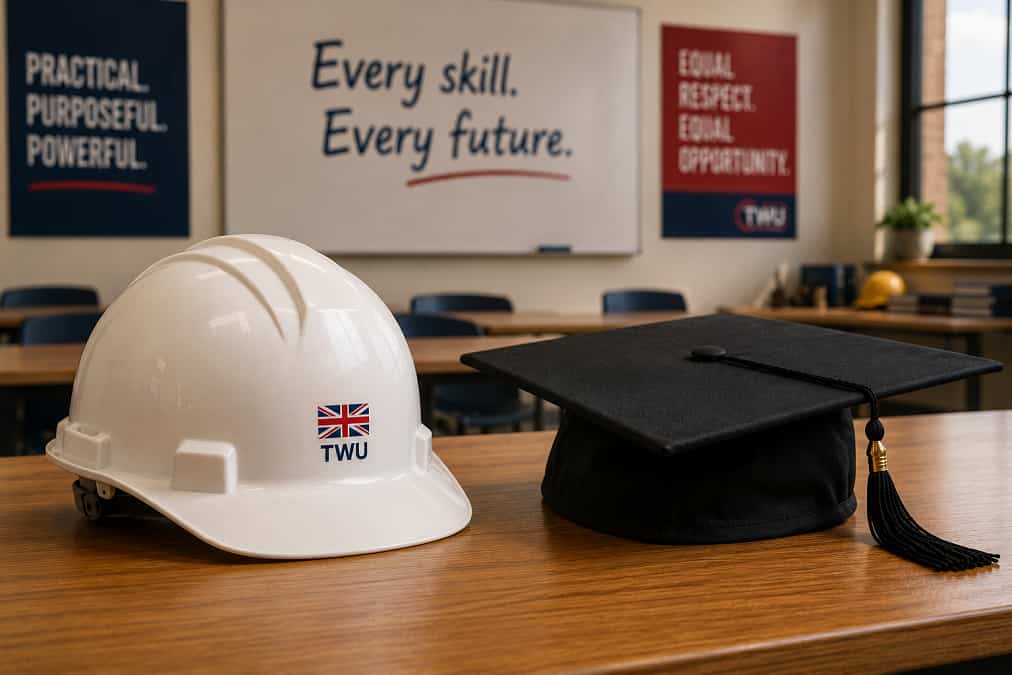
“I want an education system based on parity between academic and technical which gives all young people a clear path in life. From today, Britain will value the hard hat every bit as much as the graduation cap.”
It is a symbolic statement that many across industry have called for over many years.
Construction firms, engineering employers and manufacturers have repeatedly warned of an ageing workforce, recruitment difficulties and a shortage of skilled entrants capable of replacing experienced workers approaching retirement.
Real workplace experience before leaving school
Perhaps one of the most significant elements of the reforms is the increased emphasis on genuine workplace experience.
Rather than learning solely in classrooms, pupils could:
- Visit active construction sites.
- Work on employer-led practical projects.
- Experience engineering and manufacturing workplaces.
- Build relationships with local employers before leaving school.
- Gain valuable insight into careers before deciding their post-16 education route.
This practical exposure could help young people make more informed career choices while giving employers earlier opportunities to identify future talent.
Supporting industries facing major shortages
The Government has identified several sectors experiencing persistent recruitment challenges.
These include:
- Construction
- Engineering
- Advanced manufacturing
- Clean energy
- Digital technology
Construction in particular continues to face pressure from an ageing workforce, major infrastructure commitments, housing targets and increasing demand for skilled labour.
Giving local areas greater influence over training provision may help produce workers with skills that employers genuinely require rather than qualifications that do not always align with regional labour market needs.
Changes for schools
The proposals would also see changes to how schools are assessed.
Ofsted would recognise not only academic outcomes but also the quality of technical education and how effectively schools prepare pupils for employment.
This represents a significant cultural shift.
For many years, schools have been heavily measured through academic attainment. Recognising vocational success alongside examination results could encourage more schools to invest in workshops, employer partnerships and technical learning opportunities.
What it means for UK workers
While these reforms are primarily aimed at future generations, today’s workforce also stands to benefit.
A stronger pipeline of skilled workers could help address recruitment shortages, improve productivity and support economic growth across industries that have struggled to fill vacancies.
For employers, better alignment between education and labour market demand may reduce skills gaps and improve recruitment.
For young people, it could provide clearer pathways into well-paid careers without feeling that university is the only route to success.
The Workers Union has consistently highlighted the importance of recognising every form of skilled work. Britain relies on electricians, engineers, scaffolders, bricklayers, welders, care workers, technicians and countless other skilled professionals whose expertise keeps the country’s infrastructure, services and economy moving.
Recognising technical careers alongside academic achievement reflects the reality that success comes through many different pathways.
Looking ahead
The Government intends to begin rolling out the new technical education pathways from September 2028, using existing Department for Education funding to support implementation.
If delivered successfully, the reforms could represent one of the biggest changes to technical education for a generation, creating stronger links between classrooms and workplaces while helping Britain build the skilled workforce needed for future economic growth.
So in Conclusion…
Whether this initiative succeeds will ultimately depend on sustained collaboration between schools, employers, colleges and regional leaders. However, the principle behind the reforms is clear: technical skills are vital to Britain’s future prosperity. By giving practical careers equal recognition alongside academic achievement, the Government hopes to inspire a new generation of skilled workers equipped to meet the challenges of a changing economy.