As temperatures continue to soar across parts of the UK, with some regions experiencing conditions more commonly associated with southern Europe than the Midlands or the North West, a familiar question is once again echoing through offices, warehouses, factories and construction sites across the country:
“Can we finish early because it’s too hot?”
For many workers, particularly those in physically demanding roles or workplaces without air conditioning, the answer feels obvious. Productivity drops, concentration suffers and even simple tasks become increasingly difficult as temperatures climb into the thirties.
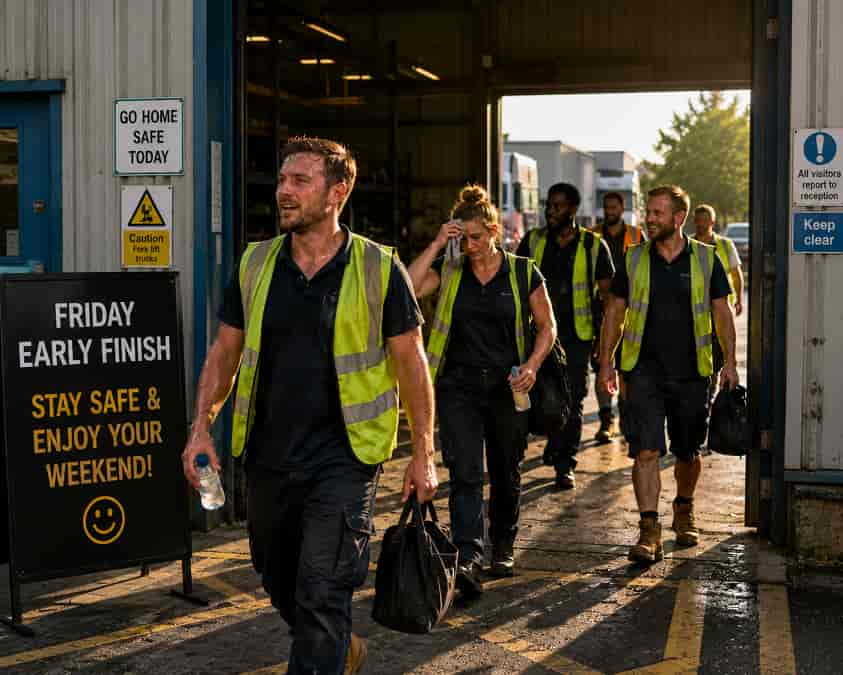
Across social media, employees have been jokingly campaigning for an unofficial British institution to be introduced: the heatwave Friday early finish.
Yet behind the humour lies a serious workplace issue.
The UK currently has no legal maximum working temperature. While there is a minimum workplace temperature requirement for indoor environments, legislation stops short of specifying a point at which it becomes too hot to work.
Instead, employers have a legal duty to provide a safe working environment and to assess risks associated with excessive temperatures.
This means employers should consider:
- Increasing access to drinking water.
- Providing additional rest breaks.
- Relaxing dress codes where appropriate.
- Improving ventilation and airflow.
- Adjusting working hours to avoid peak temperatures.
- Allowing remote working where possible.
- Rotating physically demanding tasks.
For outdoor workers, including those in construction, logistics, agriculture and infrastructure projects, the risks can be significantly higher. Heat exhaustion and heat stroke can develop rapidly, particularly where heavy manual work is involved.
Symptoms can include:
- Dizziness.
- Headaches.
- Excessive sweating.
- Nausea.
- Confusion.
- Muscle cramps.
- Fainting.
Workers experiencing these symptoms should report them immediately and seek assistance.
While there is no automatic right to head home early because of hot weather, many employers recognise that flexibility can improve morale, wellbeing and productivity.
An early Friday finish during periods of extreme heat can often make good business sense.
After all, there is little value in expecting full productivity from an office where employees are crowded around the only desk fan in the building or from warehouse workers struggling in temperatures approaching 35°C.
Jonathan Morgan of The Workers Union said:
“British workers are resilient and understand that work must continue, but common sense should always prevail during extreme weather conditions.
Employers who take practical steps such as flexible hours, additional breaks or even an early Friday finish where operationally possible often find that staff return refreshed, motivated and appreciative. Heat should be treated as a workplace risk just like any other hazard. Protecting workers and maintaining productivity go hand in hand.”
The issue may become increasingly common in the years ahead as climate experts predict hotter and longer summers across the UK. What was once considered an occasional heatwave is rapidly becoming a regular feature of the British working calendar.
Perhaps the Friday early finish during extreme heat may one day become as British as fish and chips, complaining about the weather, and discussing whether 28°C is officially “too hot to function”.
For now, however, it remains a matter for employers, workplace risk assessments and, perhaps most importantly, a little common sense.