
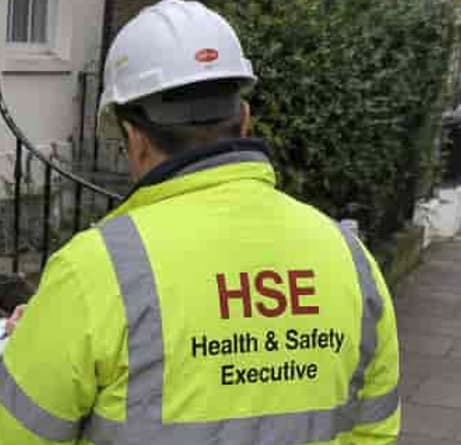
The Health and Safety Executive (HSE) has taken the unprecedented step of issuing its first-ever Prohibition Notice against an occupational health service provider after inspectors found serious failings that placed workers at risk of developing life-changing occupational illnesses.
The landmark enforcement action demonstrates a significant shift in regulatory oversight of occupational health services and reinforces the importance of ensuring workers receive competent and effective health surveillance.
According to the Health and Safety Executive, inspectors discovered that health surveillance was being carried out by individuals who lacked the necessary qualifications, training and supervision. As a result, early signs of serious occupational diseases may have gone undetected, exposing workers to continued risks from hazardous workplace conditions including wood dust and excessive workplace noise.
The regulator concluded that the provider’s practices created a risk of serious personal injury and issued a Prohibition Notice requiring the activity to stop immediately.
Further investigation also resulted in an Improvement Notice after inspectors identified widespread deficiencies in the provider’s occupational health arrangements. These included inadequate clinical governance, a lack of competent professional oversight, poor quality assurance procedures and no effective process for escalating adverse health findings or reviewing workplace control measures.
Occupational health surveillance plays a critical role in identifying work-related illnesses before they become permanent or irreversible. Conditions such as occupational asthma, occupational dermatitis and noise-induced hearing loss can often be prevented or significantly reduced when detected at an early stage.
However, ineffective health surveillance can create a false sense of security for employers while allowing workers’ health to deteriorate unnoticed.
Speaking about the enforcement action, Julie Wood said:
“This is the first time HSE has taken enforcement action of this kind against an occupational health service provider, and we have not done so lightly. It reflects the seriousness with which we view the quality of occupational health provision and our determination to act where substandard services are putting people in harm’s way.
“Health surveillance exists to protect workers from work-related health conditions that can cause permanent, life-changing harm. When it is carried out poorly, employers are given false assurance and workers are left unknowingly at risk.
“We expect occupational health providers to demonstrate genuine competence, proper clinical governance, and clear processes for acting on what they find. Anything less is a failure of the workers these services are meant to protect.”
Jonathan Morgan, of The Workers Union, said:
“Every worker and member has the right to expect that occupational health assessments are carried out by competent professionals who have the appropriate qualifications, training and clinical oversight. Where health surveillance is required by law, it must provide genuine protection rather than a false sense of reassurance.
“This landmark enforcement action sends an important message to both employers and occupational health providers that worker health cannot be treated as a box-ticking exercise. Poor-quality occupational health services have the potential to leave serious illnesses undetected until it is too late.
“The Workers Union welcomes robust enforcement where workers’ health has been placed at unnecessary risk. We would also encourage employers to review the competence and governance arrangements of any occupational health provider they engage to ensure employees receive the protection they are legally entitled to.”
What this means for employers
The HSE has made it clear that employers remain responsible for ensuring any occupational health provider they appoint is capable of delivering legally compliant and effective health surveillance.
Businesses should ensure that providers:
- Employ appropriately qualified occupational health professionals.
- Have clear clinical governance and quality assurance arrangements.
- Escalate abnormal findings promptly.
- Review workplace controls where health concerns are identified.
- Maintain effective oversight of all health surveillance activities.
Failure to do so may leave both workers and employers exposed to unnecessary health risks and potential enforcement action.
Why this matters for workers
Workers who are regularly exposed to hazardous substances, excessive noise, vibration or other workplace health risks rely on health surveillance to identify problems before they become permanent.
Where occupational health services fail, diseases such as occupational asthma, dermatitis and hearing loss may progress unnoticed, potentially resulting in irreversible damage that could have been prevented through timely intervention.
This enforcement action highlights the HSE’s increasing focus on preventing occupational illness alongside workplace accidents and serves as a reminder that protecting workers’ long-term health is just as important as preventing immediate physical injuries.