A machine manufacturing company in Manchester has been fined after a devastating workplace accident left a skilled turner unable to return to his trade. The case raises fresh questions about machinery safety, risk assessments and whether enough is being done to protect UK manufacturing workers from life-changing injuries.
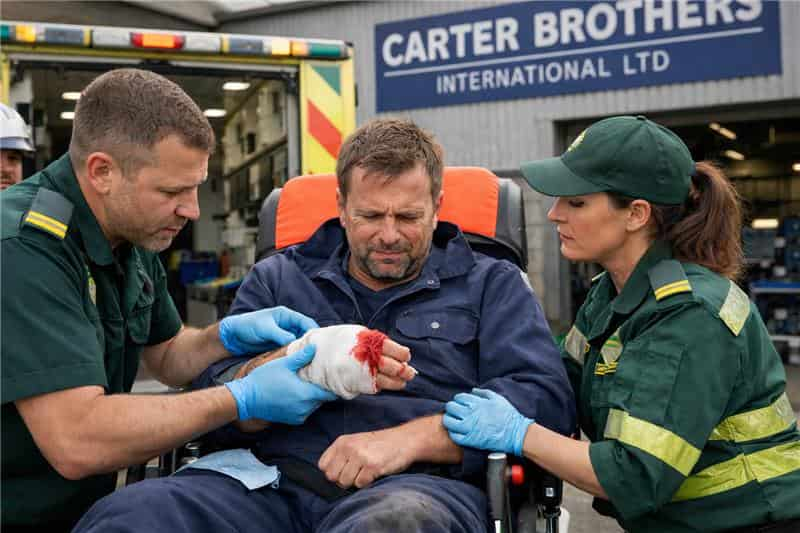
The incident took place in April 2024 at Carter Brothers International Limited, based in Middleton, Manchester. The unnamed employee was polishing metal work pieces using emery cloth while operating a metalworking lathe. His glove was drawn into the rotating machinery. The consequences were immediate and severe.
He was rushed to hospital, where surgeons were forced to amputate a finger on his right hand. According to the Health and Safety Executive (HSE), the injury has prevented him from returning to his profession as a turner.
This was not a freak occurrence. It was a risk long understood within the engineering and manufacturing sector.
What the investigation found
An investigation by the HSE concluded that Carter Brothers failed to adequately assess the risk to employees undertaking polishing work with emery cloth. Crucially, inspectors found there was no sufficiently safe system of work in place.
HSE guidance is clear: emery cloth should never be applied directly by hand to work rotating in a lathe. Acceptable methods include using the tool post as a clamp or a dedicated holding device. These measures significantly reduce the risk of entanglement and amputation injuries.
HSE Inspector Leanne Ratcliffe was unequivocal. She said the risks associated with using emery cloth on metalworking lathes are widely known and that the company should have introduced measures to carry out polishing safely.
The firm pleaded guilty to breaching Section 2 of the Health and Safety at Work etc. Act 1974 at Manchester and Salford Magistrates’ Court on 9 February. It was fined £10,000 and ordered to pay £3,758.55 in costs, alongside a victim surcharge of £2,000.
For the worker involved, the fine is academic. The impact is lifelong.
The human cost behind machinery accidents
Lathe accidents are among the most serious incidents in engineering workshops. Rotating equipment presents entanglement risks that can escalate in seconds. Gloves, loose clothing and even polishing materials can become trapped, pulling hands into moving parts with catastrophic force.
Across the UK, thousands of manufacturing workers operate lathes and other rotating machinery daily. Many are highly skilled tradespeople whose livelihoods depend on dexterity and precision. When safety systems fail, the loss is not just physical. It is professional and financial.
At The Workers Union, we see first-hand how workplace injuries reshape lives. A single lapse in risk assessment can end a career built over decades.
Why this matters for UK workers
Manufacturing remains a cornerstone of the UK economy, particularly in regions such as the North West. Skilled engineers, machinists and turners play a vital role in keeping supply chains moving. Yet machinery safety must evolve alongside productivity demands.
Under the Health and Safety at Work etc. Act 1974, employers have a legal duty to ensure, so far as is reasonably practicable, the health, safety and welfare of their employees. That includes:
- Conducting suitable and sufficient risk assessments
- Implementing safe systems of work
- Providing adequate training and supervision
- Following established industry guidance
Where guidance is explicit, as it is with emery cloth use on lathes, there is little room for ambiguity.
Commenting on this, Mr J Morgan, spokesperson for The Workers Union, said “This is a deeply distressing case. No worker should suffer a life-changing injury simply for doing their job. The risks associated with rotating machinery are well known across the sector. Proper risk assessments and safe systems of work are not optional extras – they are fundamental protections.
UK workers deserve safe workplaces, clear guidance and employers who take safety seriously. When procedures are ignored or not implemented properly, the consequences fall squarely on working people and their families.”
A wider warning to the sector
The HSE’s action sends a clear signal to engineering and manufacturing employers across the UK. The regulator continues to prioritise machinery safety, particularly where established guidance exists.
In an environment where online visibility and public scrutiny matter more than ever, businesses should also understand that enforcement cases can significantly affect reputation and search visibility. High-profile safety breaches often attract sustained digital attention.
For workers and our members, the message is equally clear: if a task feels unsafe or inconsistent with guidance, it is essential to raise concerns early. The loss of a finger is not a statistic. It is a turning point in someone’s life.
UK manufacturing must remain competitive. But it must also remain safe.