An Oxfordshire company has been fined £450,000 after a 34-year-old worker was fatally electrocuted near overhead power lines. Investigators discovered that another employee had suffered an electrical accident at the same location four years earlier, raising serious questions about workplace safety and ignored warnings.
The British company has been ordered to pay a £450,000 fine following the death of a worker who was electrocuted while carrying out his duties, in a case that has exposed serious failures in workplace risk assessments and accident prevention.
Cotswold Rainwater Services Limited, based in Witney, Oxfordshire, pleaded guilty to corporate manslaughter following the death of 34-year-old Andrew Claridge.
Mr Claridge died on 14 November 2024 while working at a property in Longworth, near Abingdon, after coming into contact with an electrical hazard involving overhead power lines.
The company was sentenced at Oxford Crown Court on 9 October 2026 following a joint investigation by Thames Valley Police and the Health and Safety Executive (HSE).
Alongside the £450,000 fine, the business was ordered to pay £15,735 in prosecution costs and a £2,000 victim surcharge.
The case provides a devastating reminder that workplace safety failures can have irreversible consequences for employees and their families.
Previous electrical accident should have sounded the alarm
Perhaps the most disturbing aspect of the investigation was the discovery that the danger had already been demonstrated years before Mr Claridge’s death.
Investigators established that another employee of Cotswold Rainwater Services had suffered an electrical accident involving overhead power lines at the same location in 2020.
That worker escaped with relatively minor injuries.
However, despite this earlier incident, the company failed to carry out a suitable risk assessment before sending employees back to the site in November 2024.
The risks posed by the overhead electrical lines were not properly identified, leaving employees exposed to potentially fatal danger.
The findings raise a fundamental question for employers across Britain: how many serious workplace accidents could be prevented if earlier warnings were properly investigated and acted upon?
For workers carrying out roofing, guttering, maintenance and construction activities, the case illustrates why previous incidents and near misses must never be dismissed simply because nobody was seriously injured the first time.
Police describe death as entirely preventable
Detective Sergeant Nathan Adby, of Thames Valley Police, described Mr Claridge’s death as entirely preventable.
The investigation established that the company had failed to identify and adequately control a foreseeable electrical hazard.
HSE Inspector Simran Sapal explained that appropriate planning, site assessments and risk controls could have identified the danger and allowed the work to proceed without employees approaching live electrical conductors.
The Crown Prosecution Service also highlighted the employer’s responsibility to protect its workforce.
The guilty plea to corporate manslaughter confirmed the company’s criminal responsibility for the failures that contributed to Mr Claridge’s death.
For his family, however, the conclusion of criminal proceedings cannot reverse their loss.
Why overhead power lines remain a serious workplace danger
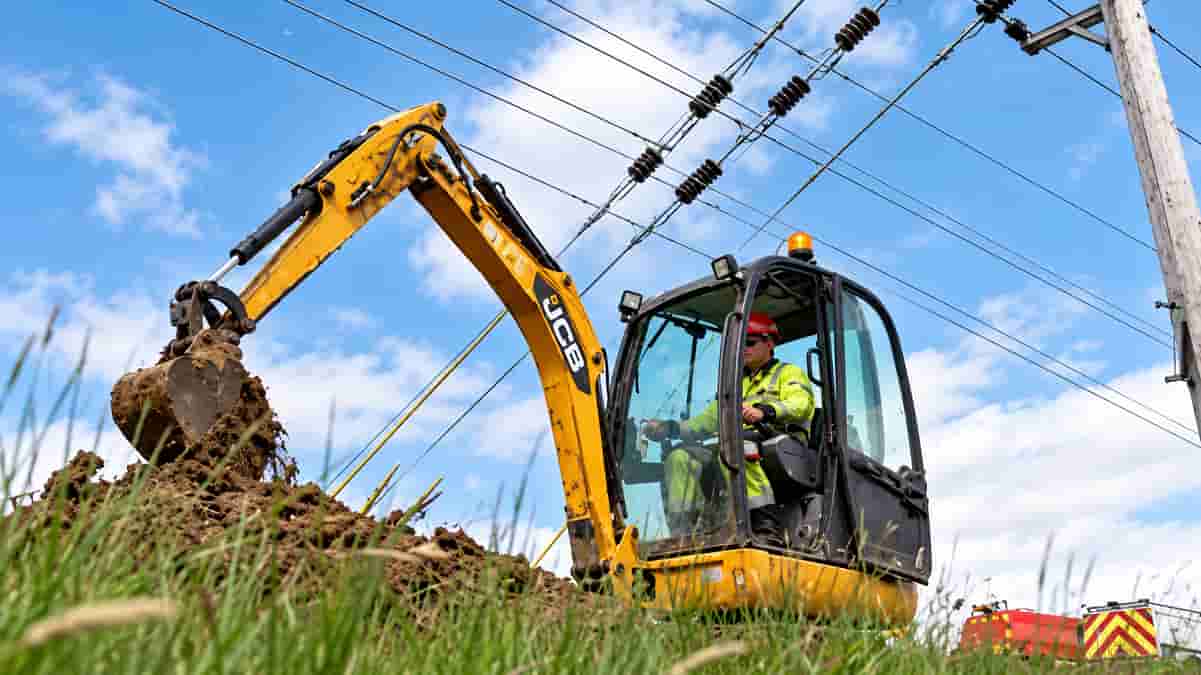
Overhead electricity lines present significant risks to employees working at height, operating lifting equipment or carrying out building maintenance.
Electricity can sometimes arc across an air gap without direct physical contact with a conductor, meaning workers can suffer serious or fatal injuries even when they believe they are maintaining a safe distance.
Commonly affected occupations include roofers, guttering engineers, scaffolders, construction workers, agricultural employees, delivery drivers operating lifting equipment and maintenance personnel.
The Health and Safety Executive’s guidance on overhead power lines explains the precautions employers should consider before allowing work near electrical infrastructure.
These include identifying overhead lines before work begins, consulting the electricity network operator where necessary, establishing appropriate exclusion zones and using safer methods of working.
Where work cannot be completed safely, employers should arrange suitable controls, which may include having the electricity supply isolated by the network operator.
No employee should be expected to approach a dangerous electrical installation without proper planning, training and effective safeguards.
What does UK employment law require from employers?
Under the Health and Safety at Work etc. Act 1974, employers have a legal responsibility to protect the health, safety and welfare of employees, so far as is reasonably practicable.
This includes providing safe systems of work, appropriate information, training and supervision.
The Management of Health and Safety at Work Regulations 1999 also require employers to carry out suitable and sufficient assessments of workplace risks.
For workers, these responsibilities are particularly important where jobs involve electricity, machinery, hazardous substances, working at height or other potentially dangerous activities.
Employers should not treat risk assessments as paperwork completed simply to satisfy legal requirements.
A meaningful assessment should identify hazards, establish who might be harmed, introduce effective preventative measures and be reviewed when circumstances change or new information becomes available.
An earlier accident involving the same hazard should prompt particular scrutiny.
Can employees refuse to carry out dangerous work?
This is an important question for employees who believe their working environment presents a serious and immediate danger.
Under sections 44 and 100 of the Employment Rights Act 1996, qualifying workers and employees have protections in specified circumstances involving serious and imminent danger.
Depending on the circumstances, these protections may apply when an individual leaves a dangerous workplace, refuses to return while the danger persists or takes appropriate steps to protect themselves or others.
Employees may also have protection against dismissal or detriment for raising qualifying health and safety concerns.
However, these protections depend on the facts of each situation, and workers should seek appropriate guidance where uncertainty exists.
Further information is available through Acas guidance on health and safety at work.
Employees can also explore practical workplace guidance through The Workers Union help section, particularly where concerns involve unsafe working conditions, inadequate protective equipment or pressure to undertake dangerous duties.
Why reporting near misses could save lives
One of the clearest lessons from this prosecution concerns the importance of reporting incidents that do not initially result in serious injury.
A near miss involving electricity, falling objects, defective machinery or unsafe access equipment may reveal a potentially fatal hazard.
Where such incidents occur, employers should investigate the underlying causes rather than concentrating solely on whether someone was injured.
Effective prevention depends on identifying what went wrong, implementing corrective measures and ensuring employees understand the risks.
Workers should feel able to report safety concerns without fearing unfair treatment or retaliation.
The HSE’s official guidance on investigating accidents and incidents provides useful information about learning from workplace failures and preventing their recurrence.
The Oxfordshire case demonstrates why this approach matters.
An electrical accident occurred at the same location in 2020. Four years later, another employee lost his life.
Corporate manslaughter conviction sends a powerful warning
Corporate manslaughter is among the most serious criminal offences that can arise from failures in organisational safety management.
Under the Corporate Manslaughter and Corporate Homicide Act 2007, an organisation may be convicted where the way its activities are managed or organised causes a person’s death and amounts to a gross breach of a relevant duty of care, with senior management failures forming a substantial element of that breach.
The legislation is intended to ensure organisations can be held criminally accountable for exceptionally serious management failures resulting in death.
The conviction of Cotswold Rainwater Services Limited demonstrates that businesses cannot assume failures in workplace safety will be treated as routine administrative shortcomings.
Where those failures contribute to a worker’s death, the legal consequences can be severe.
Yet the financial penalty is only one part of the wider picture.
A family has lost a loved one, colleagues have experienced the consequences of a fatal workplace incident, and an employer’s failure to manage an identifiable risk has resulted in a criminal conviction.
Every worker deserves to return home safely
The death of Andrew Claridge should prompt employers across the UK to examine whether their workplace safety procedures are genuinely effective.
For businesses involved in construction, maintenance, engineering and other hazardous activities, the message is clear.
Previous incidents must be investigated, foreseeable dangers must be addressed, and employees must receive the protection necessary to perform their duties safely.
Workplace safety should never depend on luck, assumptions or the absence of previous serious injuries.
A worker’s life cannot be measured against the cost of preventative action.
The most important lesson from this case is not the size of the £450,000 fine. It is that a foreseeable danger was left inadequately controlled, and a worker lost his life in circumstances investigators concluded could have been prevented.