
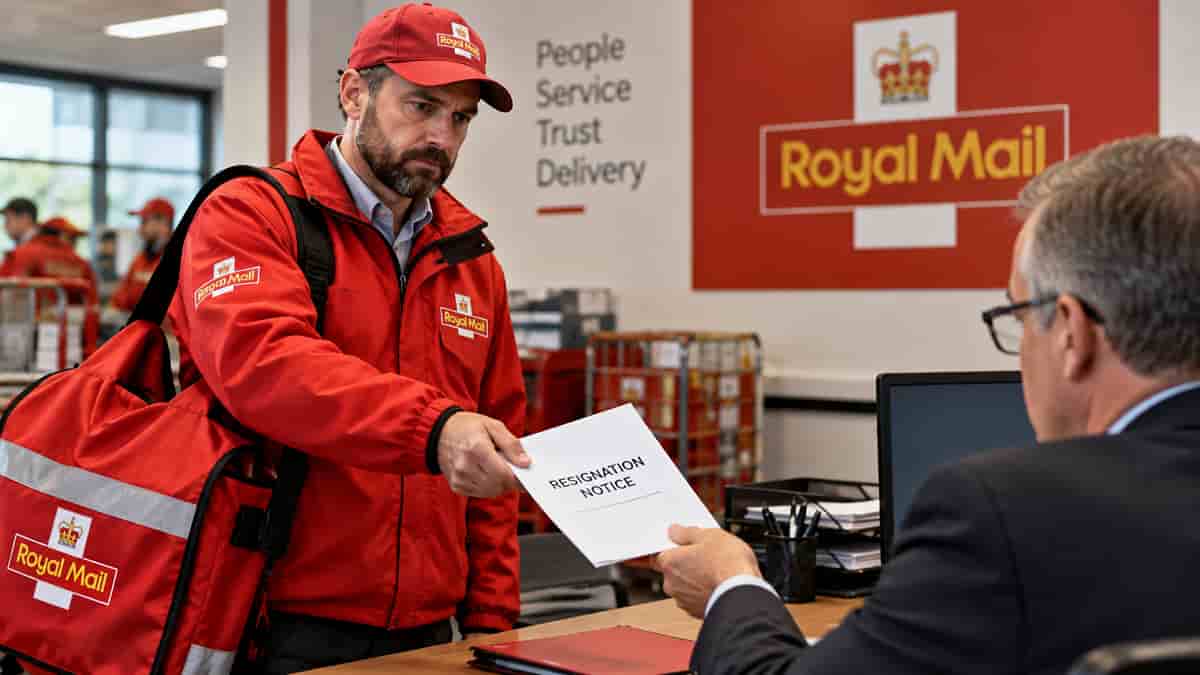
Royal Mail faces growing concerns over staffing, workloads and delivery standards as new figures suggest hundreds of postal workers are leaving each week. Meanwhile, the company is planning up to 2,500 job reductions while recruiting 22,000 temporary Christmas workers.
Britain’s postal service is facing renewed scrutiny after reports that approximately 400 postal workers are leaving Royal Mail every week, raising serious questions about workforce stability, working conditions and the future of one of the country’s most important public services.
The latest revelations come as Royal Mail continues implementing significant changes to its delivery operations, alongside plans to reduce head-office and support roles by as many as 2,500 before the end of 2027.
The reported departures have intensified concerns that experienced employees are leaving faster than the business can comfortably adapt to new working arrangements.
Yet the situation presents a striking contradiction.
While Royal Mail is reducing some permanent positions and struggling with staff retention, it is simultaneously recruiting 22,000 temporary workers to handle the Christmas delivery rush.
For Britain’s postal employees, the developments raise an important question: can Royal Mail successfully modernise its operations without undermining the workforce responsible for delivering millions of letters and parcels?
Hundreds of postal workers reportedly leaving every week
According to reporting published by the BBC yesterday the 14th of October, employee representatives claim Royal Mail is losing approximately 400 postmen and women each week.
Before the introduction of the company’s latest delivery model, the reported figure was approximately 330 departures per week.
The increase has been linked to concerns surrounding Delivery Model 26, known as DM26, which reorganises postal delivery routes and working arrangements.
The new system is intended to help Royal Mail improve efficiency, manage changing delivery volumes and meet revised regulatory requirements.
However, employees have reported difficulties with workloads, staffing levels and the practical implementation of the changes.
The figures are claims about weekly staff departures rather than independently verified redundancy statistics. They should not be confused with the company’s separately announced restructuring programme.
Royal Mail has defended its modernisation programme, saying the new delivery arrangements have improved the proportion of addresses receiving deliveries on a given day.
New delivery arrangements face growing pressure
Royal Mail’s restructuring reflects a substantial transformation in how British households and businesses use postal services.
Letter volumes have declined by more than 70% from their historic peak, while demand for parcel deliveries continues to grow.
These changes have forced the company to reconsider traditional delivery routes, staffing arrangements and operational costs.
The revised delivery model follows changes approved by communications regulator Ofcom, allowing standard second-class letters to be delivered on alternate weekdays rather than every weekday.
First-class deliveries retain their six-day service obligation.
Royal Mail says the operational changes are necessary to create a more sustainable business and improve reliability.
However, concerns about implementation have led to a pause in further rollout of the new delivery arrangements, announced on 9 October, while problems at affected delivery offices are addressed.
The challenge now is ensuring that operational improvements do not come at the expense of reasonable workloads, safe working conditions or employee retention.
Up to 2,500 jobs could disappear by the end of 2027
Alongside the concerns about frontline staffing, Royal Mail announced on 7 October that it intends to reduce up to 2,500 head-office and support-function roles.
The proposals form part of a wider organisational review intended to simplify operations and reduce duplication.
The company employs more than 131,000 people, meaning the proposed reductions represent less than 2% of its workforce.
Royal Mail has stated that the changes are expected to be achieved through natural employee departures and voluntary redundancy arrangements, without compulsory redundancies.
It has also said the programme will not reduce operational frontline positions in delivery and processing, including postal workers and drivers.
Nevertheless, employees working in administration, customer support and other affected functions face uncertainty over their future employment.
These are proposed reductions subject to consultation, rather than 2,500 completed job losses.
For our members and workers facing redundancy, understanding their employment rights is essential.
Employees may be entitled to consultation, suitable alternative employment opportunities, statutory notice and redundancy payments, depending on their circumstances.
Further information is available through the GOV.UK redundancy rights guidance.
Christmas recruitment offers 22,000 temporary opportunities
Despite the challenges, Royal Mail’s seasonal recruitment programme provides some positive employment news.
The company has announced plans to recruit approximately 22,000 temporary workers ahead of the Christmas period.
Available roles include mail sorting, delivery and collection operations, and HGV and medium goods vehicle driving positions.
The recruitment drive reflects the substantial increase in parcel volumes associated with Christmas shopping, Black Friday and online retail activity.
For jobseekers, students and people seeking additional seasonal income, these positions could offer valuable employment opportunities.
However, temporary Christmas recruitment should not be interpreted as a direct replacement for experienced permanent employees leaving the business.
Seasonal positions are designed to accommodate short-term increases in demand, while long-term workforce stability requires sustained investment in recruitment, training and employee retention.
People interested in current opportunities can consult the official Royal Mail careers website.
Delivery performance remains under scrutiny
The staffing concerns come at a time when Royal Mail is under pressure to improve delivery reliability.
According to Ofcom, only 75.7% of first-class letters arrived within one working day during the 2025–26 reporting period, compared with the then-required target of 93%.
Second-class delivery performance also fell below the applicable regulatory standard.
Ofcom has launched an investigation into the company’s performance and previously imposed penalties totalling more than £37 million for delivery failures.
Royal Mail has committed to investing £500 million over five years to improve delivery quality and operational performance.
The company faces the difficult task of modernising a nationwide delivery network while maintaining reliable services and supporting the employees responsible for operating it.
What rights do Royal Mail employees have when working arrangements change?
Changes to delivery routes, workloads, shift patterns or employment contracts can have significant consequences for workers.
An employer cannot necessarily impose substantial contractual changes without following the appropriate legal process.
Employees concerned about workplace restructuring should consider several important protections:
- Contract changes: employers should consult affected employees and seek agreement where contractual terms need to change.
- Working hours: workers are generally entitled to appropriate rest breaks and protections under the Working Time Regulations 1998.
- Health and safety: employers must assess risks associated with excessive workloads, manual handling and occupational stress.
- Redundancy rights: employees facing potential dismissal may be entitled to consultation, notice, redundancy pay and consideration for alternative employment.
- Raising concerns: employees may have legal protection when reporting qualifying workplace safety issues or exercising statutory employment rights.
The official Acas guidance on employment contracts explains how employers should approach contractual changes.
Workers experiencing difficulties can also explore workplace guidance and employment support through The Workers Union.
Royal Mail’s future depends on its workforce
There is no question that Royal Mail must adapt to protect our posties.
Britain sends fewer letters than it did twenty years ago, while online shopping has fundamentally changed demand for parcel deliveries.
Modernisation, investment and more efficient services can help secure the company’s long-term future.
However, employees remain central to that transformation.
Experienced postal workers understand their delivery routes, local communities and the practical demands of maintaining a reliable nationwide service.
Losing experienced employees can create additional recruitment and training costs while placing greater pressure on those who remain.
Royal Mail’s reported workforce departures therefore deserve serious attention, even as the company pursues improvements in delivery performance.
A critical moment for Britain’s postal workers
The latest developments reveal a business facing competing pressures.
Royal Mail wants to reduce costs, simplify its structure and improve operational efficiency. At the same time, it must retain experienced employees, recruit seasonal staff and restore public confidence in delivery reliability.
The reported departure of approximately 400 postal workers every week is an important warning, although the figure remains an employee-side estimate rather than independently confirmed company data.
For workers, the central concern is whether the business can achieve its commercial objectives while providing sustainable workloads, fair employment conditions and long-term career opportunities.
Royal Mail’s future should not be judged solely by the number of parcels delivered or the savings achieved through restructuring, but also by whether the people delivering Britain’s post have the resources, security and working conditions necessary to do their jobs effectively.