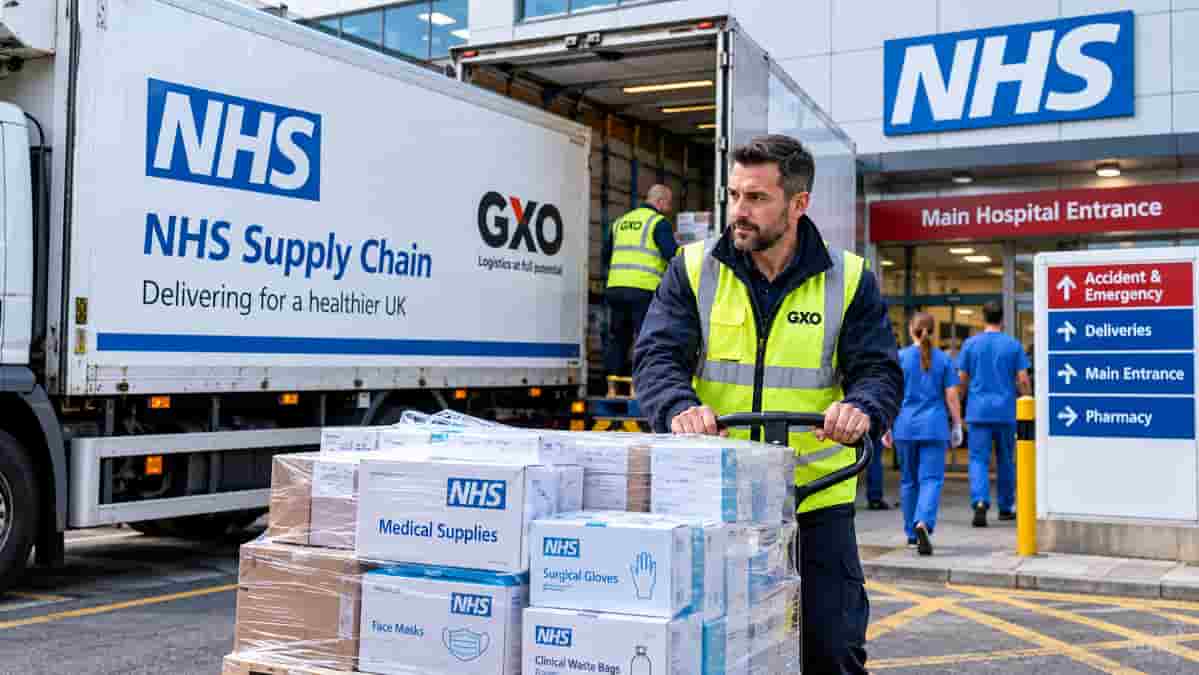
A planned walkout by nearly 200 drivers responsible for delivering essential medical supplies to NHS hospitals across England has been postponed, offering fresh hope that a pay dispute can be resolved through negotiations.
The industrial action, originally scheduled to begin on Tuesday 13 October 2026, threatened to disrupt the distribution of everyday medical equipment, including bandages, dressings, surgical gowns, gloves and needles.
However, in an encouraging development, NHS Supply Chain has confirmed that the first planned strike period will no longer take place.
The announcement follows confirmation that discussions between logistics company GXO and employee representatives are expected to resume during the week commencing 12 October.
For NHS employees and hospitals already managing significant operational pressures, the postponement provides welcome reassurance that deliveries should continue as normal during the first scheduled period of industrial action.
For the drivers themselves, the decision creates another opportunity to secure an agreement over pay and working conditions without an immediate interruption to services.
Why were NHS supply drivers planning to strike?
The dispute involves approximately 200 drivers employed by logistics provider GXO Logistics, which operates distribution services for NHS Supply Chain.
The drivers transport essential medical products from distribution centres to hospitals and healthcare facilities throughout England.
Workers rejected a proposed 4% pay increase, arguing that the offer did not adequately address concerns about their remuneration and employment conditions.
The disagreement also involves concerns about differences between the terms available to contracted logistics workers and those enjoyed by employees working directly under standard NHS arrangements.
In particular, employee representatives have highlighted pension entitlements as an area of concern.
The drivers work at distribution locations including Alfreton, Bridgwater, Normanton, Maidstone, Rugby, Bury St Edmunds and Washington in the North East.
Although these employees are not directly employed by individual NHS hospitals, their work plays an essential role in maintaining healthcare services.
Without reliable deliveries, hospitals could face additional difficulties obtaining the everyday equipment required by clinical teams.
Strike action postponed following latest developments
The original industrial action was scheduled to begin at 4pm on Tuesday 13 October and continue until 8pm on Thursday 15 October.
Further periods had also been announced for later in October and throughout November.
However, NHS Supply Chain published an important update on 9 October confirming that the first planned walkout had been postponed.
The organisation stated that NHS trusts would receive their deliveries during the week commencing 12 October on their normal scheduled days.
Hospitals were also advised that orders could continue to be placed as usual.
Most importantly, the update confirmed that discussions would take place between GXO and employee representatives in an effort to resolve the pay disagreement.
The postponement does not mean that a final agreement has been reached.
It does, however, provide an opportunity for both sides to explore a negotiated settlement before further disruption occurs.
A positive development for NHS hospitals and frontline workers
The decision to postpone the first strikes is particularly significant for healthcare employees.
NHS hospitals depend on a continuous flow of medical supplies to support treatment, surgery, emergency care and routine clinical activities.
Items such as protective gloves, dressings and medical gowns may appear relatively ordinary, but they are essential to maintaining safe and effective patient care.
Disruption to deliveries can create additional pressure for procurement teams, ward managers, clinical staff and other employees responsible for ensuring equipment remains available.
NHS Supply Chain has emphasised that maintaining the continuity of essential deliveries remains a priority.
For nurses, healthcare assistants, doctors and other frontline employees, confirmation that normal deliveries will continue during the first scheduled strike period is therefore an important reassurance.
Nevertheless, the wider dispute remains unresolved, and hospitals will need to remain attentive to any further official announcements.
Pay and pension concerns remain at the centre of the dispute
The postponement offers hope, but the underlying disagreement has not disappeared.
The drivers rejected GXO’s proposed 4% pay increase.
Employee representatives have also raised concerns about differences between their contractual terms and those associated with standard NHS employment.
This highlights a wider issue affecting workers who provide essential services through external contractors.
An employee may carry out work that is fundamental to the operation of a public service while being employed by a separate commercial organisation.
Their salary, pension arrangements and other employment conditions may therefore differ from those of people working directly for the public-sector organisation.
Such arrangements are common across logistics, cleaning, catering, facilities management and other support services.
The question for employers and contracting organisations is how to maintain sustainable services while recognising the importance of the employees delivering them.
The Workers Union believes that constructive communication, fair consideration of pay concerns and effective negotiation are essential to resolving workplace disagreements.
GXO says it remains committed to constructive discussions
GXO has maintained that its pay offer is fair, competitive and sustainable.
The company has also emphasised its commitment to continued discussions and the importance of protecting NHS supply arrangements.
According to reporting by Healthcare Management, GXO said it had contingency arrangements in place and was working with NHS Supply Chain and other relevant parties to minimise any potential disruption.
The company has also indicated its willingness to participate in discussions involving Acas, the Advisory, Conciliation and Arbitration Service.
Acas provides independent services to help employers and employees resolve workplace disagreements.
Its involvement can offer a structured opportunity to discuss competing concerns and explore practical solutions.
Although the outcome remains uncertain, the postponement suggests that further discussions are considered worthwhile.
Could further NHS supply strikes still take place?
Yes.
While the planned action between 13 and 15 October has been postponed, additional strike periods were previously announced for later dates.
These include periods beginning on 20 October, 27 October and several dates in November.
At the time of the latest official update, NHS Supply Chain had not confirmed that all future industrial action had been cancelled.
That distinction is important.
A postponed strike is not the same as a settled pay dispute.
If negotiations produce an agreement acceptable to those involved, further disruption may be avoided.
If discussions fail, the possibility of additional industrial action remains.
Hospitals and healthcare providers should therefore continue monitoring official NHS Supply Chain announcements for changes to delivery arrangements.
What does the dispute mean for other UK workers?
Although the immediate disagreement concerns NHS logistics drivers, the issues extend beyond healthcare distribution.
Across Britain, employees are facing questions about pay increases, pensions, living costs and the value of their work.
These concerns are especially relevant in sectors where essential services are delivered through commercial contracts.
Workers may feel that their responsibilities have increased without corresponding improvements in pay or benefits.
Employers, meanwhile, may face contractual restrictions, operational costs and financial pressures that complicate negotiations.
Effective communication is therefore essential.
Employees should understand how pay decisions are made, what contractual arrangements apply and how concerns can be raised through appropriate workplace procedures.
Workers seeking guidance on employment issues can explore our workplace Help section, which provides information on a range of employment rights and workplace concerns.
Where disagreements affect working relationships, early engagement and a willingness to consider practical solutions can help prevent matters from escalating.
Why resolving the dispute matters for the NHS
The NHS relies on a much wider workforce than the employees working directly in hospitals and surgeries.
Drivers, warehouse operatives, engineers, cleaners, administrative employees and other support staff all contribute to the effective delivery of healthcare.
The NHS supply drivers’ dispute illustrates how difficulties affecting one part of that workforce can have consequences across the wider system.
It also demonstrates why maintaining constructive relationships between contractors, employees and public-sector customers is so important.
A successful agreement would provide greater certainty for drivers while reducing the risk of disruption to hospitals.
For NHS staff already working under pressure, reliable access to medical equipment remains essential.
For the drivers, a negotiated settlement could provide clarity about future pay and employment conditions.
Both outcomes would be positive developments.
Fresh negotiations offer an opportunity for progress
The postponement of the first planned NHS supply strikes represents an encouraging development in a dispute that had threatened to interrupt the movement of essential medical equipment across England.
Nearly 200 drivers remain involved in a disagreement over pay and conditions, and further action has not been ruled out.
However, the decision to allow additional discussions offers a practical opportunity to find common ground.
For NHS hospitals, normal deliveries during the week commencing 12 October provide welcome operational stability.
For the employees involved, the coming negotiations may determine whether an acceptable agreement can be reached.
The hope now is that constructive discussions will deliver a sustainable resolution, protecting both the interests of workers and the uninterrupted supply of essential equipment to NHS hospitals.