UK jobs market shows signs of recovery as temporary hiring surges across Britain
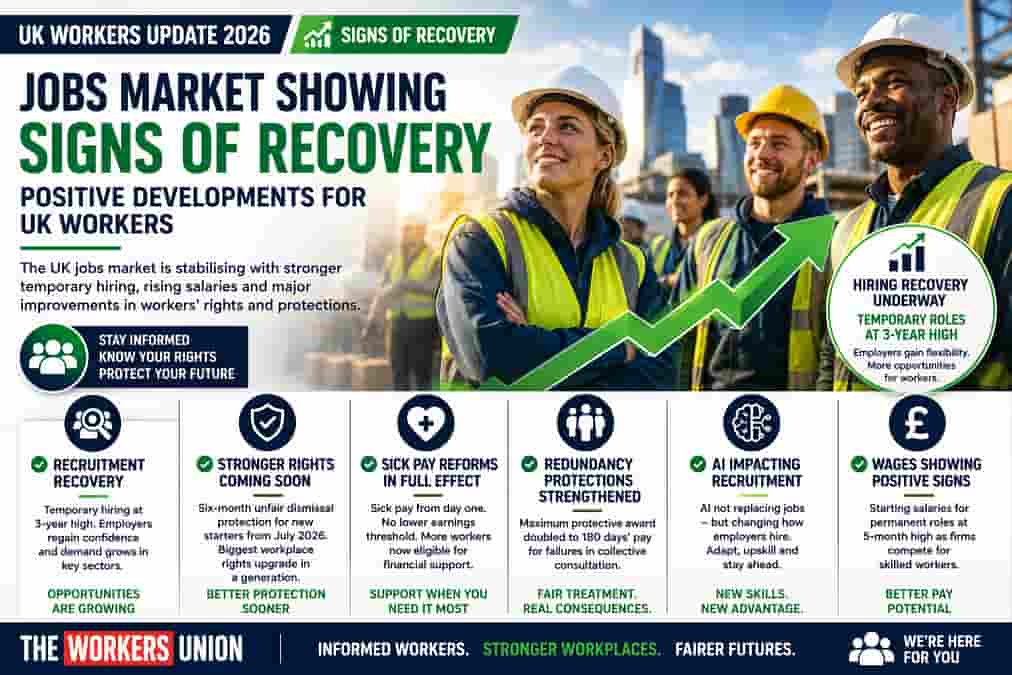
The UK’s jobs market is showing the first signs of stabilisation after months of uncertainty, with temporary hiring increasing sharply as employers look for greater flexibility while the wider economy adjusts to new employment legislation and ongoing global economic pressures. This is rapidly becoming one of the most discussed employment stories across the UK workforce this week.
Recent recruitment data indicates that while permanent hiring continues to slow, demand for temporary workers has risen to its strongest level in more than three years. Employers across manufacturing, logistics, warehousing, hospitality and professional services are increasingly turning to short-term contracts and flexible staffing arrangements to manage fluctuating demand and economic uncertainty.
At the same time, starting salaries for permanent positions have increased to a five-month high as businesses compete for skilled workers in sectors experiencing labour shortages. This combination of rising wages and increased temporary opportunities presents both opportunities and challenges for UK workers.
Why this matters to UK workers
For many workers, the growth in temporary employment may provide quicker access to work opportunities, additional overtime and greater flexibility around family commitments and caring responsibilities.
However, workers considering temporary roles should carefully review:
- Contract duration and renewal provisions.
- Holiday entitlement calculations.
- Statutory Sick Pay eligibility.
- Notice periods.
- Pension arrangements.
- Guaranteed hours provisions.
- Agency worker rights where applicable.
Many workers mistakenly assume temporary employment automatically means reduced employment protections. In reality, UK employment legislation provides a range of statutory rights regardless of contract type, including protection against discrimination, entitlement to the National Minimum Wage and paid annual leave.
Employment law changes continue to reshape workplaces
The trend comes as the UK continues implementing significant employment law reforms throughout 2026 and 2027 under the Employment Rights Act 2025.
The changes are expected to affect probation periods, statutory sick pay arrangements, flexible working rights and the creation of the new Fair Work Agency, which will oversee workplace compliance and enforcement.
Businesses are currently adapting recruitment strategies while awaiting further implementation details, which many economists believe is contributing to the increase in temporary recruitment activity.
Manufacturing and logistics remain bright spots
Despite wider economic concerns, several sectors continue to recruit heavily.
Manufacturing, engineering, logistics, warehousing and blue-collar occupations remain among the strongest performing areas of the labour market during 2026, with employers continuing to advertise significant numbers of job vacancies across the UK.
For workers considering a career move, this may represent an opportunity to secure improved pay packages or develop new skills in growing sectors.
The Workers Union view
The Workers Union believes that labour market flexibility should not come at the expense of workplace security. Temporary contracts can provide valuable opportunities for workers and employers alike, but transparency regarding pay, hours, expectations and employment rights remains essential.
Workers accepting temporary or agency-based roles should ensure they understand exactly what type of contract they are signing and what protections apply to them from day one.
With employment law continuing to evolve throughout 2026, staying informed about workplace rights has never been more important for Britain’s workforce.