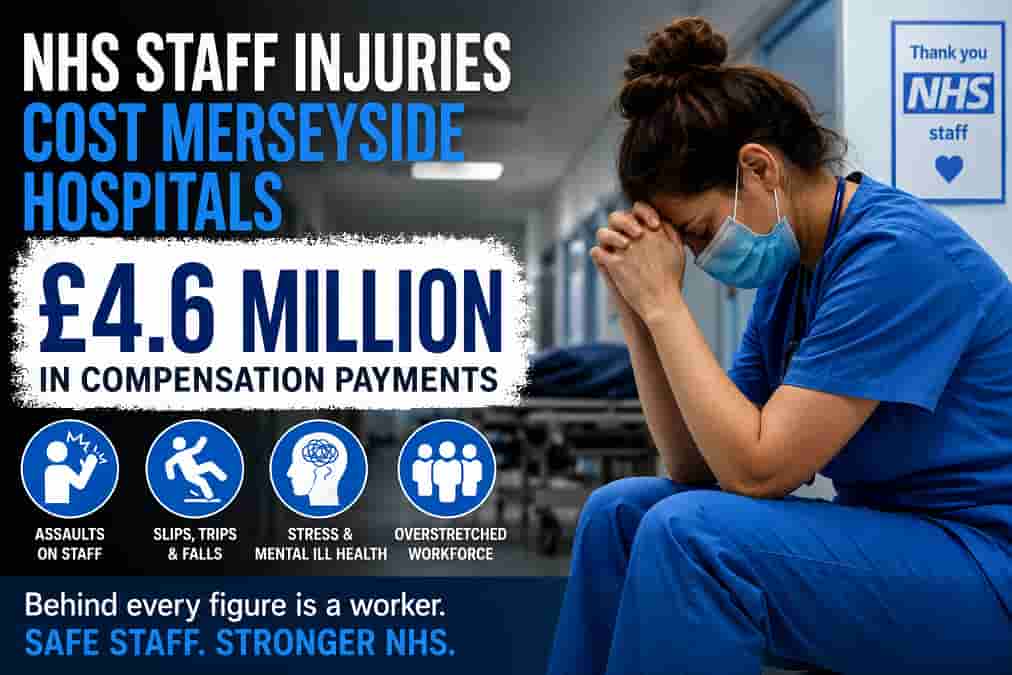
Fresh concerns have emerged over the growing physical and mental strain being placed on NHS staff across Merseyside after reports revealed that injured healthcare workers have received more than £4.6 million in compensation payments.
The figures, highlighted in regional reporting this week, shine a spotlight on the increasing number of workplace injury claims involving NHS employees across Merseyside trusts. The claims reportedly include assaults on staff, slips, trips, falls and stress-related illnesses, all against the backdrop of an already overstretched healthcare system.
For many UK workers inside the NHS, the story will feel painfully familiar.
Behind every compensation payment is a nurse, porter, paramedic, healthcare assistant, cleaner or administrator who has suffered injury while trying to keep services running under enormous pressure. While financial settlements may offer some support after an incident, they do not remove the long-term emotional and physical impact many workers carry with them.
The latest figures come at a time when NHS staff absences, burnout and workplace stress remain major concerns across the healthcare sector. NHS organisations throughout Cheshire and Merseyside have repeatedly acknowledged ongoing workforce pressures, sickness levels and operational challenges within board reports and governance meetings.
At The Workers Union, we believe workplace safety must remain at the heart of every working environment, particularly within essential public services such as the NHS.
Healthcare workers routinely face situations most people never encounter in their careers. Long shifts, staff shortages, emotionally demanding environments and rising patient pressures all contribute to increasing risks. In some cases, workers are facing verbal abuse and physical violence simply for doing their jobs.
Stress-related claims are also becoming more common across UK workplaces, particularly in sectors where workers are expected to absorb relentless operational pressure without adequate recovery time. The NHS is no exception.
The issue extends beyond hospitals alone. Community healthcare workers, ambulance crews, mental health teams and support staff often work in highly pressured settings where risks can escalate quickly. As services continue to deal with backlogs, recruitment challenges and rising demand, concerns remain over whether enough is being done to protect frontline workers before injuries happen.
The Workers Union continues to encourage all UK workers to report workplace incidents properly, maintain detailed records and ensure concerns around safety, staffing and wellbeing are formally raised through the correct channels.
Employers have legal responsibilities to provide safe systems of work, suitable training, risk assessments and appropriate workplace protections. Where these protections fail, the consequences can be severe not only for workers themselves, but also for public services already struggling with financial pressures.
The £4.6 million compensation figure also raises wider questions about prevention.
Many UK workers will ask whether more investment in staffing, training, workplace support and preventative safety measures could ultimately reduce both injuries and long-term costs to the public sector. Prevention will always prove more effective than dealing with the aftermath of workplace harm.
Across the UK, workers increasingly want practical support, clear guidance and fast access to help when issues arise. Whether somebody works in healthcare, construction, retail, transport or hospitality, the fundamentals remain the same: every worker deserves to feel safe at work.
As pressure continues to build across vital public services, protecting the wellbeing of workers cannot become secondary to operational targets or financial savings.
The health service depends on its workforce. Without safe, supported and protected workers, the pressure on the NHS will only continue to grow.
For more workplace news, employment updates and support for UK workers, visit The Workers Union.